Getting away
As soon as the Board examinations had been laid to rest Wendy and I were in to getting ready for our posting to the 84th Survey Squadron Royal Engineers, Singapore. The posting was for two years and this meant that our furniture would remain in storage for all of that time. All we could take to Singapore was our personal effects – clothing and linen and not much else. Of course there was no point in taking winter clothing so a good deal of sorting out had to be done. We were allowed several suitcases, in fact the baggage allowance was quite generous. As an officer I had the privilege of first class travel for the whole family. That privilege was extended to all ranks with infant children. The difference between first and tourist class international air travel at that time was not all that great; much as it is on domestic travel these days. Our furniture had to be uplifted close to our departure day; however, the Army would allow us two nights’ accommodation in a hotel/motel pending departure. The packing of all our small possessions for storage (crockery, glassware, kitchenware, appliances, lampshades and similar) was undertaken by the Commonwealth Department of the Interior who were responsible for all overseas movement. I recall that the fellows who did this were very professional, packing into large new cardboard boxes of various sizes, wrapping all items in clean tissue paper and clean newsprint; not the newspaper and old tea chests used by commercial firms.
But before all this we needed to do something about our Poodle dog Beau. We had contemplated taking him to Singapore and that could happen. Singapore had no quarantine requirements for animals coming from Australia and we knew of families who had taken their pet with them. But the problem lay in bringing them back into Australia. Australia at the time would not take animals from anywhere in Southeast Asia and the only way possible was to send the pet to the United Kingdom where it would go into quarantine for six months and then travel back to Australia by sea. Would anyone be bothered to do that? Apparently so; we were told of a family who did so for a much loved pet and the poor brute died three months after arriving back in Australia. Then Wendy’s Aunt Val McCotter came to the rescue. She knew Beau from the time she had stayed with Wendy when I was in Vietnam and once since then when Wendy called on her at Tamworth. Aunt Val said she would love to keep Beau for us while we were away and give him back on our return – or even keep him if that was not possible. So we packed Beau up in a dog box and railed him to Tamworth. Aunt Val took charge of him but a week later we had a phone call from her most distressed. From the moment of taking Beau she had had a huge allergy reaction – sneezing, swollen itching face – it was impossible for her to keep him. So back Beau came in the dog box. What now? We had little time left before departure and then a saviour arrived in the form of an elderly man around the corner in Greville Street. I often used to talk to him when either I was walking past his place with Beau or when he was walking past our place and he had taken quite an interest in Beau. I seem to recall that his home, an old two storey place that had a small observation tower projecting out of the roof had reputedly been used by a German spy during WW2 radioing shipping information of ships entering or leaving Sydney Harbour – so the story went! Anyhow, he believed it. In talking to him I had mentioned being posted overseas to Singapore and he had asked me what we would do with Beau indicating that if there was a problem he would take him. At the time I thought that unlikely but after Beau returned from Aunt Val with only a few days to go I contacted him and the arrangement was put in place. Goodbye Beau!
We also needed to dispose of our car – a Ford Falcon sedan about five years old in pretty good condition. I advertised it in the local paper and we had a buyer phone and visit the following weekend. He went for a test drive and after a bit of a haggle we firmed on a price. Transfer documents were signed and he took the car.
We had been told and indeed we had observed that families returning from Singapore brought with them all the latest stereophonic radio, tape recording and record playing equipment and the advice was to sell any existing items that one might have before departure. We had a very fine radio stereogram in a large polished cabinet – the best on the market at that time. It was about five years old. Should we sell it or not? We decided to do so if we could get a reasonable price for it. At the time of vacating our unit at 2 Barry Street it was normal for an inspection to be carried out and to our surprise I found out that this was to be undertaken by no less than the married quarter allocation officer (a public service civilian) from Victoria Barracks. How unusual! He was a pleasant enough fellow and while he was there – we probably gave him a cup of tea – I asked whether he could tell us who was likely to move in after us. With some hesitation and maybe a little embarrassment he said he was. Even more unusual – a public servant occupying an army married quarter? At that point I mentioned that we were looking for a buyer of our radiogram and to my further surprise he said he would be interested but he would need to bring his wife out to look at it. That duly happened and the deal was made for cash on the spot – not much less than we had paid for it.
All of this was a little disturbing for little Sarah, now three and a half years old. Times of army postings and removals tend to be tense times for army families and children can be upset by the process. Sarah had been very happy at her three day a week kindergarten but of course there was no point in renewing the arrangement for 1969. In any case the kindergarten was closed until sometime in February. I recall taking her to Taronga Zoo by bus and then returning by ferry. Was that the only time Sarah had been to Taronga? It may have been. There may have been other excursion s as well.
We had a number of administrative arrangements to make mostly concerning the family and the time we had available was used up rapidly. The day of departure finally arrived (Thursday 27th March 1969). The Army had given us two nights in the Randwick House Motel. We had an extended stay there because we had been booked on a commercial Qantas flight to Singapore and were taken off that and put on a later Qantas charter flight to depart at 10.30pm. It was a little disappointing because apart from the delay, on the commercial flight we would have been in first class but the charter flight was all single class. I wondered whether our fourteen pieces of luggage had anything to do with it. We had a day to fill in and did so by going to a movie in the city. We saw ‘The Graduate’ with Dustin Hoffman in the lead role. Filling in time after the movie I took Sarah for a ferry ride to McMahons Point while Wendy had a hair set. Due to the delay in our travel arrangement we had been invited to have a light meal at the Tredennicks who lived on that side of the city. Joan Tredennick had been a nursing colleague of Wendy and David was an army pharmacist I knew in earlier days in Brisbane and later in Vietnam. We departed the Tredennicks (unfortunately I missed seeing David – he was late home) –took a cab back to the motel where we were to be picked up by arranged transport and taken to the Sydney International Airport (no big deal in those days).
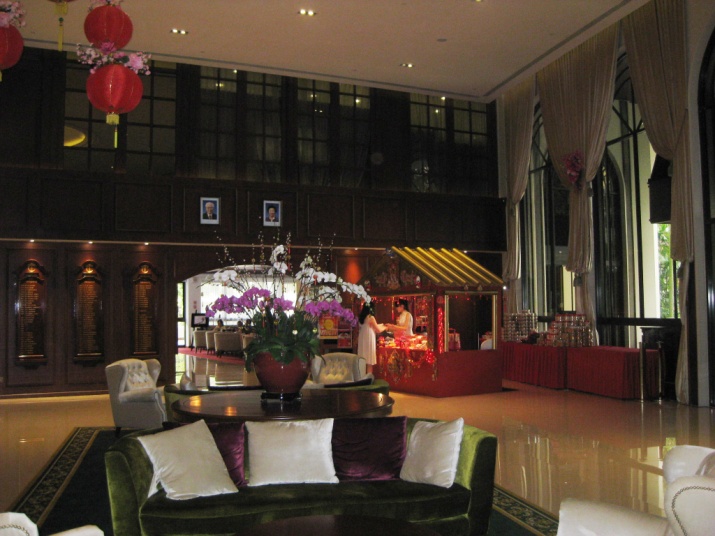
By arrangement we were seen off by our neighbours from across the landing at 2 Barry St, a CMF full time duty captain, Irving Warren and his wife Beverley with whom we had become quite friendly. They arrived at the airport soon after us. We waited and chatted over coffee boarding the Qantas 707 about 10.00pm. The first leg of the flight was to Darwin where we deplaned for an hour or so during refuelling – that was after midnight and then on to Singapore arriving 4.00am Singapore time. It was a quick process to go through customs and immigration and we were met by an army warrant officer (movement control) and after an hour’s wait for delayed transport taken to the Goodwood Hotel where we were to languish and ‘acclimatise’ for a week. Such luxury – Singapore’s second most well known hotel after the Raffles.
SINGAPORE
It would be appropriate to say a few words about the Singapore we found in February 1969. The island lies two degrees north of the equator and is most times throughout the year moderately hot (day temperature 30 to 32 degrees Celsius) and not much less than that at night. It is very humid – 85% relative humidity – and has very little wind. Hence it is hot, humid and windless, a climate that takes getting used to. Rain comes in the form of tropical downpours most months throughout the year and the average rainfall total for a year is 2300mm. There is often flooding in low lying areas and we experienced one such major flood.
Singapore became part of Malaysia with full independence from Britain in 1965 but was expelled from Malaysia in 1967 by what the Singaporean Prime Minister Lee Kuan Yew called ‘the mad Mullahs’. Singapore, being predominantly ethnic Chinese had become an unwelcome thorn in the side of predominantly Malay Malaysia. So at the time of our arrival in Singapore the island state had been fully and singly an independent self governing state for less than two years. It was in theory at least a democratic nation in the Westminster tradition but the opposition numbered just one person.
Singapore had been a British crown colony in one form or another since 1824 when Sir Stamford Raffles set up a trading post. The Island was occupied by the Japanese during World War Two from 1942 when the British forces capitulated until the surrender of Japan in August 1945. Britain then re-occupied the Island. In 1969 the previous British presence was still evident (and is now in 2012) but also in 1969 there was clear evidence of the period of the Japanese occupation.
Singapore was ethnically 80% Chinese, 15% Malay 3% Tamil and the remaining 2% British and European. Under Lee Kuan Yew Singapore was undergoing a great transformation. High rise hotels and apartment blocks were being constructed. People were being (forcibly) moved from the numerous kampongs (villages) on the island into these somewhat soulless blocks of apartments. A large industrial area was being built on reclaimed land (from the sea that is) at Jurong west of the main city. Tourist attractions were being created. The British military presence was gradually reducing and a Singaporean Defence Force based on national service was emerging. Israeli defence specialists were being brought in to develop and train the embryonic Singaporean Defence Force.
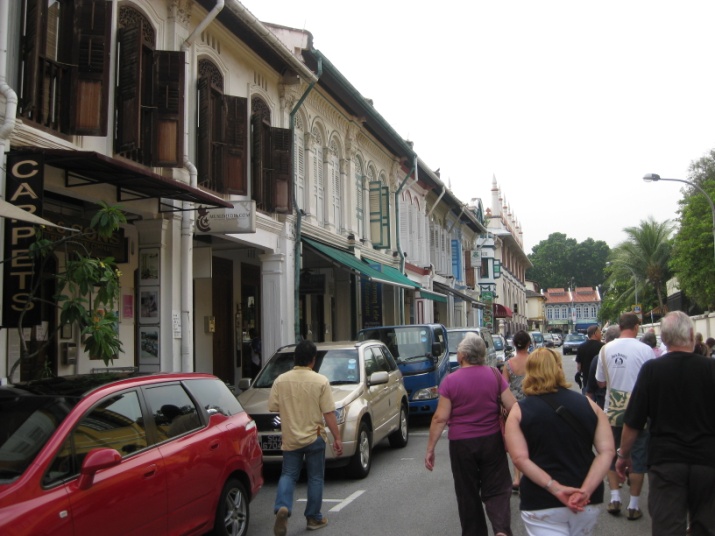
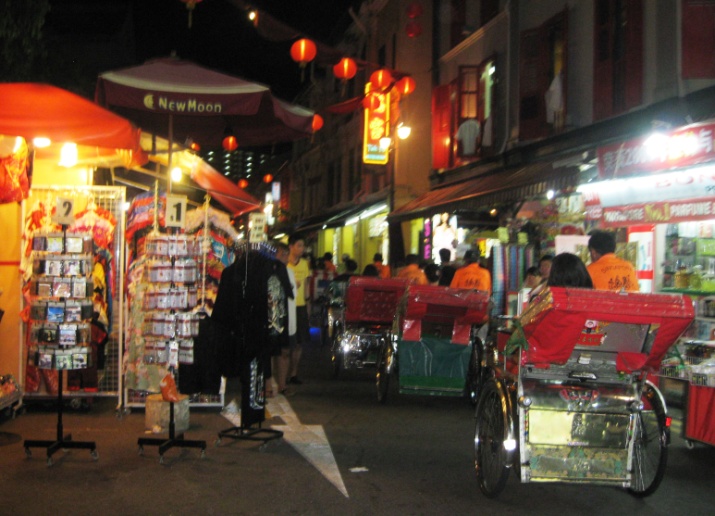
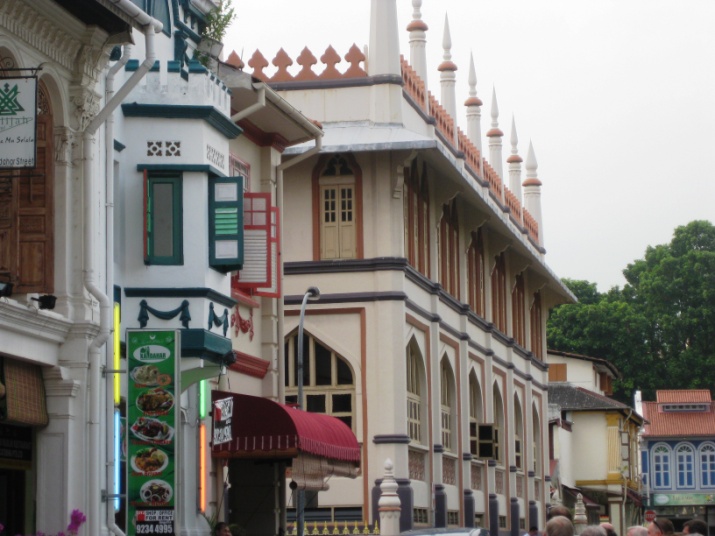
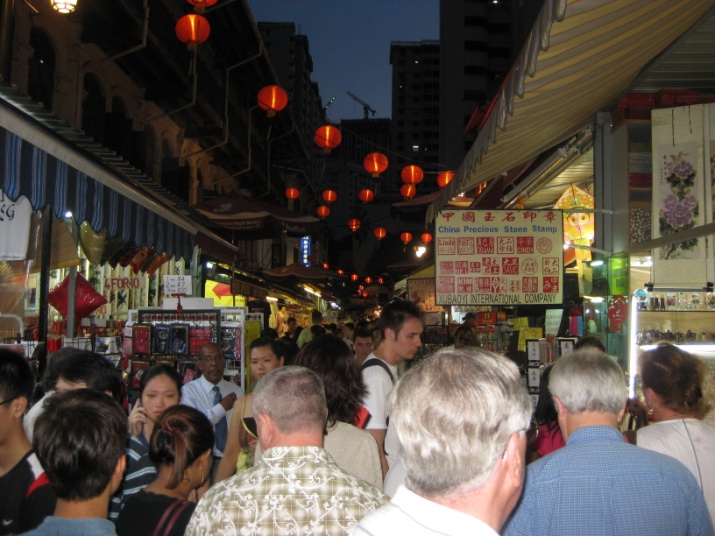
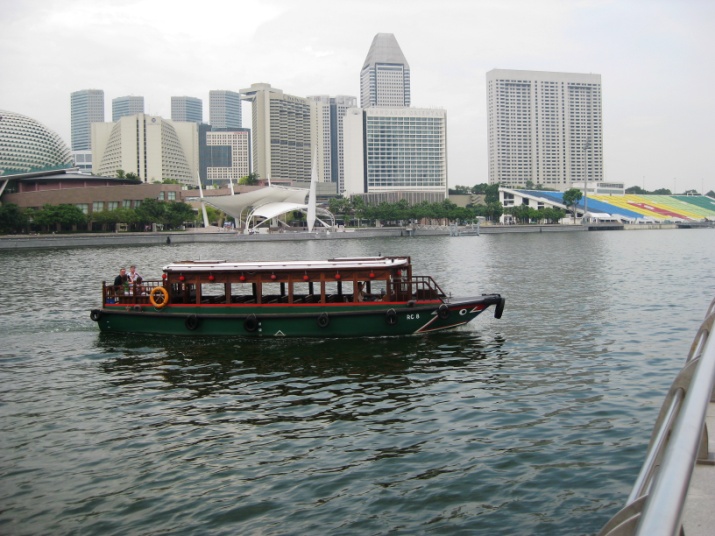
Much of old Singapore remained in Chinatown on the western side of the central business district and along the murky and somewhat smelly Singapore River. Chinatown was something of a tourist attraction and the Singaporean Government did not interfere with its joss houses, opium dens and other less than desirable activities other than maintaining law and order with a visible police presence. All that was to change some years later.
The ‘Goodwood’
We had week at the Goodwood Hotel, a somewhat spoiling experience. Wendy was anxious to get out and about and see what it was like. If I thought I was going to have a rest day on our day of arrival I was mistaken. Soon after settling in I had a call from Major Child somewhat querulous as to my arrival delay. He had not been informed of our being taken from the commercial flight and put on the charter flight. I had another call from a Major Duff, the Administrative Officer of the ‘Aust Arm’ component of HQ FARELF. Major Duff was very helpful and continued to be so throughout our time in Singapore – at least until his own departure. Major Child was well known to me. Although Australian Army he was ex-British Army and filled the appointment of DAD Survey1 in the Survey Directorate of HQ FARELF2, an Australian appointment. The outcome of the calls was that I was to be taken into HQ FARELF that afternoon and a car was duly arranged of 2.00pm. We had been directed through Gate 3 of HQ FARELF (Tanglin Barracks) which took us directly into the Australian area, not very large, a few long huts with verandas divided into a number of offices with access from the veranda. Waiting for me in Major Duff’s office was Major Child in no way overwhelmingly friendly. However, he took me to meet the AD Survey, no less than Lieutenant Colonel ‘Tommy’ Tomlinson in the FARELF Survey Directorate. Obviously Bill Child might have been a little put out at having been sent by Tommy Tomlinson to wait on my arrival in Major Duff’s office. I had known Lieutenant Colonel Tomlinson (known as ‘Tommy’ Tomlinson) quite a number of years before (1961) when he was the British exchange captain to the Survey Regiment. I was a sergeant at the time awaiting my commissioning course and he had given me quite a deal of support and sent me a very warm personal telegram when I was successful. He was delighted to see me and gave me a much warmer welcome than his deputy.
. I was told to visit an army tailor Mohammed Aktar in Tanglin Barracks to be measured up for the uniforms worn by all ranks in Singapore – dark green (jungle green) shirts, trousers, bush jacket (the British term for a safari jacket – not used in the ‘bush’ but on more formal uniform occasions), two sets in a very light weight polyester fabric.
I didn’t have much to do with Bill Child during our time. He and Esme were not inclined to socialise and I do not recall seeing him at any of the officers mess social occasions. But then, we were in different messes. Although I made frequent enough visits to the FARELF Survey Directorate and Aust Arm HQ and would always poke my head into his office with a good morning/afternoon Sir he rarely responded with more than a nod. I certainly had nothing against Bill Child. I had known him since my time as a young sapper on my basic survey course in 1955 and he had been quite supportive of my efforts in Vietnam. But I was a little disappointed at his lack of friendliness on my arrival in Singapore.
84 Survey Squadron RE – my introduction
On Saturday the 29th I visited the unit to which I had been posted, 84 Survey Squadron RE3. It was located in Dover Road Pasirpanjang, a suburb on the north western side of the city. I met the Officer Commanding, Major Tom Farmer and the other officers, warrant officers and senior NCOs who happened to be present; the Operations Officer and 2IC Captain Dixie Dean and Lieutenant Phillip Robinson, the Survey Troop OC. Why Saturday – the Squadron worked what was called ‘tropical routine’, from 7.00am to 2.00pm six days a week. My diary notes that I was told by Major Farmer that everyone was loyal, capable and efficient – in other words I was receiving the ‘new boy’ treatment.
I was to head the Map Production Troop, responsible for cartography photography and printing. Maybe I found that disappointing; field survey was my interest but no doubt Wendy was relieved that I would be Singapore based. I was also told that I would fill an extra-regimental appointment, that of RE Athletics Officer. Me – an athletics officer – for the whole of Singapore? Fair dinkum! More about that later. I was taken on a conducted tour of the Squadron. It was a modest series of structures, quite unlike the more grandiose buildings of the pre-WW2 British Raj. In fact I was to find out that it had been built by the Japanese during WW2, Nevertheless, the Squadron fitted in very comfortably with adequate space for all of its functions. The main building just inside the main gate off Dover Road was quite long with a veranda facing the road, a bit of lawn in front and some shady trees. On that side was the various administrative offices, the OC’s office, the orderly room, the SSM’s office and one or two others. The all important visitor’s book was held in the SSM’s office and the first two signatures in the book were those of Edward Heath who became British Prime Minister in 1970 and John Profumo, Secretary of State for War who fell from grace in 1961 as a result of the ‘Profumo Affair’ involving socialite call girl Christine Keeler. The Brits love their political scandals! The print troop run by Sergeant Cook for whom I developed considerable regard had a couple of fairly ancient British ‘Countess’ two colour printing machines. The photographic troop had a quite ancient large format process camera made in the era when such cameras still sported polished timber frames and polished brass general trim. There was also a photogrammetric section attached to the Cartographic Troop with Multiplex equipment – not used during my time with the Squadron. There was a large room in a separate building used as a general planning and operations room. It was termed ‘Tech Control’ a function that was to cause me some heartache later. It had a large elevated slotted template table in the centre of the room, again not used as such during my time with the Squadron. Finally I must mention the ‘Carlito Club’, an all ranks bar and recreation facility only used on special authorised occasions. Why ‘Carlito’? – I have no idea. It was set up to resemble a down-town bar – a bit sleazy.
So that was my first introduction to 84 Survey Squadron RE. Major Farmer asked me to come into the Squadron the following Monday for the visit of the Commander FARELF (Lieutenant General Sir Peter someone) and the Group Commander Colonel Kenwick Cox whom I would get to know in passing weeks. He would send a vehicle to the Goodwood to pick me up.
Our week at the Goodwood
Back at the Goodwood Hotel I had time to relax. I wasn’t required to attend the Squadron until I was sorted out domestically. We used our time to explore Singapore. Taxis were cheap – black and yellow Morris Oxfords and we went everywhere by taxi. We also did a lot of walking in Orchard Road with its multiplicity of shops and into the city – Change Alley and Robinson’s department store. In Orchard Road were the Chinese department store C.K. Tang and the supermarket called simply ‘Cold Storage’, the favourite food venue of most expatriates.
Orchard Road was not exactly the up-market shopping boulevard it is today. One needed to take great care in negotiating the sidewalks; they were not continuous and flat. At intervals one could be confronted with two or three steps to take you from one level to the next. The ubiquitous deep open side drains separated the sidewalk from the road pavement, bridged intermittently at shop entrances. Apart from the few major stores and some slightly up-market specialty shops, most others, the majority, were typically down-market Chinese food stores and stores selling all sorts of bric-a-brac, rather greasy motor bike shops and ones that left you wondering what might be within.
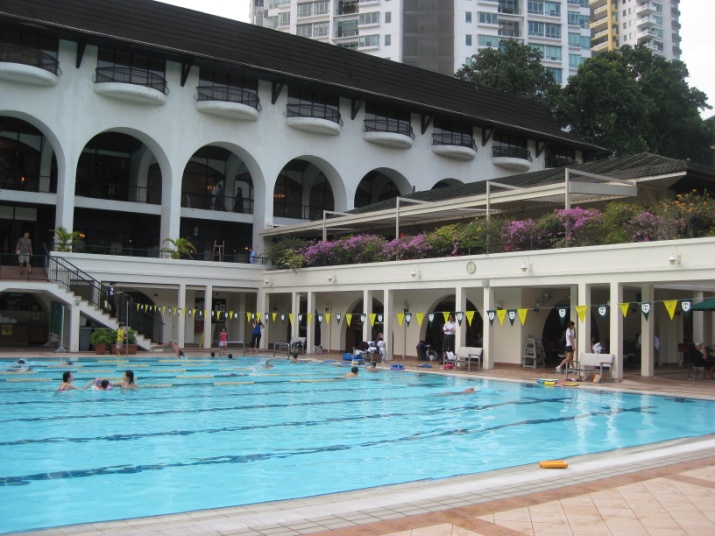
We bought Sarah a tricycle, very cheap from a cycle place in Orchard Road. We were weathering the hot humid conditions surprisingly well, especially little Sarah who seemed hardly to notice it at all although often sweating profusely. The Goodwood had a 25 metre swimming pool and we made good use of it.
Soon after lunch on Sunday the 30th Major Child called in his newly acquired Volvo (showing off perhaps) and took the three of us to what was to be our home for the next two years at 94 University Road. My diary notes that we were not very impressed by what we saw but clearly we would have to make the best of it. My diary comments ‘semi detached, two storeys sparsely furnished – looks fairly cool and should be quite comfortable’. Major Child took us for a tour of HQ FARELF, or more specifically ‘Tanglin Barracks’, the NAAFI, Tanglin Officers Mess and finally back to the Goodwood. He may have shown us his own pre-war colonial quarter and if he did the contrast with 94 University Road would not have been lost on Wendy.
On Monday morning I was picked up by a driver from 84 Squadron and taken in to Dover Road. In typical British fashion everything was spick and span; everyone in fresh well ironed uniforms that contrasted with my somewhat rumpled Aussie greens. (I wished I had worn my light khaki polyester shirt and trousers, however, it didn’t really matter). The General arrived and I felt that our OC was close to being obsequious. Dixie Dean whom by now I had realised, as well as being the nominal squadron 2IC was also in charge of the apparently all important ‘Tech Control’ section was certainly more down to earth. Neither General Sir Peter nor the Group Commander seemed at all interested in a solitary Australian officer. I spent the morning in my allocated office next to the cartographic troop. Malachy Hayes had left me a number of notes in a folder which I read with interest. We all, that is the officers, retired to the Officers Mess at Gillman Barracks, this being the headquarters of Royal Engineers in Singapore. The Officers Mess which included living-in accommodation was a very substantial pre WW2 building with spacious dining and anterooms all with terrazzo floors and substantial furniture, wide verandas facing well maintained gardens and with white jacketed Malay, Chinese and Indian mess staff. The British officer clique certainly looked after themselves. Lunch was well served from an unpretentious menu with good quality wines. Following the lunch a vehicle took me back to the Goodwood. (Major Farmer and some of the other British officers expressed some surprise at the magnanimity of the Australian Army putting me and my family up at the Goodwood for a whole week.)
On Tuesday (1st April) the three of us took a taxi in to Aust Arm for a general briefing mostly from Major Duff. It was very comprehensive – it covered most aspects of settling into Singapore, the employment of amahs (we were paid a very adequate allowance for this sufficient to cover a live in house amah, a wash amah and a gardener usually called a ‘kebun’, the latter on a two or three day a week arrangement) and car purchase. Major Duff had purchased a Mercedes Benz 230 and he gave us an introduction to a Mr Tan Sinn Whatt at the firm Cycle and Carriage conveniently located on Orchard that the 230 was certainly outside our price bracket and also we would have had to wait many weeks for delivery. However, Mr Tan was prepared to guarantee that the 200 could be supplied within the time margin to which we were restricted if we wished to own it for the necessary eighteen months to allow us to bring it into Australia free of the rather horrendous import duty We left it at that and returned to the Goodwood. We had already opened a cheque account with the Bank of Hong Kong and Shanghai and it would be from that bank that we would arrange a loan for car purchase. I should add at this point we were financially quite well off living as a family in Singapore. We were on a much reduced Australian tax rate and the Army paid us an overseas allowance. In all, my normal remuneration was almost doubled and the exchange rate was also beneficial at three Singapore dollars to the Australian dollar,
94 University Road - our home for two years
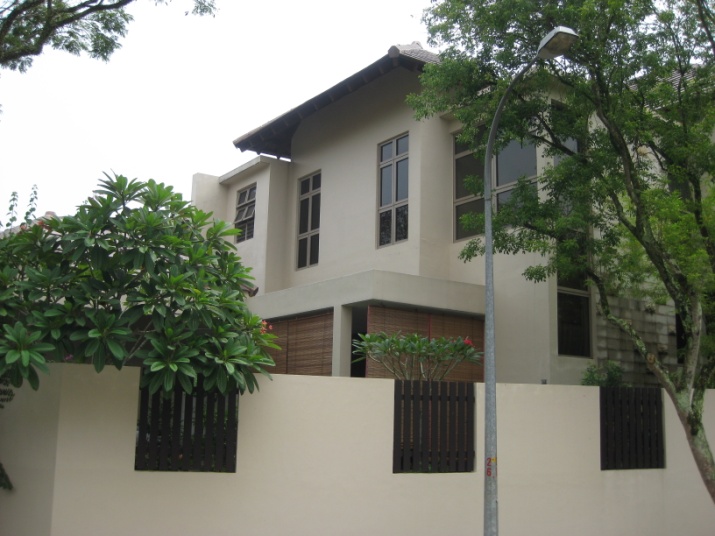
Finally the day of the handover of 94 University Road arrived – 2nd April 1969. Our home for the next two years was a two story duplex, one of many similar or even identically designed places in Singapore, on a corner or at least a bend in University Road. It had a small front yard and back yard with a strip of lawn down the road side. Down stairs comprised a large lounge room/dining room, kitchen and small amah’s bedroom. Two bedrooms were upstairs, the main bedroom with a balcony overlooking University Road. The entire floor area was tiled in small inch square yellow tiles. The other half of the duplex (party wall separating) was occupied by a youngish and very traditional Chinese couple whom we never came to know other than a good morning or similar greeting. In front was a small tiled patio about a metre wide and a carport (under the bedroom balcony) that would cover about half the average car.
The handover process was complicated. The ‘private hiring’ arrangement was the responsibility of Aust Arm. The owner of the duplex was a Chinese lady whom we knew as Miss Tow. British Army Quartering owned all crockery, glassware and bed linen. Everything else belonged to Miss Tow. So the handover team consisted of the Aust Arm quartering sergeant (who picked us up at the Goodwood), an Indian gentleman representing British Army quartering and Major Child who was waiting for us as we arrived but really had no part in the process.. There were a few things to be done – fix up a broken bed, unlock the screen door to the balcony, change a worn out door mat. Everything on the inventory had to be checked off and initialled a process that took two hours. Then we were returned to the Goodwood for our last night in luxury.
The purchase of a top market car had been very much on our mind and had been our intention even before leaving Australia. Several had suggested that it made good sense, motoring sense anyhow, to do so. Perhaps it was some sort of a deal struck with the Singaporean Government concerning the placement of an Australian military contingent for reasons of maintaining security in a foreign country that the members of that contingent would not be subject to any form of taxation. And of course such an arrangement would have been established when Singapore was part of Malaysia and before that when the entire Malay States and Singapore were under British Colonial rule and an Australian battalion group were engaged in counter-insurgency warfare against communist insurgency. Anyhow, the arrangement was very much in place throughout our time in Singapore although likely to come to an end should the Australian Defence Forces pull out of both Singapore and Malaysia and that was certainly on the cards. It was important therefore that we act quickly in our car purchase. An added incentive to act quickly was that the car had to be in possession for eighteen months in order to avoid paying import duty when returning with the car to Australia. Import duty on fully assembled foreign cars coming into Australia was close to 100% of the car’s value. I spent that afternoon following the handover of our quarter checking out various car suppliers, visiting a number of dealers including Fiat, Jaguar, Volkswagen and even Ford Falcon if only to establish a basis of comparison.. But finally I was back with Mercedes Benz. Mr Tan (like many Chinese businessman he had also an English name and his was Lawrence) took me for a test drive and with that I was completely sold. I returned to the Goodwood. Tomorrow was the day of departure from that fine hotel and our move in to 94 University Road.
Thursday, the day of our move in or ‘march in’ as the Army liked to call it was wet, at times raining quite heavily. As soon as the usual Aust Arm ‘snafu’ on transport was sorted out and a long wheelbase Landrover supplied by 84 Squadron arrived at 9.30am we were underway – not quite, we still had to await the arrival of the Movement Control Sergeant from Aust Arm to attend to the inevitable paper-work. We set off with Wendy and Sarah in the front seat next to the driver and me in the back with our fourteen pieces of baggage. We spent the remainder of the day in a lather of sweat unpacking and by the end of the day we were more or less sorted out.
Word had got around and on our arrival at 94 there was waiting for us two prospective amahs. We engaged a Mai Tan to start the following Monday. At about 11.00am Jimmy the grocer called in (Major Duff had forewarned us that this would happen) and we ordered extensively for delivery that afternoon. Jimmy also brought us bread rolls and cold meat for our lunch. Jimmy was able to arrange the trial hire of a TV for a month – he was rapidly becoming a very handy contact – nothing seemed too much trouble. Sarah had been kept amused with a few of her toys as they were being unpacked and in the late afternoon I took her for a walk around the block on her trike. And that brought us to the end of our first day at 94 University Road. The following three days were spent in further settling in – cleaning the none-too-clean tiled floors, the stove and the surrounding grounds small though they were.
Our block as with all others in our University Road estate was fenced with a six foot high chain wire fence topped by a couple of strands of barbed wire. We had had warnings from Major Duff that we needed to be diligent with security. All of our windows and doors had heavy wrought iron grills – heavy but not unattractive. Lots of stories abounded about how cunning Singaporean would-be robbers were. We heard how they could enter a place at night without clothes and covered in grease so that if you tried to grab them they would just slide out of your grip. Another concerned their dexterity with a long bamboo pole with a hook on one end that could be slipped through a window grill at night into a bedroom with the hook picking up jewellery from a dressing table. If you saw this happening and tried to grab hold of the bamboo you could severely injure your hands because the pole would have pieces of razor blade protruding from it at close intervals. Did we ever hear of this happening – no, of course not; perhaps they were just urban myths. On our front high chain wire double gate was a one foot square white painted board bearing in black sign written letters Captain R.F. Skitch – 94 University Road.
On each side of University Road – and all other roads in Singapore, even in the city centre – were deep concrete storm water drains at least a metre deep and half a metre wide. Some were partly covered with a concrete slab, and in our instance to provide car access to our car port, but one had to be careful. To step off the footpath into one of these deep open drains would result in severe injury and during our time in Singapore we were aware of two or three such instances involving our Australian or British colleagues.
University Road came off Dunearn Road, a major east-west thoroughfare. Dunearn Road ran parallel with Bukit Timah Road with a deep canal between the two roads, a canal that occasionally flooded. Why University Road? – because it was nearly opposite the University of Singapore on Bukit Timah Road. University Road despite its rather prestigious name was really quite humble. At the other end not far from our 94 it went into a Malay-Chinese kampong (village), one of the few remaining on the Island at that time. Kampongs were noted for their marauding half-starved dogs that at night would prowl the streets and tip over rubbish bins sitting on the footpath waiting for the rubbish truck the next morning. Since we had a daily rubbish pick-up the bins tended to live permanently on the footpath. I think I usually brought ours in each morning but many didn’t.
The garbage truck was of the compactor type, the first I had ever seen, long before they were in general use in Australia. One morning the truck didn’t turn up. It was reported that a man’s body had been compressed in the garbage and found on the tip and the truck was impounded by the police. The incident seemed to be connected to the ‘Triad’, the Chinese form of Mafia. However, lots of incidents were ascribed to Triads.
It must have been on our first visit to No 94 that Wendy recognised the lady living diagonally opposite at 87 University Road as someone she once knew and on reflection realised that it was a nursing sister at the Royal Women’s Hospital in Melbourne where Wendy had undertaken her midwifery training. They had not been close friends at that time, Margaret, as her name turned out to be was somewhat senior to Wendy and a staff nurse but nevertheless they were well known to each other. It was then on that early visit that Wendy walked over and briefly renewed the acquaintance and on the Friday after moving in we were invited over to meet Margaret’s family, her husband Jeffrey Chiam and three fine children Mary-Ann, Katherine and Jenny. Margaret as a nursing sister had met Jeffrey in Melbourne where he was a graduate doctor and they married. Jeff, was a senior surgeon at the Singapore General Hospital. I can’t say that I ever came to know Jeff all that well; he was friendly enough and in no way resented his wife’s friendship with an itinerant Australian Army family but he had his own very busy life to attend to. Wendy and Margaret became very close friends and Margaret told us much about Singaporean culture and customs. Having that civilian contact and friendship provided a nice balance against our inevitable Army friendships both British and Australian.
An immediate need that quickly emerged was some means of hanging or pegging out our washing. There were a couple of steel posts in our small back yard with some sort of contraption on their top but no wire between them and we soon realised that Singaporeans did not use clothes lines as we knew them but hung their washing on bamboo sticks and the contraption at the top of the two metres high posts was some sort of clamping device for the bamboo sticks. There were two or three rather dirty looking old lengths of bamboo lying at the side of our house but after one look at those we decided to improvise something else. I think I strung up some sort of rope between the poles but on day two the bamboo stick man appeared trundling his cart full of bamboo sticks and advising his wares by frequent loud calls. His bamboo sticks were all of considerable length and covered in brightly coloured shrink plastic. We bought two nice green ones for a few Singapore dollars (Margaret said we paid too much) and it quickly became obvious how they should be rigged to the steel posts. In time we had several more than two.
Gradually we were getting our domestic act together. Wendy and I visited the famous C.K. Tangs in Orchard Road and the Orchard Road market. It took us a while to get accustomed to shopping in those locations – huge chunks of meat hanging on hooks in the open didn’t appeal all that much. Fresh fruit and vegetables were more appealing; however, Margaret advised us that any fresh produce we bought should be soaked in ‘Milton’ for a good half hour before use.
We had neither washing machine nor troughs, only a couple of tubs and a scrubbing board. All clothes washing took place on the concrete at the back – not even a bench – all done squatting on one’s haunches. Hot water seemed not to be used. I bought a length of plastic hose that could be fitted to an inside hot water tap and then led outside to the washing area for filling the tubs or at least one tub with hot water. Clearly we needed a ‘wash amah’ as most other people had.
The weekend came and went, spent mostly at home. On Sunday afternoon we visited with Sarah the quite famous Singaporean Botanical Gardens. Small monkeys in great numbers roamed freely through the parkland areas of the gardens. Sarah was quite fascinated. We bought a bag of peanuts to feed the monkeys but when Sarah hesitated in feeding this friendly looking monkey, he immediately became greedy for more, baring his teeth at Sarah and giving her quite a fright. In the kiosk we happened to meet Phillip Robinson and his fiancée Mary Howe. Phillip was dressed as becomes an English gentleman in a tweed suit. Many stories can be told about Phillip but I will refrain from doing so. Phillip and Mary were to become friends for life.
Finding my feet in 84 Survey Squadron RE
Monday the 7th April was to be my first full day at work. My allocated black and yellow Austin Cambridge taxi with its elderly Malay driver called for me at 6.30 am to take me to Dover Road Pasirpanjang for the 7.00am start. I spent the day getting to know my territory and those who had been running it since the departure of Malachy Hayes. Sergeant Hill was the NCO in charge of the Cartographic Troop. Sergeant Cook was running Print Troop and during my time with 84 Squadron I developed considerable regard for these very serious and quiet mannered NCOs. On that day I spent most of my time with Warrant Officer Braybrooke who informed me that I should not address him as Sergeant Major (or Sar-Major) but as ‘Q’ Braybrooke or just ‘Q’. Apparently the only warrant officer to be addressed as Sergeant Major in the British Army is the Regimental Sergeant Major (RSM) or in the case of a squadron, the Squadron Sergeant Major (SSM), both warrant officers Class 1. Q Braybrooke who more or less belonged to ‘Tech Control’ had administered command of Production Troop since Mal Hayes had left which more or less meant that Tech Control had administered Production Troop. Q Braybrooke was by trade a senior photo technician. It seemed to me that the role of OC Production Troop had become redundant – and I wasn’t wrong. Assuming that the Squadron was functioning satisfactorily I wondered whether there was a need for the appointment. The work passing through the Squadron seemed not to have any pattern to it or purpose – just odd jobs. I certainly knew that in the past there had been a heavy throughput of work both in the field and in cartographic production. This had been the 1:50.000 series of the Malaysian Peninsula which was now largely complete. The Squadron had a field group deployed to Sarawak (northern Borneo) although I was never clear quite what they were doing. With all that I found Q Braybrooke a pleasant fellow to deal with.
Finishing off at 2.00pm I took my taxi to Aust Arm to sort out a few administrative and pay issues. I called on the regimental tailor Mohammed Aktar and collected my uniforms. They were well made and I was well satisfied. I had arranged to meet Wendy at Coach and Carriage and there we finalised the deal with Mr Tan Sin Whatt for the Mercedes 200. At A$3,500 we could just make it but as it turned out it would be June before we would take delivery.
It is not my intention to write of our time in Singapore on a day by day basis taken directly from my diary. I have a gap from late September till January 1970 when I started again and kept up till January 71 when we returned to Australia.
From a work point of view I did not find my time with 84 Squadron particularly challenging or rewarding. In the first few weeks I faced the problem of wresting control of the Troop from its general absorption into the overall Squadron command structure exercised through that entity called Tech Control headed by the Squadron Second in Command Captain Dixie Dean. Tech Control responded to direction directly from Survey Branch on HQ FARELF and I became aware that direction was from neither the AD Survey nor the DAD Survey but from a civilian, Mr Colin Howman who filled an appointment with a title something like ‘Map Quality Control Advisor’. He had a couple of civilian staff officers under him. All enjoyed ‘officer status’ within the military hierarchy. Howman acted in a capacity far beyond that of an advisor; he had assumed control of the whole production process. The Production Troop had become his separate fiefdom that he directly tasked through Tech Control with whatever work he chose. I guess my predecessor Malachy Hayes accepted this and stood back from it. Perhaps he had been directed to do so. Dixie Dean, whom I liked a great deal, simply stood to one side and had no argument with it. Dixie was a pragmatist but at times he disappointed me. I am quite sure that our Officer Commanding had little notion of Howson’s assumed role or if he did he either ignored or supported it.
The Officer Commanding the Squadron, Major Tom Farmer, concerned himself almost solely with personnel issues and the general status of the Squadron within the Engineer Group. I recall in quite early days (my diary tells me it was on Friday 11th April) a conference in the OC’s office to discuss junior levels of promotion attended by the OC, 2IC, the SSM, Warrant Officers Braybrooke and MacKenzie and me. We discussed the relative merits of promoting to staff sergeant one of two sergeants in the print section and the promotion of a certain sapper to lance corporal. Only the latter promotion actually took place at that time. I was grateful to my predecessor for giving me some knowledge of Tom Farmer so his attitudes were of no surprise to me. In fact in no way did I dislike him and we developed a good and effective working relationship. He often took me into his confidence on a number of matters that came close to being embarrassing. In a sense he was ‘off-loading’ in a way that he could not have done with any of his RE officers.
There were two (maybe more) officer streams in the British Army – at least as I saw it in Royal Engineers. There were those who were graduates of the Royal Military Academy of Sandhurst – the ‘elite’ and those of lesser officer qualifying establishments. I was not too sure where Tom Farmer fitted, most likely the former which meant he could be promoted to the dizzy heights – he moved into a Lieutenant Colonel’s appointment after he left 84 Squadron; Captain Philip Robinson was of similar ilk but Dixie had served in the ranks and was commissioned through one of the lesser establishments. This meant that Dixie had only an outside chance of being promoted to major although he achieved that a few months before our departure from Singapore. At the time my bid to attend Staff College became known to my British colleagues some surprise was expressed that I could do so having been commissioned ‘from the ranks’ and also that I could continue in the ‘Survey Service’. Apparently in Royal Engineers, while one could be selected for Staff College, one could not return to the Survey Service on completion but instead go onto the general list of Royal Engineers. Like the engineer corps in most armies of the world including the Australian Army the Engineers tends to stand as an army within the army.
On the 10th April I had my first detailed general talk with Tom Farmer – the first of several during the time we served together. He seemed to appreciate that I had been put into a ‘work vacuum’ – a job that did not exist or had gone into abeyance. He wanted to know how I was going to respond to it; how I was going to re-exert command of and manage the Troop. To my disappointment he was critical of Malachy claiming that he did not involve himself in technical operations. (There were few of my contemporary survey corps officers for whom I had higher regard than my old friend with whom I was commissioned than Malachy Hayes). The following Monday I immediately embarked on the preparation of an instruction in two parts, the first part outlining the manner in which I would want work to enter the Troop and the second part directed to SNCOs in charge of sections establishing a pattern of control in our relationships.
A few days later I discussed my draft instruction with Dixie – I could see that it was cutting at least some of the ground from beneath his feet, however, he seemed agreeable to the measures if not enthusiastic. With Dixie enthusiasm would not have been in character. I had also discussed my proposals with the NCOs in charge of the two principal sections – print and cartographic draughting, Sergeants Cook and Hill – and both were supportive, perhaps relieved that some sort of system might develop. Some days later I confronted the OC on my plan – he seemed agreeable but thought I was cutting Tech Control out of the picture. I assured him I was not. My position was that they were to work through me and not go direct to the NCOs in charge. But of course old habits were likely to die hard. Quite by chance I discovered that a photomap job had been passed directly from Tech Control to Sergeant Ward. Our Photogrammetric Section existed in name only and operated as an offshoot of Cartographic Draughting. Their principal equipment Multiplex photo plotters had not been in use for quite some time, maybe a year or two. The job was quite a big one, likely to keep Sergeant Ward and one other busy for a few weeks. It took me some days to realise that Sergeant Ward had little idea how to tackle it. At least I had worked on air photo mosaics in the past.
Personnel problems
My lasting impression of 84 Squadron is the on-going individual sensitivity in all manner of personnel relationships. It is hard to find a sufficient generic expression to describe just what I mean. Much of it involved promotion opportunities and applied throughout the rank structure. There would have been few days when I wasn’t confronted by a disgruntled sapper or above with some sort of promotional concern. This was markedly the case during confidential report time. Confidential reports were an annual event for all ranks and a good deal rested on them.
Many of our younger ranks had served in ‘Boys Service’, somewhat like the Australian Army’s Apprentice School although the latter at the time was mostly confined to the mechanical and electrical trades. Entry to Boys Service was sixteen and over a four year period enlistees learned a trade and in the case of the Survey Service graduated as technicians in Print, Photo, Draughting and perhaps other survey trades. Individually they were certainly fine young men and mostly quite athletic. That was not surprising since apparently in Boys Service they played strenuous sport every afternoon.
They certainly knew a lot about every form of sport including athletics, the latter being of interest to me since I was the Engineer Group Athletics Officer and I knew nothing about it – more on that later. It was a ‘given’ that an appropriate comment on the soldier’s sporting prowess and commitment to unit sporting achievement would be made on his confidential report and I recall an instance when I commented that ‘this corporal takes a passive interest in squadron sporting activities’. I was confronted by a very upset corporal who believed that such a comment would blight his promotional opportunities thereafter. I guess I modified the statement somehow. Of course I knew little of each of the men I had in my Troop during those first few months and I was quite dependent on section sergeants and especially Q Braybrooke to provide background information on each – in fact to give me a draft report on each that I could modify if necessary. At one point I had suggested to the OC that on this first round of confidential reporting that Dixie would be better placed to sign them off, however, Major Farmer insisted that I sign them.
I had considerable regard for my two section sergeants, Sergeant Hill in charge of the Cartographic Draughting Section and Sergeant Cook in charge of the Print Section. Both had the confidence and support of the men in their section and were quite effective NCOs to my liking. Sergeant Cook had a particularly difficult job. The Squadron’s two Countess printing machines were old and worn out, one in particular on which it was difficult to maintain registration, essential for multi-colour map printing, was barely serviceable. Part of the problem was the Singapore climate and the very inadequate air conditioning that prevailed in the print section. There had been some discussion on the packing up of both machines for return to Britain as the Squadron ran down to its final demise in 1970. I was of the personal opinion that at least one of the machines should be taken to sea and dumped overboard.
At about the same time as I arrived in Singapore Sergeant Scothern was also posted there as a senior print technician, that is, not a tradesman, a fact that he constantly pointed out to me. It was also his belief that he had the expectation of being promoted to Staff Sergeant and be put in charge of the Print Section, so displacing Sergeant Cook. My diary notes that on the 17th April I had discussed with Sergeant Cook his relationship with Sergeant Scothern and he admitted that Scothern was disinclined to take direction from him. Scothern was convinced that he should be promoted to Staff Sergeant and in any case, as a technician he should have ascendancy over Cook. I discussed this with the OC who supported Cook continuing as NCO in charge of print. Scothern approached me again a few days later on the outcome of my discussion with the OC and my diary entry states that Scothern must be the most impatiently ambitious man I have ever known. He seems not to see the people he is prepared to walk over to achieve his ambition. He is burned up by his own welfare and can only see fairness when applied to himself. He has undoubtedly got away to a bad start here and while his promotion to Staff Sergeant is virtually ensured, this could be the end. He probably has ability. I include this incident to demonstrate the ongoing personnel issues that seemed to crop up almost every day. Scothern got his promotion in about July and Cook remained NCO in charge of Print. Scothern was made Troop Staff Sergeant, a sort of nothing job; my regret was that he had to occupy a desk in my office.
Sport and Athletics
The British Army puts huge importance on all forms of sport and as I commented before, the young soldiers, especially those out of Boys Service are little short of professional. Work stops to give way to sport and yet the individuals concerned are not as enthusiastic as their officers might like to believe.
My appointment as Engineer Group Athletics Officer was an appointment which in the minds of RE headquarters transcended all other responsibilities. I was not sure that within 84 Squadron it was accorded quite that level of support although Tom Farmer would never accede to that if it meant that the Squadron might be seen in a bad light. Within the Squadron we had no internal sporting competitions but participation in Engineer Group sporting activities was not only encouraged but demanded. Survey Troop personnel largely got out of it although there were one or two in Survey Troop who were seen to be acclaimed athletes, footballers, swimmers and they could be pulled out of the field to participate. There were three levels of sporting competition on Singapore – Group (within Royal Engineers the three or four engineer squadrons); Army (all army units on the Island – Engineers, Infantry, Signals, Transport and others); Engineer participation was paramount and finally Inter-Service (Navy, Army Air Force). All sports were participated in but athletics seemed to be the big one but, as I was to discover, the least popular. I was to learn from no less than Colonel Kenwreck Cox himself that athletics included cross-country running. Was I to do that too?
On Tuesday 8th April I was visited by Major John Rooke. I would take over from him in July after the District (Army) Games and in the interim I would be his under-study second in command. The Group Games were to be on the 13th May and then the selection of a team for the District Games on the 3rd July. Then would follow selection for the Inter-Service Games and I would be responsible for the Engineer content of the Army team.
There were some quite keen athletics participants in Engineers and on the 14th April a Lance Corporal Lee from 59 Company RE, a soil analyst and champion athlete visited me to ensure that his name would be on the District athletics list. I thought this was promising but unfortunately that level of enthusiasm was not very prevalent. A few days later Major Rooke phoned me to advise that the Group meeting was to be brought forward a week to be held on the 9th May and would I let units know. I had a list of the various unit athletics representatives and I set about phoning around. Then on the following Monday Major Farmer called me in to advise that the powers that be at the top had advised that the 9th of May was unacceptable and the original date was to stand – so back to the phone. I include all this to indicate the nature of the athletics portfolio.
There would hardly have been a day when I did not spend an hour fiddling around with athletics schedules and the lead up period of training had not even started. Apart from almost daily minor issues concerning athletics personnel and equipment the next major event was a meeting I had with Major Rooke on the 15th May. I will quote directly from my diary.....Went to see John Rooke on athletics – it became a decision making meeting with representatives from other RE units. On that day I took over from him as District Athletics Officer. I was sorry I did not go more prepared and take a unit rep with me. Went through the selection for District Games and picked a team with plenty of reserves. Goodness knows whether they will all be available. 84 Squadron obviously has considerable representation; 59 Squadron has quite a few – but I cannot imagine that they will all be there. Training became the main problem. It seems essential that they all train together – suggested on the Gilman Padang each afternoon. I tried to put the case for 84 and morning training, however, it seems that other units want afternoon training and I was out-voted on this. On reflection it will have to be a compromise.
On the following Friday I prepared the order to be included in Engineer Group Orders. This took a lot of time on the phone checking out names, initials, rank and regimental numbers but finally managed to get it all together and over to Group. I discussed it all with Major Farmer. He agrees that afternoon training is out (mad dogs and Englishmen go out in the midday sun). The compromise I reached was that other units train with us on Monday morning at Dover Road and we train with them on Gillman Padang on Friday afternoon. John Rooke was unhappy with this solution, however, he was on the way out and I think it was the only answer.
Finally, the 13th May arrived and the big athletics event on the Gillman Padang. My diary records ....The sports meeting was quite well run. Some of our 84 Squadron people impressed me very much indeed – tremendous stamina, good physique. We won it easily. As Assistant Track Judge I sat at the finishing line most of the evening. Had my coffee and sandwiches (that I had brought from home) and arrived home by taxi at 9.00pm. Major Rook with the Engineer Group RSM Warrant Officer Class 1 Atkinson ran the show – it was his swan song. I realised that one does not need to run things of this nature in any direct sense – more or less just oversee what is happening and make the occasional decision when a matter is referred. That’s the British way. Commissioned officers don’t get their hands dirty.
There was a further meet at Farrar Park on Sunday 15 May. I am not clear on what that one was about other than we had 84 Squadron participation. My diary records...I went to athletics meeting at Farrar Park. All turned up in good time; also a few spectators. We were disqualified on batten changing in two events – 100m and 200m. Did quite well on times in the 100 but poorly in the 200. We have a lot to learn. Wendy, Grace and Sarah arrived in the late afternoon. We stayed to see the 4x1600m then went home.
My involvement in athletics continued on, particularly in the preparation for the District Army event. I took to attending the various training sessions at both Gillman Barrack in the afternoon and at Dover Road in the early morning, doing the runs and the steps climbing routine. I felt I needed the physical effort since I was getting none at all in my routine role at 84. Sergeant Suilaman was the RE Physical Training NCO, a Malaysian fellow, extremely fit. The turn-up at both was frustratingly few. The following diary entry for 26 June illustrates the problem ......Returned to Engineer Group Padang in afternoon; Sarah and Wendy also came. I walked down to the pavilion and saw a few of the jumpers and throwers; made a couple of quick team changes so visit was profitable. Called in to Group HQ with my draft (team listings) for Group Orders and then drove to Dover Road – no one there – not surprising.
The District Games (i.e. all Singapore based army units) took place on 3 July. Royal Engineers acquitted themselves well enough but were certainly not at the top. I wasn’t present – I was attending my promotion examination coaching week at Tana Rata in the Cameron Highlands, a far more important priority for me. My OC Major Tom Farmer agreed.
After July my further involvement with athletics throughout 1969 diminished however I continued with the portfolio and of course I had the responsibility for making it happen again in 1970. The British Army in Singapore was in a state of run-out with many units being returned to UK. We had our RE inter-unit competition and I recall it went well. The RE RSM WO1 Atkinson, although I didn’t like the man all that much conducted the event with his usual efficiency while I swaned about looking important – just like a British Army officer.
Yuen See Wah
On my first scheduled day at 84 Squadron Dixie introduced Yuen See Wah. I had been anticipating this although not quite so soon. Yuen was a recent graduate in Surveying from the University of Queensland. Mr Harry Ward, a tutor in the Surveying Department of the University had made mention of Yuen before we left Australia, told me a little of his background and asked that I keep an eye on him when he returned to Singapore. I had known Harry Ward for a number of years. He was the father of a close friend of Wendy and a surveyor of note. He had been Chief Surveyor of Singapore both before and immediately after World War 2, had been a Japanese Prisoner of War on the Thai-Burma ‘death’ railway and had given me some assistance during my own Surveyors Board survey studies. In Singapore as Chief Surveyor Harry had presided over the nationalisation of the Survey Department leading to the appointment of Rameswarren, who had also trained at the University of Queensland, as Chief Surveyor to follow Harry. I met Rameswarren a few weeks later. In a word, Harry was a great bloke and I developed a liking for Rameswarren. Tom Farmer was mildly surprised at my local survey relationship. I guess for Tom anything outside British military survey was beyond recognition. .
Yuen had had to return to Singapore after graduating to meet his National Service obligation and had been assigned to 84 Squadron for military survey and mapping training. I developed a month long training programme for Yuen that seemed to fit the bill. Yuen was not a happy person and would have liked to return to Australia, however, that was not to be. He was nuptially engaged by family arrangement to the daughter of the proprietor of the crocodile skin hand bag and shoe shop in Clemenceau Street. Wendy and I had Yuen to dinner a few weeks later – our first dinner guest. My diary notes that Yuen ‘seems a very pleasant fellow, oddly lost in Singapore and not at all enthusiastic for the two years to come’.
Interviews and relationships
I have spoken previously of my relationship with my OC Major Tom Farmer. My predecessor Malachy had well prepared me for Tom although there was a risk in that – I could have got off on the wrong foot as a result of Malachy’s briefing. Tom Farmer was no fool although at times one could be forgiven for thinking he may be. Malachy had mentioned that Tom had fallen into an unworkable relationship with Major John Hillier, the predecessor of Bill Child as DAD Survey on HQ FARELF. I had known Major Hillier for some years also and the fact that he and Tom Farmer did not get on was no surprise. John Hillier was one of the most difficult officers I had fortune or misfortune to have worked under or around. On first meeting Tom Farmer he gave me an earful on John Hillier (not a very appropriate thing to do). He claimed Hillier had no interest in the job (if there was one – and that may have been part of the problem) and spent his time riding roughshod over he, Tom, in a most un-gentlemanly way. Knowing John Hillier I could believe that. Tom claimed that Hillier’s only interest was sailing and he had joined one of Singapore’s several sailing clubs. I learned later that he had won a few trophies from his sailing successes. John’s wife Joy had returned to Australia early. In a Christmas card to Joan Stedman and maybe others she had made the single statement ‘this place stinks!’ As time passed I began to notice that others didn’t take Tom seriously, tended to avoid him or work around him, even his 2IC Dixie Dean although Dixie would never openly criticise Tom Farmer. I never had a problem with Tom as OC and found I could approach him on any matter and looking back we clearly had respect for each other. He would often come into my pokey office and sit down and discuss some issue with me. One simply had to accept his values and priorities which were simple enough. At times I would disagree with him but he took no exception to that and we would part on the understanding that we disagreed but that I would accept his take on it. After all he was my Officer Commanding.
I met the Engineer Group Commander Colonel Kenwreck-Cox on my early visit to the Squadron but apart from a shake of the hand and acknowledgement of his presence we exchanged no words. He seemed a bristly sort of fellow – at least he had a white bristly moustache and eyebrows. A few days later on the 10th April I was called to his office at Engineer Group at Gillman Barracks for a more formal interview. Most interviews I had from British officers would start with questions on the Vietnam War which was quite intense at the time. Britain was not involved in Vietnam apart from a few observers. I think Kenwreck-Cox’s interest was very general, perhaps directed towards the Engineer involvement and no doubt I explained our Survey role. Then to my surprise he gave me an ear-full on our Prime Minister John Gorton whom he thought was an unmitigated scoundrel. I could make no response to that other than to say that his appointment was contentious. I was to see our Group Commander a few times after that, partly as a result of my athletics involvement and later at a dinner engagement in his home – more on that later.
I had an appointment on the 16th April to visit Brigadier Morrow in his modest office in Aust Arm at Tanglin. Wendy had beaten me to the punch with the Morrows. She had already been to morning tea with Mrs Morrow, (Meg) to farewell the Lynch’s returning to Australia. I had known of the Brigadier over the years; perhaps he had served in Vietnam when I was there although I do not recall that. He had been Director of Infantry before his Singapore appointment and I think he was fairly close to retirement. Morrow was a pleasant mild mannered general and he invited me to sit in one of his two arm chairs at a small coffee table. Coffee and biscuits were brought in by one of the office staff. Inevitably we discussed mapping in Vietnam, my role with 84 Squadron (gave a wry smile at my appointment as Group Athletics Officer) and then went on to discuss the future of Australia’s commitment in Malaysia and Singapore. Clearly it wasn’t certain that we would pull out at the same time as the British. The Australian battalion group at Terendak (Malacca) would be withdrawn to Singapore (the Seletar base) and we would continue to maintain a company at the RAAF base at Butterworth near Penang. He was interested in my Staff College application. Following that I had only passing contact with Brigadier Morrow, mainly at the Tanglin Club where he used the swimming pool extensively, swimming many laps in a session and I recall sitting next to him on the three hour flight from Brisbane to Melbourne – we had a pleasant chat.
Some days later I was called in to HQ FARELF for interview with the Chief Engineer (British) Brigadier Cooper, a very genial fellow, a bit of a Colonel Blimp in appearance. In a half hour interview (but no coffee) we talked about Vietnam (inevitably), 84 Squadron and training for the athletics meetings assuring me that if I was to have any trouble getting athletes released I was to go direct to him – I never did. Clearly sport and athletics was all the British Army was about.
Perhaps it is time to move away from my military work place and cover some aspects of our domestic life.
Amahs
There was one topic of conversation that could dominate most social intercourse in Singapore. Almost inevitably conversation would get around to the topic of amahs – who had good ones; who had bad ones, experiences in employing them and even sacking them. Some, mainly British had a ‘black and white’ amah. ‘Black and Whites’ were a sort of Corps of Amahs. They were all middle aged Chinese women highly skilled in the practice of being an amah. They wore a white loose top and full length black trousers of a silken material. They wore their shiny black hair pulled back into a tight bun at the back. You did not interview a Black and White; they interviewed you. They gave you little say in running your own household – they ran it. From all accounts they were very efficient. Urged on by David Duff we interviewed a black and white amah in August. She was formidable. She rejected us. I think our amah accommodation was too frugal and indeed it was. It was mainly the better off Chinese families who had Black and Whites but also some of the more senior British families in their large colonial dwellings. Maybe the Duffs had a Black and White but their home was the same as ours.
We went through the usual dramas in employing an amah. As previously mentioned on our very first day at 94 University Road we interviewed our first amah – Mai Tan. She only stayed for five days and only used our amah room twice and said she had to live at home to look after her ill mother. Then she started arriving late – 10.00am and admitted that she could not continue. She brought with her a potential replacement, Ah Lan, and with some trepidation we employed Lan and she stayed with us until 7 July. Lan was quite good, a little bossy with Sarah and disinclined to take direction from Wendy. She was a good cook and a good worker and we could not really find fault with her. When we entertained she would rise to the occasion and although Wendy would usually do the cooking on such occasions Lan would be helpful in serving and cleaning up afterwards. Lan finally left simply saying that the job did not suit her. Our next amah was Ah Yong starting the day after Ah Lan left. I was away at the time and had only just arrived back when Ah Yong started. She too proved to be quite good but throughout July both Wendy and I had alternate attacks of flu or similar and Sarah had one of her recurring attacks of tonsillitis. Ah Yong finally left on the 2nd August claiming that we had a sick house. It was only then that we fell on our feet with our next amah – An Chu who remained with us until our departure from Singapore in January 1971.
Amahs addressed their domestic employers as ‘Missy’ and ‘Master’. That was the way it was and we accepted it. Some Australian families tried to introduce a more intimate friendly relationship by insisting on first names but it didn’t work. The amahs didn’t like it. An Chu was different. She had adopted the very colonial forms of address – I was ‘Tuan’ and Wendy was ‘Mem’. It was recommended by Aust Arm and was part of our initial briefing by David Duff that on employing an amah one should have them medically checked. Margaret Chiam also said we should do that. The cost was not great and more than covered by our allowances. Mai Tan was not with us long enough for that to happen; Ah Lan showed considerable reluctance to a medical check but Wendy convinced her otherwise and the check including a chest X ray proved satisfactory.
It was some six weeks after An Chu started that we had her medically checked. At that time we had started a Malay wash amah, Rahmania Binti Mansa whom we called Eda and we took them both, first to the local medical centre and then to the British Medical Hospital for X ray. We had some alarming news concerning An Chu. The doctor at the Tanglin Medical Centre phoned regarding An Chu’s X ray result. It had shown some sign of an infection and we need to take further action with the Singapore Government Outpatient Clinic. In the event the infection turned out not to be TB but a hereditary condition that would respond to treatment. This resulted in Wendy taking An Chu to a series of further tests and a programme of physiotherapy, sometimes Wendy taking her and sometimes me. An Chu responded very well.
An Chu was a widow with five children. How did she manage on an amah’s wage and how did she manage her children? An Chu’s children were in the Roman Catholic Stella Mara home and received their education either there or as arranged by them. Who paid for that I have no idea. On two occasions that I recall she brought the children to our home and on one such occasion we took them to the McCritchie Reservoir public park, a very attractive place with walks and kiosks in the centre of the Island. On another occasion we accepted An Chu’s invitation to visit her very humble apartment in China Town. One could hardly call it an apartment. It was simply a partitioned off small portion of a floor space on the second floor of a very decrepit building. She paid some small rental for that and I suppose in a sense it gave her a toe hold in Singapore and presumably an address. In the building there was a pervading smell – I suspected that of opium smoke. Although such practice was banned in Singapore the government and the police were tolerant of the old Chinese addicts living out their life. An Chu would take her children there at weekends although I doubt whether they could stay there overnight.
The other amah I should mention is our Malay wash amah, Rahmania Binti Mansa whom we called Eda. I rarely saw our wash amah and it was only Eda that I really became aware of. The wash amah lived in her Malay kampong and would arrive for her day’s work after I had left for the Squadron in my taxi and mostly had left by the time I arrived home having done a relatively light load of washing and the ironing from the previous day. An Chu supervised her and they seemed to get on well. I think she started at about the same time as An Chu and stayed for the duration of our time in Singapore.
Domestic routine and the odd incident
Adapting our normal Aussie approach to domestic routine to Singapore could be a challenge. Singapore’s national motto at the time we were there was ‘keep Singapore clean and green’. One needed to take care with the former. Most of the produce that came into our home came from the ‘wet markets’. These were large expanses under roof where in very open stalls everything was sold, fruit and vegetables, all forms of meat including rather scrawny chickens and duck, clothing and fabrics of all kinds and all sorts of weird and wonderful things that only the Chinese would buy, dead and skinned animals that one would never dream of eating. I am sure that there would not be a thing in the world that one would not find in a wet market. Why ‘wet’. Simply because the concrete floor was hosed out regularly often leaving puddles one needed to almost wade through. I never knew which wet market Jimmy our grocer boy shopped in if in fact he shopped in one at all. Food was certainly cheap there, much cheaper than in the big stores or the NAFFI. We were wised up that one never ate the food, or at least fruit and vegetable that came from the wet markets without soaking for a time in Conde’s crystals. Certainly we did so.
But of course we like most could be inconsistent, especially when we ate out at street restaurants. We convinced ourselves that so long as the food was piping hot and it always was straight from the flaming wok, it was safe. Then there were the street vendors. Both Wendy and I were quite addicted to satays. In the restaurants and clubs one might pay up to five Singapore dollars for a satay but from a street vendor a somewhat slimmer version of a satay could be bought for less than one Singapore dollar including the delicious peanut sauce. Satay street vendors came on a bicycle with a side car that contained all their ware as well as a brazier of red hot coke over which the satay was cooked. Incredibly rigged to the bicycle and side car was an erected beach umbrella providing shade. I often wondered why it all didn’t take off should a breeze pick up but then Singapore is generally a very windless island. They would offer three types – beef, pork or chicken and they were all delicious. But of course, what the meat might be was open to doubt, perhaps dog or cat. Margaret Chiam assured us that the Singapore government subjected them to periodic random checks and if they infringed they would have their licence withdrawn. It must have been effective since I do not recall any of us having major tummy upsets. On the occasion when Wendy and I might be sitting on our small front terrace and the satay man came by ringing his bell we would call him over and buy a few dollars worth of satays; especially if one of our neighbours on their evening walk had popped it. Such was home life in Singapore.
Wendy is quite convinced that we three took the anti-malarial tablet provided by the Australian army ‘Paludrin’ daily. Singapore had been proclaimed malaria free and the island maintained a program of anti-mosquito spraying. Nevertheless I feel sure that I spotted the occasional distinctive anopheles mosquito, the well known vector for malaria. Also we made fairly frequent trips across the causeway and into Malaysia which certainly was not malaria free. Major David Duff our frequent advisor on all matters had suggested that we maintain the discipline. So most likely we remained diligent in taking that little white tablet each day at breakfast and we as a family remained malaria free.
We acquired a cat, not intentionally but the cat acquired us. Sarah obviously enjoyed the cat and it was given the name of ‘Puss’ by Sarah – very imaginative! Puss was a kampong cat and used to surviving. He wouldn’t have won any prizes in a cat show but after a diet of good food he presented quite well. An Chu didn’t like Puss having that typical Chinese disdain for animals but tolerated him. We would sometimes hear An Chu giving Puss a hard time when he had ventured into the kitchen or anywhere she regarded as her preserve. Then tragedy struck – in October. Wendy in backing the car out ran over Puss injuring his rear legs and lower spine. We took him to the vet with the help of Susan Fraser-Allen (a Brit friend) and the vet sedated Puss and stitched up his wounds and determined that his spine was okay. But unfortunately at the vet Puss gave Wendy a severe bite on the finger which became very sore and infected. The following day (Sunday) I took Wendy to the BMH where the MO gave her a tetanus injection and a course of penicillin. Back home Puss seemed to be recovering and I put him outside but he wasn’t interested in moving around. My diary records that both Puss and Wendy made a progressive recovery over the next few days and a couple of weeks later I took Puss back to the vet and had the stitches removed. Wendy also recovered.
Probably only a week or two after moving in to 94 University Road we were visited by an Indian hawker wanting to sell us articles of small occasional furniture handmade of Nepalese Walnut which he claimed would be the last opportunity to buy such exquisite pieces since the craft had died with the death of his father. (We heard a similar claim from a carpet vendor). Anyhow, we let him in probably against our better judgment. The next problem was getting rid of him without being rude. Our amah Ah Lan thought we were stupid – she would have gotten rid of him with a few sharp Cantonese words. We finished up buying a small walnut trinket box made from the root of a walnut tree (therefore very rare and valuable), a two drawer sewing cabinet and ordered a set of three nesting tables delivered a week or so later. We were told by our walnut man to not use polishing oil on them but to bring up their lustre with brown boot polish. I have always done that and we still have all five pieces in good condition.
Another hawker to visit was an Indian soothsayer for want of a better name. I wasn’t home at the time but from Wendy’s account he must have been quite a skilful observer. He noticed we had only one child and foretold that we would have three more and that we would always be comfortably well off. Well – all that was correct. He was very gentlemanly as only Indians can be and he left Wendy with a polished lucky stone. All this must have cost something and I am sure Wendy would have been quite generous.
Of course we continued to explore Singapore although without private transport we were confined to those parts that were within walking distance or a relatively short taxi ride. We would go window shopping in and around the various shopping complexes and the city centre, the latter being something of a magnet for short term tourists (the average stay in Singapore was three days) and of course young Americans on R&R from Vietnam. I chatted with one young fellow, a GI (how that came about I cannot remember) who was clearly homesick for mum and dad and was most likely looking for some home hospitality which I was in no position to offer. A somewhat amusing incident occurred when Wendy and I took a stroll down ‘Change Alley’ in the central CBD of Singapore, perhaps the most frequently visited tourist venue of the Island where there were kerbside currency changers and Wendy got hit by a substantial bird dropping, probably from a pigeon, and a young Chinese girl shop assistant who observed the incident rushed out saying “bird sheet, bird sheet – good luck Mem!” I am not sure that Wendy felt all that lucky with a heft dollop of bird shit on her blouse. No doubt the shop assistant thought her attention to Wendy (she kindly wiped off all she could) might attract our business – but it didn’t.
ANZAC Day
Australians and New Zealanders based in Singapore attended the Dawn Service at the Kranji War Cemetery. It may not have been compulsory but it was expected and of course, who would want to miss such a significant and moving occasion. Officers were expected to be ceremonially dressed with Sam Browne and medals.. I had borrowed a San Browne from Dixie and had spent a few hours the day before bogging it up. Dixie was going to get a glistening Sam Browne returned. My diary records the event......We awoke by alarm at 4.40am and quietly dressed – Sarah was stirring slightly. We had toast and coffee after dressing. Wendy wore her pink linen and green hat, white shoes and bag. Murray and Marilyn Taylor picked us up in their old jalopy (they lived nearby) – it was raining as we drove to Kranji. The service was simple and dignified – we watched as spectators. We had a long wait in the semi-darkness, but had a good position. Afterwards we had ‘coffee royal’ and a biscuit outside the main gate. Kranji is most impressive and we must visit at some time in the future.
Kranji is maintained by the Commonwealth War Graves Commission and as with war cemeteries the world over it is beautifully maintained.
We returned home with the Taylors and asked them over for drinks on Sunday evening. Murray Taylor was in army public relations and I had known him slightly in previous postings. ANZAC day was a public holiday for we Aussies and I had cleared that with my OC a day or two before.
Sound equipment – what the Brits called ’Kit’
It was in the afternoon of Anzac Day that we made our first significant purchase – our record playing and tape deck recording sound equipment. The Brits constantly called this their ‘kit’ and the word implied ‘sound equipment’. Australians also were caught up in this fever of buying sound equipment – ‘kit’. Singapore prices were certainly much cheaper than what one would pay for similar equipment in Australia if indeed similar items could be found in Australia. It was all a bit of an adventure. It was all mostly of Japanese origin when Japan actually made the equipment in Japan although I think one of the companies had at least an assembly plant in Singapore at Jurong. The Thomas’s, our near Aussie neighbours in University Road (Keith was something of a techo nick) bought across the brands Akhi, Sony and others – but certainly not National – no one bought National and then had major problems with compatibility. There were no industrial standards at that time and companies made sure that if you settled on one particular brand you then stuck with it. He, and most others, bought speakers the size of tea chests. When assembled and turned on all it did was squeal. Keith being the clever fellow that he was overcame the problem. Anyhow, we bought National and it worked perfectly, no problems of compatibility and the speakers were small enough to affix to the wall.
The next step was to acquire music. While we bought some long play twelve inch records, we had so many left in Australia, now in storage, that we really didn’t need more. In any case our object was to have music on tape – not cassettes, they hadn’t reached the market in 1969, but on open reel tapes where one could record a whole symphony and then some. We also had an interest in lighter stuff, party music, dance music (although dancing was not our forte), musicals perhaps but where were we to get all that. One source was Radio Singapore. That station would broadcast each evening from 5 to 6pm an unbroken hour of music in stereo for the specific purpose of allowing owners of kit to record it to tape; direct from the radio tuner to the open deck tape – no microphones involved, no extraneous external noises, a perfect recording in stereo. It was so good that Radio Singapore gave a five minute count-down so that you could get everything set up to press ‘go’ at the critical moment. But we needed more than that. We weren’t going to fill many tapes that way and of course at five o’clock we would more than likely be at the Tanglin Club. In Orchard Road and no doubt many other places on the Island there were comprehensive record stores that hired long play records, classical, light classics, musicals, big bands, anything at all one might want. For what purpose? To play and then return – not to record on all the sound equipment these stores also sold – perish the thought! Even in Singapore that was an infringement of copyright – not that Singapore was all that concerned about upholding international copyright laws. They had more to do than enforcing copyright. So that is what we and everyone else with sound equipment did. Hired long play records, three or four at a time for a small hire charge and also the price of the new record that would be refunded when you returned the record in mint condition after a couple of days. And that was how we built up our library of music on open reel tape.
Married Quarters
The Australian Army had no married quarters in Singapore. The Australian Army simply had ‘private hirings’ and that is what 94 University Road was – a fair average standard private hiring. Perhaps there were better ones than 94 but the difference would have been marginal. Perhaps Generals may have been provided with better and certainly those appointed to the Australian High Commission were but we run of the mill junior officers, even up to the rank of Lieutenant Colonel, accepted what we were allocated.
The British Army was different. They had been in Singapore since the days of Raffles and they owned property, or at least the British Government did – large tracts of it. They alone owned the very attractive and traditional married quarters built pre-World War 2 in the days of the Raj. Because I was posted to a British Unit I had at least the smell of access to the British married quarter allocation system and perhaps had I stayed in Singapore for five years and rose in rank to at least Lieutenant Colonel I may have been allocated one. So how did the allocation point system work? I had no idea and it was never explained. Clearly length of service had something to do with it and also I think war service. I had Vietnam war service but that was a war the Brits did not participate in. So how come Major Bill Child had one of the Raj type married quarters? Bill had had World War 2 war service and judging from his campaign ribbons, a good deal of it. Probably one’s Singapore appointment also had something to do with it. Major Tom Farmer had one such quarter (I never saw it but Wendy did at a morning tea) and Tom did not have World War 2 service but had been in many of the British hot-spots since that war.
There was a marked difference between British Army officer and other rank accommodation. The little I saw of British OR accommodation – a sort of tenement style – left a lot to be desired.
Then there was another level of accommodation for officers and perhaps warrant officers. These were timber constructed, probably built as temporary dwellings at some time in the past. They were called ‘Splits’. I have no idea why they were called Splits. They were invariably within the large military compounds such as Tanglin Barracks and Tyersell Park and maybe others across the Island. Also being on the British list I had an entitlement to a Split but unfortunately I did not know about them – I wasn’t told. Splits were of a variable quality – all much the same design but variable condition. Many were in pleasant parkland settings surrounded by lawn and shady trees with gardens looked after by the British Army. Why didn’t I know about Splits? Because Dixie Dean didn’t tell me. Splits were on a different point allocation system and although I sat at number eighty three on the main married quarter listing at the time of learning about Splits and applying for one, I was below ten with some prospect of being allocated in maybe July or August. If one got to within five of the top, one went onto the fixed list. That meant you couldn’t be bumped off by someone with a higher priority.
Now why have I included all this: From the time we marched in to 94 University Road Wendy was not happy with our allocation. For some reason she expected a lot better – her expectation was higher. I became aware of the alternative ‘Split List’ in early May and discussed my possible eligibility with Dixie. He tended to suggest that Splits were no great cop. Wendy also had become aware of them through the wives network; may even have visited one. From my diary....On the 6th May I spent some time talking to Dixie on quarter allocation and then drove to Tyserall Park (Singapore District HQ) to see a Mrs Warburton – nicknamed ‘the Dragon of Tyersall Park. She was very pleasant but unsympathetic. Had I applied for a Split last month I would most likely have made the fixed list – however, I did not. Too bad! I may just scrape onto next month’s fixed list although this seems unlikely. My points are in order; however, I had lost points on the period of training prior to Vietnam since these months are now pre May 1966. It seems I can’t win. I talked to Dixie on my return and put him in the picture – viz, had he informed me of Splits on my arrival I may now be looking forward to getting one. Afterwards I had a look at a couple of Splits at Alexandra Park. They look quite attractive but a bit primitive but could be quite comfortable.
Somewhat to my surprise Dixie told me that he had been allocated a Split. I was considerably surprised – Dixie had never told me that he was even the least interested in a Split, in fact very negative about them. Anyhow on Sunday afternoon (27 July) at Dixie’s invitation I drove over to see the Dean’s Split at Alexander Park. The Deans had been living in a private hiring not unlike our own. They seemed very comfortable but their Split was just above a major road and traffic noise was a problem. I comment in my diary ... we spent a pleasant afternoon, had a beer but I don’t think we will ever become great friends although I quite like Dixie.
Then on the 31st July I had a call from a Major Emerson on Split allocation. We had been allocated one. He suggested that Monday might be suitable for examination of the Split. Emerson is OIC of Barrack Stores and it seems that he has some out of scale furnishing to dispose of. I got the impression that he expected this Split to go to his successor. Wanted to make a deal on the telephone.(from my diary) On Monday at 3.30pm we drove across to Alexandra Park and met Major Emerson at the Split. Undoubtedly it was a good one, well located and well furnished – very pleasant surroundings, cool and attractive. Major Emerson was very helpful and intends leaving in it quite a few extras. Wendy was quite impressed and on leaving we both felt we had to move in. That evening we had to think long and hard about the Split. My diary best records our thinking...The main problem in acceptance seemed to be that of Sarah’s kindergarten. She must stay at Natalie’s – she has become completely associated with it and it means so much to her. To shift would be to completely unsettle her again. She has friends nearby. Wendy would be hard pressed to drive her to Stephens Road daily and collect her at 12, 00. It would in fact severely restrict her activities. The Split has its security problems – some real and some imagined. So we reluctantly decided to refuse it.
With that I will say no more about married quarters. We had to make the most of where we were – where we had developed friendships and were well serviced. Miss Tow had undertaken to attend to a few jobs including a full exterior re-paint and some touch-ups inside. Marg Chiam thought we had had quite a win in that. Our house was comfortable; our street clean and there was a good neighbourhood community spirit. Several of our Aussie families lived nearby and an officer colleague John Rogers and his wife Silvia from 84 Squadron were a short walk away.
Sarah
Sarah Jane had settled into Singapore better than I expected. Somehow the heat did not trouble her excessively nor all the strange sights and smells. She turned four years old on the 14th August 1969 and we held quite a birthday party for her with probably twenty or so of her friends – Chinese, English and Aussie mostly all from our community. She related well to our new amah An Chu who was very caring. She thoroughly enjoyed and related well to her Natalie’s kindergarten and would happily board the small pick-up bus that took her there and brought her home at midday. She was never concerned if on arriving home neither Wendy nor I were home but of course our amah was always there. However, her health was not good and she was afflicted by periodic fevers and tummy upsets. Finally she was diagnosed with tonsillitis and would go on courses of antibiotics from time to time. Despite that she was a happy little girl who only had occasional periods of being ‘out of sorts’ and rarely anything approaching a childish tantrum. Only on one occasion much later in our time in Singapore, November 1970 did we leave Sarah for a week with friends, Rosemary and Les Francis when I was attending a course in Australia and Wendy took an opportunity indulgence flight to Ceylon (Sri Lanka). More on that later. We knew of several families who had left children with amahs or even other families for much longer periods with not the best outcomes. Sarah enjoyed her trike bought during our first week at the Goodwood and in 1970 we bought her a folding mini-bicycle which she quickly mastered discarding the trainer wheels after only a few weeks.
The Tanglin Club
Even before leaving Australia we had been told about the Tanglin Club with the suggestion that we should or might join. The Hammetts had done so and looked upon it as the highlight of their time in Singapore. (Major Bob Hammett had been the DAD Survey in HQ FARELF in 1963/64). For the Hammetts it had been their home away from home. Even Malachy had made mention of it although he and Kaye had never joined. The fact was there were a number of clubs in Singapore, some like the Tanglin, having their origins during the British ascendency and others providing something of a refuge to other national groups based in Singapore. Not surprising since Singapore as an ‘entrepot’ port was the centre of trade for much of South East Asia and had been for near two hundred years. Hence there was the Hollandische Club, the American Club and others. Other clubs catered for specific activities – the Singapore Island Golf Club, the Singapore Cricket Club (at the city end of the ‘Padang’) and the Singapore Swimming Club. Wendy was very disposed towards the Island Golf Club, anxious to pursue her great love of golf. At an early stage I checked out membership fees for the Island Club and generally judged them as too expensive. The Chiams were members and Margaret took us there as guests (with all the children) and it was impressive – but still too expensive. Soon after we went as guests of the Howsons to the Tanglin Club. I would have joined there and then but Wendy was still directed to golf. I guess that impasse was broken when we visited the Warren Golf Club in Dover Road. By then Wendy had developed a friendship with Anne-Marie Finnimore who was a member of Warren and I suppose to cut her losses she decided to join Warren. It was an Army golf course, only nine holes and had all the normal facilities of a major course. Soon after we joined the Tanglin Club as service members (reduced joining fee), nominated and presented by the Howsons and enjoyed its facilities for the remainder of our time in Singapore.
At that time the Tanglin Club was very British and Chinese people could not become members. It was simply a British Club and seemed to be accepted as such. That was to change a few years later. The building was old and very well maintained. It had a certain old world charm and dignity. It had a twenty-five metre swimming pool with a children’s end; outdoor eating facilities, indoor restaurants, bars and lavish waitering staff. For us it certainly became a home away from home. Sarah all but learned to swim there and on many afternoons I would take her for a swim, meeting up with Wendy who would have been pursuing her own social, sporting and other interests during the day, have a beer and a light snack of curry puffs before returning home to a dinner prepared by our amah.
An old school friend
One Sunday towards the end of July we went to the Club for a swim and curry lunch and with Sarah slightly out of sorts not wishing to go in before lunch but deciding to do so after lunch. I was watching her when an old acquaintance John Williams approached. He recognised me but at first I could not place him. I last remember him in the year after leaving school – Kent Street High School - 1950 when I was sixteen. We had formed a club which we called the Kentex Club meeting in St John’s Church Hall in Victoria Park. The Club remained active for a few years. We talked a while about old times and exchanged phone numbers with a view to getting together later. John and his wife Anne came to dinner a couple of months later. We had a very pleasant evening again talking of old times, school teachers we had and our Kentex Club excursions of which there were several. John told me about many of our erstwhile school mates who with the exception of Jim McLaughlin I had lost contact with many years ago. John had had a successful career in commerce (so my diary records) but I also recall him saying he worked with the Ford Company in their factory building just off Bukit Timah Road near the Causeway4. John and Anne were in the final year of their three year assignment to Singapore and were anxious to return to Australia. John said they found the life of an expatriate in Singapore without significance. One could never become part of the community – always an outsider. We were fortunate with the Army, both British and Australian providing that essential social structure ready-made one could slot into.
Grace Warburton and the May riots
Wendy’s nursing colleague and our long time family friend Grace Warburton was our first home stay visitor. Grace arrived from Saigon on Thursday 21st May and departed for Sydney on the 7th June. She had completed twelve months service with the ‘Save the Children Organisation’ working out of a Roman Catholic Hospital at Qui Non in Vietnam. Grace’s story is one to be told but not here other than to say that the experience had a huge impact on Grace that stayed with her for the rest of her life. It was starting to emerge during those sixteen days she was with us in Singapore.
It was unfortunate that Grace’s arrival closely coincided with the May riots. These commenced on the 13th May in Kuala Lumpar and sputtered on to the end of July. Essentially they were racial and much has been written on them but their cause remains shrouded in mystery with many overlapping theories. They had relatively little impact on Singapore but from time to time the city went into a security shutdown largely imposed by the Singaporean police. The British Army wanting to remain totally uninvolved imposed their own restrictions declaring certain sections of Singapore out of bounds. There was very little reported in the local papers including the Straits Times. I had some access to army bulletins issued under what they called ‘Ring Force Alpha’. The only significant incident that I recall occurred on the evening of Sunday 1st June when several incidents occurred in the Beach Road – Kalang Park area with one killed and thirty-seven injured. I happened to be Orderly Officer that night and I had reason to believe that the official version was more serious than most people realised. I sent a vehicle to my home with a message to Wendy suggesting that Wendy, Grace and Sarah come over to the Gillman Mess for a drink and swim in the afternoon. They did so. Grace after her experiences in Vietnam and expecting to come to peaceful and well ordered Singapore was finding it all very unsettling. There was a further incident that occurred on the 5th June, two days before Grace’s departure and I am not sure whether Grace was aware of it. My diary records: General comment on Singapore: Singapore still seems to be swarming with police – according to papers large numbers of potential trouble makers are being rounded up. On Wed night the Holland Village Kampong and the Bukit Tima Kampong were cordoned and searched. All non-Singaporeans without correct documentation are being taken in. I believe the casualty rate stands a t four dead and forty injured. The police appear to be fairly impartial but severe.
Grace had arrived with a friend Mandy, en route to New Zealand. Also she had another friend and colleague, Paul arrive on his way to Australia with a few days to spend in Singapore. We had Paul to dinner with the Chiams one evening and of course conversation centred on Vietnam. Grace or it may have been Paul was keen to visit the Leprosarium and with Wendy they did so. Wendy bought a very beautiful cane occasional table and chair made in the Leprosarium workshop which we kept for years. Grace also came to a couple of Army events including the Athletics Meeting at Farrer Park. I am not sure that Grace related all that well to that sort of thing or for that matter the British way of doing anything. We had the Howsons to dinner one night (a sort of payback for introducing me to the Tanglin Club) and Grace retired to her room very out of sorts. In fact she had had enough of Colin Houson and his bombastic and pompous Pom ways. Perhaps that was a wake-up with me because I also was finding his company quite tiresome.
Grace went with Wendy to most things that Wendy was involved in – the morning teas and coffees, shopping and the Australia and New Zealand Association which we had joined (everyone did) function at the Hollandische Club. Finally Grace’s day of departure arrived. We took her to the airport in the late afternoon and saw her off. Perhaps we gave a sigh of relief to be back on our own again.
Peter Constantine and Vietnam
In late August I had a call at work from Bill Child to advise that Peter Constantine was taking R&R in Singapore and would be at his place for drinks the following night – would Wendy and I join them and of course we would. It was in fact the only time we were ever invited to the Childs for anything but I suspect that would have applied to most others. Bill and Esme were not socialising people. Peter, as a Major had been appointed as OC of my old unit in Vietnam the 1st Topographical Survey Troop (A Section). On arriving at the Child’s we were surprised to find that Peter’s wife Nan was there also having flown from Melbourne to be with Peter during his five days R&R. It was a pleasant evening and not a great deal was said about Vietnam. Peter was obviously not prepared to make much comment in front of Bill Child.
The following day (Monday) we picked Peter and Nan up from the Cockpit hotel as soon as I had finished at 84 Squadron and went for our planned drive to Changi – looked at one or two points of historical interest, did some shopping, called in to the Changi Creek Hotel (RAF) and sat talking while Sarah played on the swings. We headed back via the beach front and Tampines Road to the Tanglin Club for a swim, a drink and the usual snack then home to 94 and dinner prepared by An Chu. It was during the afternoon and evening that Peter told me a great deal about the Troop in Vietnam and the state in which he found it on arrival to take over from John Bullen. (In fact Frank Thorogood had been administering command for a short while, Bullen having returned to Australia). Peter said he found the unit in a state of shambles with only about six soldiers on the ground the rest having been detached to US units far and wide. No doubt good for their personal experience but the Troop was in danger of losing its role within the Task Force. He said it took him some weeks to pull it all together again and re-establish its role within the Task Force. Peter without being too specific alluded to ‘questionable material’ he found in a couple of drawers. Peter and Nan left by taxi back to the Cockpit and it was to be quite a few years before we met up again. I was left feeling rather disturbed at some of the things Peter had told me about the Troop in Vietnam, the Troop that I had raised and taken to Vietnam and forged its role in 1966.
It was later when at a chance meeting with Tony Hammett that I learnt that the Troop during the Bullen period had become known as the 1st Pornographic Unit. I have never forgiven Bullen for that and never will.
Throughout our time in Singapore for me Vietnam was not far away. Singapore was certainly a preferred R&R location for US servicemen who, despite being in civilian clothes were fairly identifiable in the streets. Wendy and I somehow got to chatting to one young fellow, I can’t recall quite how that happened and I think it may have been in our second year (1970). He was a pleasant young man, on his own and clearly very lonely. I remember him commenting that all there was to do was pick up girls in bars for the obvious reason. That of course was what R&R was all about for most. I am sure he would have liked an invitation home for a meal but that was an initiative I left to Wendy and she didn’t take it.
Another unexpected visitor was Len Rudd and his wife. We had a call from Len from his hotel – sometime during 1970. He was in Singapore for a few days and found our phone number in the telephone directory. How did we come to know Len Rudd.? We certainly did not know him all that well. In 1964/65 when we lived in Brisbane in our married quarter at Enoggera we live opposite Mort Rose and his wife, an elderly couple. Their daughter was married to Len Rudd who at the time occupied the unique role of being the sole opposition member (and therefore the Liberal Party leader) on the Brisbane City Council opposite Brisbane’s legendary mayor Clem Jones. Somehow we met the Rudds and had been invited to their home for an incredibly boring evening of viewing their slides of their motoring and caravanning tripping to various parts. How they ever remembered Wendy and me or the fact that we were in Singapore remains a mystery to this day. Anyhow, we invited them to visit and spent the day with them (it must have been a Sunday), may even have taken them over to Kukup out of Johor Baharu, probably took them to the Tanglin Club just to impress and finally bid them farewell never to see them again. Len talked all day about himself, his caravan, his tripping etc etc – incredibly boring. His long-suffering wife had little to say if in fact anything.
Promotion exams
To meet the entrance requirement for my bid to attend the Australian Staff College it was essential that I be fully qualified for promotion to Major. As for Captain but at a higher and more detailed level there were four subject areas – Staff Duties and Training, Current Affairs, Military History and Military Law. I had only two opportunities to pass all four, 1969 and 1970. If I was going to make Staff College it would have to be in 1971 to beat the age barrier of 37 year. To have undertaken all four in one year would have been for me a mission impossible with only five months of preparation time during which I would have to find my feet in a British unit and resettle domestically. So I opted to do just two, Staff Duties and Training – by far the most difficult and Current Affairs. In the latter a particular study theatre was nominated that changed from year to year. In 1969 that was the Philippines – why the Philippines I have no idea; it received but scant coverage in the press. (I had ordered The Australian through some source or other and had the Straits Times delivered and bought each issue of Time Magazine. The latter giving the American slant on things was more likely to have some coverage of the Philippines, at least more than the Australian press. I spent every spare moment working on those two subjects – afternoons and evenings despite an increasing domestic social commitment. In slack periods at work I could also spend the odd hour working on it. The exams themselves were to take part at Tanah Rata in the Cameron Highlands near Ipoh in early July. All we promotion exam students were to be flown to Ipoh at army expense and bussed to Tanah Rata, an astonishingly generous undertaking by the Army. A week or two after Tanah Rata I was advised that I had passed both exams. It was on to the next two in 1970.
The Carlito Club
The Carlito Club was a sort of all ranks mess set up to resemble a night club, slightly sleazy one at that. It had a bar that could be opened at any time with the OC’s permission. I guess it could be best described as a Cabaret – small tables under an open air covered patio outside the main bar area. Sound equipment had been installed, presumably from regimental funds. One became a ‘member’ of the Club by paying a small fee graduated according to rank. To be a member one also had to be a serving member of 84 Squadron. Major Farmer had an ambivalent attitude to the Carlito Club, in a way slightly apologetic that it existed and yet defensive if there was any criticism of it. I gathered that it had been part of 84 for many years through previous OCs and had gradually developed to what it was in 1969. Where the name came from no one seemed to know. It served a useful purpose although I had some misgivings about it during my early weeks. Departing members had send-offs in the Club, usually in the afternoon at stand-down time (1.30 pm). Squadron evening social functions were held there and the first Wendy and I attended was on Saturday the 19th April. In fact a week or so before Tom Farmer had popped into my office to find out whether we would attend. He seemed concerned that we might not attend. My diary records...Wendy and I went to 84 Squadron function at the Carlito Club. Caught taxi across, arrived about 9.30pm. It was very hot and noisy. Danced one bracket but rest was a bit too hep. Other than the noise evening quite pleasant. Wendy met Warrant Officers Braybrooke and Garland and wives. Chatted with OC then Sergeant and Mrs Hill joined us for remainder of evening and supper. I won second prize in a raffle – a bamboo drink set.
There were fairly frequent management meetings – somehow I had landed a job on the committee of management. The Club was largely run by senior NCOs and warrant officers with officers on the committee being little more than observers. The OC who did not attend such meetings always wanted a briefing on what had transpired soon after. On the 12th June Tom Farmer asked me to come to his office (he usually popped into mine) and I wondered what it could be about. My diary records....During the morning had a long talk to Major Farmer on the Carlito Club. He grilled (or lectured) me on the psychology of the British OR (other rank – sappers to sergeants); the concept of the Carlito Club etcetera. I told him that I accepted what he said but did not agree. After beating the subject to death a second time we parted. He appeared satisfied that I was convinced – which of course I am not. I am not clear what my problem was or even whether I had a problem.
Military training
Each year 84 Squadron carried out some sort of exercise of a military nature that they called Jungle Familiarisation. Conducted at the British Army’s famed Jungle Warfare Centre at Kota Tinggi in Malaysia, a bit north of Johor Baharu, it had always been a non-tactical exercise – a sort of jungle navigation exercise. Tom Farmer asked me to take it over and do something with it. He was far less than enthusiastic about it but apparently it was something that was laid down to be done, perhaps by Engineer Group. Staff Sergeant Evans (a non-tech Q wallah) had been assigned to it and beyond that our OC wanted no more to do with it. I spent a bit of time with Staff Evans and expressed concern that these occasional forays into the ‘jungle’ were conducted without radio or a standby vehicle. I decided to give the exercise some tactical point – make all movement tactically significant, harbour in a defensive location and go through an attack sequence and withdraw tactically. Staff Evans greeted this with some enthusiasm and I started to feel that it might be developed into something more than a waste of time. We decided to recce the location next Friday.
The jungle exercise was to be preceded by a range shoot with the Thompson Sub-Machine Gun (SMG). The only SMG I had previously fired was the old Australian made Owen Gun. The Thompson (often called the Tommy Gun but I think that was the WW2 version) was a much higher tech job than the Owen. Apparently the SMG was the standard issue personal weapon for RE soldiers, at least those in survey units. The rifle range was at Nee Soon on the northern side of the Island and was oriented such that stray rounds went whistling out to sea or came to ground in the extensive mangrove fringe. On arriving at the range I was astonished to find that fringing the range down either side were a large number of apparently inhabited huts or hootchies and lots of children scratching around the firing mounds picking up spent shells (brass) and on the butts digging out spent rounds (bullets) for their lead content. There must have been fifty or more, small Malay kids. They started to move out once our couple of Landrovers and truck arrived although with some evident reluctance. I was assured by Sergeant Scothern that they would go as soon as the red flags went up at the firing mound but I remained uneasy, even at the closeness of the apparently inhabited hootchies at the side. Nevertheless, the rifle range scavengers had operated this way as long as the British Army had been part of Singapore On Friday 18 July with Staff Evans and Corporal Hobson we headed up to Kota Tinggi, about a two hour drive. Called in to the Administration Centre and were directed to a specific location (Area 17) off one of the many tracks criss-crossing the whole area. Our allocated spot was not very impressive, not well maintained, dirty and untidy with scattered rubbish and the remains of previous training stints – old hootchie frames. The ‘jungle’ was fairly dry, not much vine scrub, timber not large – nowhere near as ‘jungly’ as the Wyangerie forest in which we trained at Canungra before Vietnam . Nevertheless it would have to do. It would meet our limited requirement. We returned to base. I had the impression that the famous Kota Tinggi Jungle Warfare Centre was suffering from overuse.
The following Friday with an early start the training group formed into an infantry platoon of thirty (three sections and a platoon headquarters), called at Gillman Barracks for the issue of weapons and we headed north to Kota Tingii (not sure what vehicles we had but presumably a couple of long wheel base Landrovers and a covered truck) arriving about 9.00am, booked in and drew smoke grenades then headed to our allocated Area 17. I will quote a little from my diary to give some flavour to the event....Staff Evans and Cpl Hopwood went to lower side of area and set up radio control point. With Sergeant Hill I took the troops to the northern side at de-bus point. Patrols were formed according to the plan. I addressed them on movement through the jungle – then they set forth. Sergeant Hill and I drove around to the control point and then walked down through the area to make contact with the patrols. Some confusion on position developed and it was some time before we made contact with all three. This activity took all day and in the late afternoon the three patrols and the headquarters element harboured up for the night and I returned to Singapore and home driving myself in a Landrover.
The reason for so returning was certainly not to avoid an uncomfortable night in the jungle but to attend the Tanglin Club with Wendy and our nominators the Howsons for our formal introduction to the Committee and acceptance as members of the Club.
The next morning (Saturday) I left early and arrived at our harbour site at 7.15am My diary tells me .....Drive up was trying with mist and many cyclists, all without lights. Had to stop for a 20 minute doze. With Sergeant Hill and Corporal Vidler spent most of the morning on the proposed enemy feature – creating noise. Carried out recce for afternoon attack. Only one of the three patrols encountered the feature. Found out later that the other two had followed the road in their movement in and out. Took the matter up with their section commanders. In the afternoon delivered a pep talk to the group – no matter how well an exercise is planned, it cannot work without the cooperation of all taking part. Went through the sequence of the attack using a dirt model, sticks etc. Then led the attacking force to the FUP (Forming Up Position) and SL (Start Line). Support Section put into position later found to be too far east. Unfortunately in moving up to the SL missed the axis of attack. On way back ran into enemy position so attack took the form of an immediate contact. Some lessons learnt – if only by myself!
On return to our de-bus location we all had a non-tactical swim in a fairly deep waterhole in a clear nearby stream. In the evening inspected the harbour location and choice of weapon positions – better than I thought although probably not by intention. Throughout the night the position was harassed quite effectively – reaction was quite good. Second part of exercise much better than the first. Went to bed on a lie-low in the back of a Landrover.
Two casualties on Friday - L/Corporal Wilkes cut two fingers of left hand and Sapper King twisted an ankle. Corporal Hopwood took them to JWC for treatment then back to Singapore.
On Sunday Staff Evans up at 6.00am on radio – stand-to appeared to have taken place but much too early. Called it off at 7.00am, packed up and after a de-briefing returned to Singapore.
I arrived home about midday to find that I had a number of ticks feasting on my blood. Kerosene successfully removed them Thinking back on our Kota Tinggi training venture, I think we all got a good deal more out of it than the so-called ‘Jungle Familiarisation’ exercise of previous years and at least the senior NCOs thought so too. But perhaps they were just being kind to their Aussie officer.
A ‘Hole in One’
A quite notable event occurred on the 6th August 1969 – certainly notable in the life of any golfer – Wendy ‘holed in one’ on the Warren golf course on the 5th hole of 220 yards long – what a mighty shot; most holes in one are over less than 200 yards. The Warren was only a kilometre away from 84 Squadron – both on Dover Road – and at about 11 o’clock in the morning an excited Wendy and Anne-Marie Finnamore called in to 84 with the news, conveyed with graphic descriptions of the response of the Malay caddies – “hole in one Mem, hole in one”!. I am not sure whether the round of golf with four holes to go was finished but it was a cause for celebration. I have no record of any particular celebration afterwards but no doubt we would have perhaps just with the Finnamores. Wendy was given (I paid for it) an inscribed cup by Raj & Co who had the ‘pro shop’ at Warren.
Tengah – Operation Mandau
Soon after returning from Tana Rata I became involved in a role that was probably the most significant job I was to have throughout my whole time with 84 Squadron. It was to continue in one form or another until late in 1970.
On the 9th July the OC called me into his office to discuss the establishment of a Photo Liaison Unit at the RAF Base at Tengah on the northern side of the Island under the control of 84 Squadron. The task to commence in early August is photography of part of Western Kalimantan to be flown by 81 (Photo Recon) Squadron RAF. Major Peter Andrews had been sent out from MID (Ministry of Defence) to set up the section and ensure that it is functional. Tom Farmer obviously felt that this was an imposition; however, Peter Andrews had apparently had considerable experience in this type of work on Malta. Final detail of the job had yet to be decided by Royal Engineers and the Indonesian Government who will provide an officer to ‘sit in’ at Tengah. The original film is to go to Jakarta after it is flown and processed. Major Andrews came in to the OC's office and further discussion took place on specifications.
The following morning Major Andrews called in at 9.00am and we drove out to Tengah with Sergeant Lyno. We first went to 81 Squadron RAF and looked at the flight planning chart done by Major John Hillier (predecessor to Bill Child as DAD Survey at HQ FARELF) last year. A few minor modifications were added such as coastal strips. We then went to another building; the Photo Engineering Squadron and met Flying Officer John Hayes, an enthusiastic and helpful young fellow who had been in Singapore only a few weeks. Also met a Flight Lieutenant (army rank equivalent Captain) who was also very helpful. All were very friendly and before returning to Dover Road called into the RAF Mess for a beer at the bar.
That was to be the first of many, almost daily visits to Tengah and other RAF establishments. On the 10th in a unit vehicle I picked up Major Andrews again and thence to Bukit Tima Road 6 Mile to pick up John Hayes at 8.30 to visit JARIC (Intelligence) at Seletar. My diary records that after getting lost on the way we first called at the Photo Processing Wing and the problem of processing polyester based film and maintaining dimensional stability was brought to our attention. Dimensional stability of the primary source of data in mapping is essential. The Photo Processing Wing was certainly well equipped with two ‘Logetronic’ processors – then state-of-the- art equipment. I doubted that we would have any problems with them. I was proven to be wrong – we did. At JARIC the OC, a Squadron Leader ( army equivalent Major) suggested we establish our Photo Liaison Unit (PLU) there and not at Tengah. We drove across to Tengah and put that proposal to the OC, Squadron Leader Watson but that situation remained unresolved.
I should at this point explain what had to happen. The original film from the aircraft after processing, as stated before had to go to Jakarta as soon as it had been processed, that is, developed as a negative. But of course the British were hardly going to go to the trouble and deploy resources to fly photography of West Kalimantan as a gift to the Indonesian Government without retaining something for their effort. That something had to be in the form of a duplicate negative. To obtain a duplicate negative first of all a duplicate positive film has to be made from the original negative. The process was therefore negative \> positive \> negative. Each time the film is processed through a continuous processor some dimensional stability is lost – a certain amount of stretching occurs along the flight line (X axis) but not across the film (Y axis). This produces a distortion which for all intents and purposes in general intelligence work is not significant – but not for mapping. Furthermore, the Indonesians were not to know that we were producing a duplicate of their film. I sometimes wondered if they were stupid – surely they would realise that we would do that!
On the 11th Peter Andrews called in and discussed all aspects of running an Air Survey Liaison Unit with Tom Farmer and I started to wonder whether the project would get off the ground. But of course it had to – I was beginning to realise that there was a lot at stake and I started to become aware that it was going to involve the Australian Government and the Royal Australian Survey Corps, but not until 1970. The issue of film distortion received an airing, however, it was still unresolved as to whether it was a real concern, having at that point no idea if it was occurring, its extent and whether it exceeded mapping tolerances. RAF showed largely disinterest – it was not their concern. We needed to measure it on a couple of samples of original film negative and duplicate negative but for that we needed a highly accurate measuring device that could measure in microns (a micron is one millionth of a metre, i.e., one million microns = 1 metre). I am not sure who suggested using a parallax bar, a very simple precise measuring device used in photogrammetry, but that proved to be the answer and 84 Squadron happened to have one. I had had some experience with its use in Vietnam and maybe it was me who made the suggestion. If not I certainly recognised its potential. Tom Farmer tended to keep clear of discussions of this nature – they were not his bag!
The following day Lance Corporal Brown and I checked the parallax bar on a few old air photo negatives we had in the defunct photogrammetry section and I became convinced that it could give us the answers we needed in comparing the original and duplicate negatives. On Wednesday the 30th we went out to 81 Photo Recon Squadron at Tengah and spent some time with Corporal Wright checking original film against the duplicate with the parallax bar. My diary notes that the movement within the duplicate negative would render it very unsuitable for photogrammetric work. As we suspected the film is stretching along the X axis as it passes through the processor. There seemed to be some scepticism expressed by the RAF officers concerning the use of the parallax bar and the results it was presenting. There was little point in pursuing the problem at that point and decided to wait until actual flying of West Kalimantan commenced later in the month. The RAF were taking some action in having sent out from UK better quality polyester film in larger rolls and large magazines and a better camera was enroute.
It wasn’t until the 12th August that I made another trip to Tengah, this time with Sergeant Lyno who had been put in charge of the Photo Liaison Unit. I was quite impressed with David Lyno and over the ensuing months we developed a friendship (at least to the extent possible in the British Army between an officer and a NCO). I had a lengthy discussion with Flying Officer John Hayes on all the associated problems – film, cameras, proposed flying schedule, crew briefings and de-briefings and.....the camera window in the aircraft – is it optically flat? I gained the impression (a correct one) that Sergeant Lyno was very competent and very able to take part in a conversation with more senior people without being overwhelmed by rank difference. I often found in the British Army that that was not always the case. The opposite could sometimes be true with the soldier of any rank, NCO or below, adopting a semi belligerent attitude that could be quite embarrassing. Our Photo Liaison Unit had moved across to JARIC (as previously suggested) putting it in closer association with the operation once flying commenced. I found they were proposing three missions each day, departing Seletar at 0700, 1100 and 1500 returning 1100, 1500 and 1800 with film being ready for duplication four hours after being unloaded from the aircraft. I thought this was an unrealistically optimistic schedule. It would commit our Photo Liaison Unit to a work period for about 1400 to 2100 each flying day and possibly later if there were any delays. Despite all this the operation remained uncertain but then the following day when I happened to be at Aust Arm I received a message to call on Lieutenant Colonel Tommy Tomlinson. He told me that the Kalimantan operation was about to start.
On the 15th August I went again to Tengah and spent the morning in Photo Engineering looking at photo defects – blemishes in the emulsion – not good but probably acceptable. The distortion problem was becoming even more complicated – at the instant of exposure the film in the camera is stretched but then of being released from the camera the film resumes its original dimension thus causing the image to compress along the X axis. The same thing happens in duplicating to positive and then again in duplicating from positive to negative. An operational briefing took place that afternoon, first by Colonel Tomlinson, then by me and then Sergeant Lyno and Flying Officer Hayes. The following morning (Saturday) I briefed my OC Major Farmer on the previous day’s activities. His main concern seemed to be that of Lieutenant Colonel Tomlinson’s role in going to Tengah. I left him to sort that one out.
On the 19th it was back to Tengah again this time with Major Farmer. I think he wanted to establish some ownership of the operation. I will quote directly from my diary....There was an initial flap during the morning due to classification of certain aspects of the job which had been mentioned in an unclassified operation instruction issued by 81 Photo Recon Squadron. All copies retrieved and corrected. Subject discussed at Tengah with Sergeant Lyno, Flying Officer Hayes, Tom Farmer and me. A little later the OC of 81 Squadron, Squadron Leader Henderson joined in. The latter seems cool to the whole project, referring to it as an ‘exercise’ and obviously downgrading it relative to his training programme. Returned to Dover Road about 12.45pm. OC decided not to go to Seletar during the afternoon as previously planned.
Then the following day I visited Seletar and...discussed the task with Squadron Leader Monk and Major Brennan (I am not clear what their role was – Monk probably OC of one of the associated units at Seletar and Brennan for JARIC)......I became convinced they were talking ‘off the cuff’. There are still many unanswered questions and missions over Kalimantan had not yet commenced. Briefed OC on return to Dover Road. He phoned Lieutenant Colonel Tomlinson but responses were vague and led to nothing.
Little transpired over the next few days then on the 28th I had a phone call from David Lyno at Tengah (or was he at Seletar?) to indicate that the job could be on the move again. Finally the first sortie over Kalimantan took place in 1st September. I drove out toTengah early – arriving 6.40am in time for brief to air crew. The Canberra bomber fitted for photo reconnaissance didn’t get away until 1000h. I phoned Seletar in the afternoon; there was to be no afternoon sortie and the result from the morning sortie was small but at least the operation had commenced. Aircraft had been allocated. I was at Tengah again the following day for the aircrew briefing. My diary notes...Some problems with previous day’s flying – photos were taken that should not have been taken and FEAF (Far East Air Force) directed that the film be destroyed. I passed this piece of information on to Lieutenant Colonel Tomlinson via OC 84 Squadron and the order to destroy was rescinded – there was some gain from the film. The afternoon flight was taken by the OC of 81 Photo Recon Squadron, Squadron Leader Henderson.
I continued with daily early morning visits to Tengah and Seletar, attending air crew briefings and checking flight line plots. The sorties were hit and miss. We were getting some photos but generally not on planned flight lines. The main problem was of course cloud cover.
A personal note: I previously mentioned that I had developed a friendship with Sergeant David Lyno. At the time of his appointment to the Photo Liaison Detachment his wife was seriously pregnant with the baby due any day. David confided that the appointment was at an awkward time in his life – baby due, just moved into a new married quarter and commitments to cricket at the district level, nevertheless, he was pleased to have been appointed. I do not recall how our friendship developed at the personal level but his wife had a baby girl – their first – and Wendy and I called on them with flowers in their home, saw baby Lyno and said all the things one says when inspecting a new baby. Mrs Lyno was a well educated and well spoken woman and I suspect a cut above the average soldier’s wife (British that is) I had met – mainly at the Carlito Club.
On Friday 12th September it was out to Tengah again to meet up with Lieutenant Colonel Tomlinson, Major Child and a little later Major Farmer and his successor, Major Richards. It was the first meeting I had with Major Richards. Tom Farmer was to return to UK in a few days. My diary records ....I discussed the project with them in some detail, however, few of the points I made were really taken. I had prepared and sent in to Colonel Tomlinson some days before a detailed situation report but I doubted that it had been read. The problems we were having at Seletar were only vaguely appreciated. It seemed to be a chaotic sort of gathering and achieved little if anything. My next diary entry a few days later records that... the Indonesian observer had actually arrived and I thought that his presence might have a salutatory effect on the RAF who had become quite dilatory in their efforts. Nevertheless, flying efforts seemed to pick up after that and some good results were coming in. We continued to assiduously check the duplicate negative against the original with our trusty parallax bar for image distortion and at least now it was consistently within stated acceptably tolerance.
I finally met the Indonesian officer, an Air Force captain, on the 25th September at Seletar. My diary notes that... he seemed a pleasant little fellow but only partly aware of what was going on. Flying was down to one sortie a day and results had dramatically fallen off. Very few miles claimed. Flying conditions had worsened but It seemed to me that there was little enthusiasm for the job. Only John Heayes, now promoted to Flight Lieutenant, showed any real interest in the job. Again my diary records...Two Canberras have been in New Zealand on a ‘swan’ type exercise for this past week. Two RAF ‘Victors’ came out from UK for no apparent reason but only one was fitted with camera. This one is flying a sortie this afternoon. On return to JARIC some confusion had developed at RAF HQ over reporting routine of miles claimed, remaining etcetera – more or less sorted out.
I first became aware of Operation Mandau on the 9th October – I am not sure how but it was being used to identify the photography acquisition programme. I had been aware of some planning for the survey mapping operation to take place in West Kalimantan next year. Captain Dick Ellis was to lead that one for 84 Squadron. Mandau was to be a tri-national survey mapping operation – British, Australian and of course Indonesian. I was unaware of the full ramifications of Mandau at that time; that it was going to involve the Royal Australian Survey Corps in a 20 year mapping programme of Indonesia and I wondered why Indonesia; we had only just extricated ourselves from the troublesome Sukarno inspired ‘confrontation’ issue. Major Childs called in about other matters but discussed Mandau with Dixie Dean (acting OC pending departure of Major Farmer) and me. He said that MOD (Ministry of Defence) was applying considerable pressure on Lieutenant Colonel Tomlinson on why Mandau was not proceeding. I had covered all those in my report of some days before which I suspected hadn’t been read. I gave a copy to Dixie.
Made further trips to Tengah over the next few days; discussed MOD’s concerns with Flight Lieutenant Heayes (they were really a RAF concern more than ourselves) and Sergeant Lyno. Sergeant Lyno had suggested a better routine for our Photo Liaison Detachment that I agreed with and we put that to RAF. On the 21st advice was received that Major Peter Andrews from MOD was coming out again – to stay at Tengah. I comment in my diary that it will be interesting to see what that accomplishes. I doubted that RAF will be very impressed. Peter Andrews arrived a few days later and I met with him at Tengah the following Saturday. He had little to say and even less to contribute. With Sergeant Lyno we drove across to Seletar and JARIC where he looked at some film with little comment.
Next trip to Seletar was on 30 October. I will quote directly from my diary....Picked up at guardroom by 84 vehicle – thence to Sergeant Lyno’s place and 84 Squadron for Sergeant Ward, then to Tengah for Peter Andrews. Proceeded to Seletar with Peter Andrews and Sergeant Ward. Met by George Proctor. Maurice Mark came in also. Things have moved somewhat in last day or so. Seletar now to go to duplicate stage. Peter Andrews checked out film distortion on master positive and was quite pleased with the results. Maurice Mark carried on about his pet subject – use of parallax bar for measuring film distortion – we heard him out but it must have been clear to him that his argument could not be supported by results. He is in fact a pain in the neck!
The 30th October is the last of my diary entries for 1969 – so the rest of my account for that year must be from an imperfect memory supported by odd entries in the official record, although I can re-enter my diary for other incidents that took place during that first six months. The Tengah air photo acquisition operation for what was to be Operation Mandau had drifted to a low ebb and my recollection was that by Christmas we had 90% photo coverage of the whole area to be mapped, albeit, a bit chaotic with few straight runs. But that is the nature of air photography in tropical regions where cloud cover rarely disperses, especially as the rainy cyclonic season progresses. I believe that had the RAF 81 Air Reconnaissance Squadron showed more interest in and commitment to the project during the early period when the weather was relatively clear over Kalimantan the whole task might have been finished with much less heartache and with much more regular flight lines. Major Peter Andrews returned to UK in the first week of October. Pleasant fellow that he was I don’t think his two visits achieved very much. Perhaps his presence may have reinforced the rather weak commitment of the RAF to the project. Canberra bombers have an endurance of at least 18 hours; that is, they can stay over target for that length of time. The RAF never exploited their endurance, often returning to base after only a couple of hours if the cloud cover appeared more than 50%, never exploiting gaps in the cloud. Perhaps as the season progressed they became more inclined to do so. I can only assume that they were getting the same blisters from MOD that we were. Canberra bombers, a post World War Two bomber were recognised as one of the most reliable war planes of all times and following the end of their combat role many were converted to photo reconnaissance.
I saw little of the Indonesian officer and I do not know whether or not he remained in Singapore for the duration of the project. Certainly after a few days of wandering around Tengah probably being bored out of his socks (he had very little English) he retired to the Indonesian Embassy and maybe enjoyed the pleasures of Singapore. Certainly we had no problems with the clandestine aspects of the project duplicating the film and sending the duplicate negative and probably the master positive to MOD-UK. We were able to deliver the original negative to the Indonesian Embassy most times within 24 hours of it being taken in accordance with the heads of agreement and if we were unable to do so there were always plenty of acceptable reasons why we could not. Nevertheless, I cannot recall a time when the Embassy questioned the process. Perhaps they guessed we were duplicating the film and retaining the duplicate but really didn’t care – a risk they took to get the photography they wanted.
Without doubt the use of the parallax bar in measuring and controlling film distortion proved invaluable. It told us a great deal about how a film responds when passing through a continuous processor. The parallax bar was a very old item of photogrammetric equipment, mostly used in the field and it was remarkable that one could be found in the Squadron. Any criticism I might level at the RAF would not extend to the Photo Engineering Squadron and Flight Lieutenant John Heayes. That officer worked tirelessly to overcome the film distortion problems and he alone had total faith in our use of the parallax bar to measure distortion. On our side of the house it was undoubtedly Sergeant David Lyno to whom we can credit success. Implied criticism coming from Survey Branch, invariably directed against 84 Squadron was totally unwarranted and I made that very clear in the two reports I prepared and forwarded to Survey Branch, but probably not read.
Military Justice and ‘Pot’
I always had a mild fascination with the military system of justice and had always scored well in military law examinations. I never expected to be involved in the British system of justice but in the course of my time with 84 Squadron I was to be assigned to two courts martial. The first in October 1969 concerned the use of marihuana (pot) by two of our soldiers. I had certainly been aware that pot use was quite prevalent amongst the soldiers in Singapore. Although the use of pot was a civil offence on the Island, it seemed not to be a major concern to the embryonic Singaporean government. The use of opium – raw opium that is, not its more potent derivative heroin, had long been condoned particularly amongst older Chinese men and reputedly there were tolerated opium dens in the area of Singapore city known as Chinatown. Pot under various names – hashish, weed, Buddha sticks – was readily available – ask any taxi driver. Also it was cheap. In places like Bugis Street the smell of pot smoke mingled with the smell of superb Chinese street cooking at Fatti’s. The army took a much stronger attitude seeing pot as robbing the British soldier of the will to fight but more than that rendering them open to blackmail and being a possible security risk.
I first became aware that 84 Squadron soldiers might be pot users, that is, a small number of them, on the 29th July. My diary records ....At 1315 Major Farmer with Dix marched in like a victorious gladiator to tell me that Spr Ward would have to be replaced at Tengah. After some nonsense quizzing I found that he and some others from the D.O. had been smoking pot. Staggered me a bit – the consequences could be severe. Not sure that the OC’s attitude is the right one either’. Then on the 31st.... the big investigation into pot smoking continues – Tom Farmer sees all sorts of further implications which may or may not be real. A raid of soldiers lockers in the lines at Gillman apparently uncovered lots of pot and the two members of 84 Squadron implicated were Lance Corporal Vernon and Sapper Amory. (names changed) Somehow the errant Sapper Ward did not get a mention. Some time elapsed before the two were arraigned for court martial and of course they both had to go through the orderly room procedure on an initial charge sheet. I don’t recall whether the charge was heard by Major Farmer or his successor Major Richards but in either case it was a formality. Dixie Dean had prepared the summary of evidence and was the charging officer. It was in that process that Vernon confessed to his homosexual proclivity, something that horrified Major Farmer. The young man claimed he had ‘fallen in love’ with one of the hermaphrodites of Bugi Street and wanted to sponsor his/her immigration to UK. It was all quite bizarre and although such activity was also considered a military offence, it generally simply led to an administrative discharge on the grounds of being unfit for further military service. Nothing more was heard until late September and both soldiers carried on with their normal duties. Vernon was an excellent photo technician and had quite a flair for the work, particularly in the use of hand held cameras. That brings to mind a little incident that caused a chuckle amongst a few of us. From my diary...At 12.30 we all formed up for the Squadron photograph – Mr Maunder (a civilian photographer from Engineer District) seemed to have some trouble in sizing everyone, insufficient chairs, stools etcetera. OC became agitated, however eventually resolved about 12.50. Lance Corporal Vernon took the photograph with comments like “come on girls” which made the OC visibly wince.
I was notified later in September that I would be required to give character evidence at the forthcoming court martial now scheduled for the 2nd October. The ‘evidence’ was to be simply in the form of a resume of service and a short statement of role and competence. I interviewed both Vernon and Amory but neither seemed particularly concerned. Vernon confirmed his homosexuality and I assured him that that would not be part of the court martial evidence which would be confined to possession of hashish. Since they were both pleading guilty there would be no prosecution as such and only the members of the court itself could ask questions.
British court martial procedure at the time was a very formal procedure. All personnel taking part (other than the accused) were required to be in ceremonial dress, that is wearing Sam Browne and with sword. Officers wore their ‘bush (safari) jacket’. On entering the court having saluted the bench, swords were withdrawn and laid on the floor. Head dress could then be removed. I had been into Aust Arm the day before to be issued with Sam Browne and sword which thankfully were in pretty good condition and required only a bit of touching up that evening. The court martial commenced at 9.00am at Tyersall Park. The court comprised five officers of captain or major rank. The president of the court was a permanent president, probably Legal Corps.
I was to sit in public area until being called. The plea was guilty and the abstract of evidence was read by a legal Lieutenant Colonel. Dixie Dean took no active part. John Rogers presented a case in mitigation – brought out some good points but not well presented. I was called into the witness stand to present the service record statements. All this took 15 minutes. The court was cleared at 10.00am and when reformed Vernon and Amory received 56 days detention. As expected the charge sheet was confined to being in possession of a prohibited substance and no mention was made of Vernon’s homosexual proclivity although this had been part of his submitted personal interview statement. I was able to speak to both afterwards but there was little to do but offer them best wishes. Vernon seemed to take the outcome in a rather light hearted way but Amory was far less up-beat. I assured them that they would simply be administratively discharged after they had served their sentence since they had not received the maximum period of detention which might have led to a dishonourable discharge’
From all of this we lost a very good photo technician.
Social and Community activities
I have made previous mention of many of these and having a live-in amah made possible a fairly intense level of social activity, perhaps more so for Wendy than for me. Nevertheless, I attended most if not all Mess dinners at Gilman Officers Mess; to some extent they were obligatory and were conducted monthly. I was not unfamiliar with mess dinner procedure; I had attended many at home and since we followed the British military tradition that was hardly surprising. Certainly the British did it with great aplomb with military band playing before and after and even during with a soloist – post horn player on one occasion. Sometimes it was a ladies night and Wendy would come on such occasions. Being very pecuniary in their approach to mess functions, beverages were not included in the dinner charges and as glasses were filled and especially when the port was passed (one could choose port or Madeira or some other dessert wine) the elderly Chinese table attendant would hover along behind recording each time a glass was filled. Finally we would retire to the anteroom and the Brig, the latter being a cosy bar room. The Brig was open at most times, certainly at lunch and every evening.
Monthly on a Sunday a traditional curry tiffin would be held in the anteroom and mostly we went. There was a swimming pool and playground close to the mess which Sarah enjoyed. There was always a pool attendant watching over children in the pool, maintaining order. The Brits were very family conscious and provided for families. Many British families left their children in approved boarding schools in UK and they received some sort of allowance to do so. Charter aircraft would bring children out to join their parents during periods of school holidays and return them when the holiday season ended. This was twice a year. We Aussies had no such system and children of all ages accompanied their parents and went into local English speaking schools, both primary and secondary. Late teenage children always seemed to me to be a problem. In Singapore they were at loose ends and after the novelty wore off they often returned to stay with grandparents or others.
The Tanglin Club was certainly Wendy’s and my home away from home. In the late afternoon I would take Sarah there for a swim and Wendy would arrive after being out for most of the day and we might have a drink and a pre-dinner snack. Occasionally we might take friends to dinner at the Club in the Churchill Room. If the meal wasn’t all that great, the ambience certainly was.
We belonged to the Australian New Zealand Association and if that did not mean a great deal to me it meant more to Wendy. Later in the year or maybe in 1970 Wendy took on secretaryship of it. Of course it wasn’t purely military, it probably had a preponderance of non-military expatriate Australians and New Zealanders and it provided a pleasant break from military conversation that usually centred on married quarters, amahs and ‘kit’, meaning sound kit, tape recorders and players and turntables (for long play records).
Home entertainment was frequent and there would have been very few weeks when Wendy and I would not be having small groups of friends to dinner or attending someone else’s home for dinner. I am astonished at the late nights we had and my diary records time to bed at one or two o’clock in the morning. At home we always tried to have a mix of Aussie and Brit friends; it had occurred to us that many of our Australian friends had little opportunity to meet British couples or vice versa. Some of our home entertainment obligations with the Brits were of a somewhat formal nature which for me meant the wearing of ‘planter’s rig’, black dinner trousers, white shirt and black bow tie. My diary records such an event to the home of Colonel Kenwreck-Cox..... To Colonel Kenwreck Cox’s home for dinner. Arrived 8.00pm with Hardings. Rogers and Chinns who had arrived before us. Taken up stairs for drinks. All stood for half an hour before going down for dinner. Dinner good for first two courses, sweets a little too sweet and fruit not really appreciated after a heavy meal. The Colonel and Mrs Kenwreck Cox very good hosts – very formal. After dinner men retired to the patio for cigars and liqueurs, ladies up stairs after dinner. Talked about Singapore politics for some time then joined the ladies up stairs where we broke into two groups, the reverse of the dinner seating arrangement – very skilfully done. The conversation now more general – antiques, buying etc. Party broke up at 12.30 on pre-arranged signal.
Wendy’s sporting activities were golf of course and tennis. She excelled at both and often picked up a trophy. She entered the British Army wives tennis competition and was runner-up, thoroughly beating Anne-Marie Finnimore in straight sets and finally being beaten by a lithesome young English wife who was South of England tennis champion.
Dining out
We often dined in restaurants and there were many in Singapore, usually with friends, more likely Australian friends. Of course there were many excellent Chinese restaurants in Singapore and I realised that there are many variants to what we Aussies knew as Chinese food. The most frequent were Cantonese and I suspect that would be seen as international Chinese cooking – it is everywhere and more or less what we were accustomed to in Australia. Then there was Hokien and many others. On Orchard Road not far from the Tanglin Club was a very large and quite high class Chinese restaurant where the food was excellent and the decor beautifully done. The restaurant had excellent entertainment and I well remember a very petit Chinese girl in chong-san singing ‘I’m a Tiger’.
Of course there was the other sort of street restaurant where the food was excellent straight from the sizzling wok. Fatti’s in Bugi Street was one of the best and well known and I have already mentioned Bugi Street and its attraction previously. There was also the ‘Cold Storage Car Park’ where food stalls were set up in the early evening and packed up after midnight. Because the whole area would be cleaned and hosed down afterwards it was considered to be very hygienic. Perhaps it was. And of course there were many others.
Chinatown
One of the high lights of our time in Singapore was Mr Lim’s Chinatown tour by night. Wendy had got onto this through one of her army friends, or it may have been Margaret Chiam so having made a booking we ventured out one evening and met up with Mr Lim and a party of fifteen or twenty somewhere near the Raffles waterfront. Mr Lim was a delightful elderly Chinese gentleman with a wispy white beard and a great sense of humour. En-route to Chinatown he told us a lot about Singapore’s early Chinese history but in so doing was very generous to the British colonial masters who made Singapore into the great entrepot port that it was to become with its dragon headed barges and go-downs on the murky Singapore River. The tour was fascinating, The old Chinese streets of Singapore, Sago Lane, Trengano Street, Pagoda Street and many others with their fascinating Chinese food stalls selling monkeys brains, snakes and goodness knows what else, dubious places of residence with slinky Chinese women leaning next to their doorways, eating places on the street ( where elderly Chinese squatted on high stools while they spooned noodles into their mouths with chop sticks, squatting to allow the wind to pass through, so Mr Lim informed us with a grin, the colourful traditional Chinese theatre that you could hear all over Chinatown and finally Sago Lane, the death street with its dying houses, where families brought their dying; Taoist priests in orange robes doing gyrating dances with flaming lanterns warding off evil spirits. This was old Singapore with all its sights and smells.
We did Mr Lim’s tour of Chinatown several times, always with our house guests and for them it was a highlight of their stay in Singapore.
Church
My diary accords to the fact that we were but sporadic church goers. There was a ‘local’ Church of England, a humble affair in a simple timber structure with a simple altar and pews – or they may have been plastic chairs. Marg Chiam was a parishioner and attended most if not every Sunday and it was Marg who introduced us to the church and its rector – the Reverend Cook, an Englishman. The Reverend Cook was the very opposite of charismatic. He was totally devoid of personality and impossible to engage in conversation. Nevertheless, he did his best and no doubt was devout. He liked to visit his parishioners in their homes so fulfilling his pastoral duty and in so doing he wore his long white cassock. We had one such visit which caught Wendy at home on a week morning. In Wendy’s words the visit was excruciatingly painful. Wendy (or An Chu) produced the requisite cup of tea and a biscuit and while Reverend Cook sat in one of our cane lounge chairs Wendy sat opposite. Cockroaches were simply one of those pests one lived with in Singapore, quite large winged ones that were impossible to keep at bay. As Wendy talked and tried to entertain the Reverend she observed a large cockroach make a beeline for his cassock, disappear within and presumably ran up his leg. She was too embarrassed to say anything and presumably Reverend Cook if he was aware of the intrusion, too embarrassed to take any sort of evasive action. Finally after an hour of difficult conversation he departed taking his friend with him.
The Reverend Cook returned to the ‘Old Dart’ about mid 1970 and was replaced by the Reverend John Potter, an Australian. How unusual! John Potter was a very casual sort of priest and not particularly reverend in that he ‘called a spade a spade’. He was instantly popular. His sermons were mercifully short and to the point dealing with real issues. Nevertheless, he conducted the service with proper Church of England aplomb. John Potter had arrived in Singapore by way of a stepping stone back to Australia from England where he had been a parish priest for a couple of years taking advantage of a church scheme to give their colonial priests a bit of true Anglicanism in the mother country. The scheme didn’t guarantee their return from whence they came and John and his very nice wife had used his stipend to travel around the old country as much as possible. John and his family managed to return to Australia about a year later and that is another story.
Occasionally, at least for formal military occasions we attended the Garrison Church, St Georges, within Tanglin Barracks. St Georges was a classical Church of England building of red brick of tropical design with wide airy verandas and slatted shutters built probably in the 1920s and had survived the war. It was surrounded by a heavy tropical garden. Services there were very traditional based on the Book of Common Prayer, Matins, Eucharist and Evensong every Sunday. St Georges had a small pipe organ and they seemed to have no shortage of players, often a soldier. The congregation sung hymns from ‘Hymns Ancient and Modern – very right and proper. To attend was a good Church of England experience but one would not want to do that all the time. Instead we went to our little parish church – occasionally. Of course there were occasional strictly military services at St Georges but I do not recall attending any such occasion.
Wendy and Mrs Lee
In 1970 Wendy undertook Chinese cooking lessons in the home of no less than Mrs Lee – mother of the Prime Minister of Singapore Lee Kuan Yew. Mrs Lee, quite an elderly lady specialised in cooking classes for expatriate ladies, especially Australian expatriate ladies. There was of course a charge but I don’t recall that it was all that much. As stated before there are many schools of Chinese cooking and apart from the well known traditional Cantonese dishes, Mrs Lee specialised in Nonya cooking which is the traditional Malay- Chinese cuisine. She also taught some of the British colonial favourites, mostly of Indian origin such as full curry tiffin with all of the side dishes. Wendy took copious notes and typed these up on the small portable typewriter we purchased in Singapore and somewhere within our library of cookbooks all of these still exist in a folder. Like most British educated Chinese men the Prime Minister had an English name, David, by which Mrs Lee referred to him. She would entertain the ladies in her class with stories about her son and his errant way which Mrs Lee appeared not to approve. If nothing else her stories gave her son, the austere and remote Prime Minister a more human side, at least to the expatriate wives – stories they could repeat to their husbands and friends. Wendy enjoyed her Chinese cooking and practised it at home pushing An Chu to one side in the kitchen.
Command and Control
I developed a liking for my OC Major Tom Farmer although by any measure I would not rate him as a competent commander. Perhaps he had been in Singapore too long; at the time of my arrival he had been there over two years and was due to return to UK towards the end of the year. He had little interest in the work the Squadron undertook; often looked quite bored. At the same time Tom was super-sensitive to anything that might reflect poorly on the Squadron, tending to take slight when none was intended. I sometimes found myself writing letters of justification when it would have been better to simply let the matter drop. He would take very personally incidents that he alone saw reflected badly on the Squadron even though he had no influence over their happening. Typically the pot smoking incident and Vernon’s homosexuality. From time to time our work schedules might fall behind and adverse comments would come from Survey Branch. Tom’s reaction would often be quite irrational and on one occasion accusing Sergeant Hill and the cartographic section of being a lot of pot smokers and queers! He wanted to be liked and respected by the Squadron’s personnel but often he did little to achieve that.
We were expecting a visit by some senior officer at one time and the OC wanted the place to be very spick and span and generally it was. Within the Squadron area was a largish space where there may have been a building at one time (Japanese perhaps) that was used as a fairly rough car park. It was somewhat weed strewn and uneven and Tom wanted it cleaned up before the visit. My diary records....At one o’clock OC sent message to all for afternoon work on car park – to parade at 2.45 pm – a popular decision! Went home in domestic transport for lunch and drove back in Merc. Spent afternoon preparing memo to CRAOC (Ordnance) and generally just filling in time The car park brigade seemed to accomplish little enough. The roller became bogged in the centre of the area and after floundering around for an hour was finally freed. Headed home at 4.30pm. On the following day (Saturday) work on car park progressed fitfully throughout morning. At 12.00 OC brought out an ‘After Order’ (never heard of that one before) detailing weekend work – Saturday afternoon and Sunday morning to complete the car park – another popular decision – can only be taken to imply some form of Squadron punishment – what for – the events of the previous week? (The young gladiators turn out to be pot smokers and queers) or not completing the car park in the predicted time? There has been little or no proper control over it in the past two days – no real direction – no officer seems responsible for it. Logically John Rogers should be........The car park took till 4.00pm to finish – few ups and downs, but finished. Tom Farmer appeared at 3.45 and invited all to Carlito Club. I came home but left my apologies with John Rogers to be conveyed. (I had a children’s party to attend.)
We made a point of getting to know the Farmers. Wendy had been to the inevitable morning coffees at their home and I had an easy work relationship with Tom. In July we had the Farmers to dinner at our home with the Preston-Jones and the Ellis’s (not Dick Ellis) for what my diary records was a very Brit night – that meant married quarters, amahs, kit and Aden – many had served there previously). Wendy used to describe these as ‘I’ll give you a pat on the back if you give me two in return’. Tom and Joan Farmer departed for UK on the 20th September. The Squadron wives farewelled Joan in the Carlito Club; there was a farewell dinner at the Farmers own home and on their day of departure Wendy and I took them to lunch at the Tanglin Club.
I had a great deal of respect and considerable liking for Lieutenant Colonel Tommy Tomlinson, AD Survey heading Survey Branch but I came to realise that there was little love lost between the two of them. Colonel Tomlinson tended to work around Major Farmer and his Survey Branch staff dealt directly with 84 Squadron’s Tech Control unit. This was not altogether inappropriate but there were times when the OC should have been involved. Perhaps that might have been Tom Farmer’s own fault and perhaps it was more the fault of Dixie Dean, the nominal 2IC of the Squadron and the officer in charge of Tech Control. Beyond that Survey Branch, and one staff member of Survey Branch often went directly to whatever production section was undertaking the work once the job was underway. That person was Mr Colin Howman, a civilian and the Map Research Officer in Survey Branch.
At the beginning I developed a degree of friendship with Colin Howman. He was always very pleasant although a bit overbearing, particularly in the work place. Wendy quite liked Colin’s wife Chris who was a very down to earth woman, a bit of a contrast to Colin. He became aware of my interest in becoming a member of the Tanglin Club and offered to nominate me and did so on the 25th July. We had the Howsons to dinner in late May while Grace was with us. Grace, who had excused herself early and retired to bed commented the next day that she found Colin Howson an arrogant bore – or words to that effect. But what bugged me most about him was his apparent free access to any of the production areas of the Squadron although I managed to circumvent that after discussion with Dixie. Our deteriorating relationship took a plunge in September when I was called over to Tech Control to find Howson there with Dixie and Warrant Officer Braybrooke. They were studying a rough proof of a job we had undertaken – the Hong Kong Cordon Map, one of many similar products the Squadron was involved in at the time. Discussion led to argument with Colin Howman and from my diary...‘This task went out in proof containing numerous plotting inaccuracies. Our discussion developed around this with Howson suggesting that the ‘customer’ in Hong Kong had lost faith and was therefore committed to an intensive check of all relevant information. He took the Squadron and its personnel to task and I took exception to this and suggested that if the ‘customer’ in Hong Kong had lost faith – this was of no concern of ours and that the end product would more than meet his requirements. Howson was arguing from a lofty height and I unfortunately had little sound ground to stand on. I had little or no support from either Dixie or Braybrooke - disappointing – and I wondered why I should carry the torch for their troops – a product of a system to which I did not belong’. I recall now that proof checking was a function of ‘Tech Control’. This was the start of the break-down of my relationship with Howman.
Then there was another incident in October. Again from my diary..... Became involved in a somewhat heated conversation with Dixie on Sapper High (a junior photo tech). An Ektachrome transparent positive of a world map produced by 84 Sqn was presented (by Colin Howson) had been set up askew on the camera copy board and upon development (by a private company – 84 had no facility for handling colour film) was found to be unacceptable. High speed colour film cannot be exposed to light in any form – it must be handled in total darkness so hence the problem. Dixie and Braybrooke seemed only to be able to think in terms of ‘knock Spr High’. For better or worse I took the defensive and was accused of doing so by Dixie. I suggested that a degree of supervision by Braybrooke was logical and that in any case the crux of the matter was to develop a fool-proof method to prevent further occurrences. The way to do this was not to kick Spr High although I agreed that he should be left in no doubt that the work was unacceptable. Unfortunately my argument was not well formed and Colin Howson weighed in at that time. Dixie threw us to his mercy without support. In reflection of the incident at the time I asked myself ‘What sort of an army unit is this? It is starting to sicken me. We let our WO2 photographer (Braybrooke) – presumably the expert – to polish a chair in Tech Control doing less than half the work I am doing which is little enough. We send our sergeant photographer to Survey Branch (HQ FARELF) to do the same. The corporal photographer is sent to Hong Kong to do a job completely outside his trade and we throw the L/Cpl photographer into the Jug (subject of court martial for possession of pot) then kick the new young sapper just out of training when something goes wrong. On production we are administered entirely by a civilian who chooses and allocates the work, sorts the priorities and the timings – accepts or rejects the finished product. Dixie sits with his tail between his legs and accepts this!
Perhaps I was a bit hot under the collar when I wrote this but it really did reflect the situation that prevailed throughout my first year with 84 Squadron My diary on the 29th October records....Major Child and Colin Howman visited. Major Child commented on recent troubles with his Volvo. Howson ascribed these to local assembly, in his usual pompous manner. He is becoming increasingly insufferable.
Colin Howson returned to UK soon after that and his replacement was of a different personality.
Major Kayler Thompson
I think I first became aware of Major Kayler Thompson in Singapore (it was a double barrel surname without a hyphen) when visiting the Tanglin Officers Mess for some reason and I heard my name called from one end of the ante room – I was at the other end – I turned and recognised the familiar figure and approached him. “Captain Skitch” he said, “you have your ribbons on back the front”. I looked down at my lonely two Vietnam ribbons with some embarrassment and, yes, they were back to front. I hastily un-pined them a re-pined them correctly. “And where is your pink ribbon?” he enquired pointedly. “I have no pink ribbon sir” was all I could reply. The pink ribbon would have denoted that I had been awarded an MBE in the honours list and it never happened.
I had known Major Kayler Thompson since my officer qualifying course at Jungle Training Centre in 1961. Kayler (as he subsequently invited me to call him – socially at least) was something of an icon in the Australian Army. He had been awarded the Military Cross in Korea and had previously served during WW2 in the Middle East and New Guinea. He knew my cousin John Mules and somehow that singled me out for his interest. How he connected John with me I never quite knew. He was not one of my directing staff (DS) but was on the administrative staff of JTC. He frequented the mess most evenings and made it his business to talk to the students. Perhaps he reported on those conversations. I occasionally saw him in the Victoria Barracks (Brisbane) officers mess but apart from the occasional acknowledgement we had no close contact. My next meeting with Major Kayler Thompson was in Vietnam 1967. He was appointed to the Task Force headquarters as the unofficial Camp Commandant with the mission to get some order into the somewhat shambolic headquarters area comprising HQ staff and several minor units including my own. He was entirely satisfied with my unit but far less so with many others. At that time he and I often chatted together in the mess and from time to time he would call in to my unit. I think he saw me as an old friend. It was just before I left Vietnam to return to Australia that he told me that I would get a pink ribbon out of my Vietnam service. It had been approved by the Task Force Commander and it would happen. But it never did. It really was inappropriate of him to tell me that. So that was the background to his comment in the Tanglin Officers Mess.
Both Wendy and I saw a great deal of the Kayler Thompsons during our remaining months in Singapore. His wife’s name was Honey; I thought that was a bit odd. And he had a late teen age daughter with him who joined in all the social activities. During my study preparation for promotion exams he and Major David Duff gave a couple of well prepared talks on the New Guinea campaign. He had spent some time on staff at the Royal Military College, Duntroon, and from that he seemed to be on close if sometimes critical terms with many officers senior to him whom he had known as cadets. I often wondered why he had not progressed to a rank or two above Major. There was some talk of a live firing exercise that went wrong and Kayler wore it but I never knew how correct that was. He had the reputation of being a medal seeker and had fought hard to get a posting to Vietnam. To his chagrin he had to RTA before he had completed six months and therefore had not qualified for the green and white Vietnam campaign ribbon.
A visit by Rex and Beryl Weight
Preparation and planning for the visit by Wendy’s father Rex and stepmother Beryl had been underway for some time and they finally arrived on 24 October for a three week stay, but not all that time in Singapore. Sightseeing in Singapore tended to run out after a week – in 1969 there were not all that many tourist attractions. Nevertheless, Wendy took them around and I recall them going to the Indian Deepavalli Festival where Indian men in a trance-like state carry huge contraptions mounted on metal skewers stuck into their body. Rex was fascinated – that was the sort of thing he wanted to see in Singapore. They of course visited all the shopping venues, night markets – up market and down market, Robinsons and Change Alley. We took them on Mr Lee’s Chinatown night tour, the death houses of Sago Lane with their Taoist priests performing in the street, traditional Chinese theatre. We called at the Tanglin Club often although they were not pool people. We dined at the Goodwood Hotel and Raffles. Rex enjoyed the company of Jim Orr or appeared to. He and Dorothy were frequent visitors. They came with us to the Gillman Officers Mess, calling in when I was on duty.
We had two major trips away from Singapore; a motoring trip up the west coast of Malaysia, across the peninsula staying a few days at Bukit Frazer (Frazer’s Hill), a traditional rest station built to meet the needs of the British colonial administrators, a beautiful place. Wendy, Rex and Beryl played golf while I looked after Sarah. We stayed in a very comfortable bungalow and were looked after by a Malay family who lived in a much lesser residence at the back. We saw the lantern festival and went for jungle walks and swam in a natural pool below a waterfall. We returned to Singapore down the east coast, spending a little time at historical Malacca. Our second ‘away’ trip was to Bangkok. Wendy, Sarah and I used the British indulgence system; that is, a near free flight on an Andover RAF passenger aircraft – Rex and Beryl of course flew commercial. We three stayed at the YWCA on the cheap and Rex and Beryl at a five star hotel. We did all those things one does in Bangkok – shopped, visited temples, the Grand Palace, visited ‘TIM’ Land (Thailand in Miniature) where Rex came to close terms with a python – tame of course, did the canal cruise (Bangkok was once the ‘Venice’ of the East and it sits about a metre above sea level). Wendy and I bought Celadon pieces and a set of bronze cutlery. We had about five days there and then returned from whence we came. Finally with a sigh of relief we farewelled Rex and Beryl to Brisbane and home. While it was great having my father-in-law Rex with us, it was wearing thin having Beryl. Her constant bickering was stressful.
1970
Christmas 1969 came and went as did New Year. There was no shortage of parties to attend – the Officers Mess, the Australia and New Zealand Association and of course lots in private residences. 84 Squadron had two Christmas events in the Carlito Club, one for children with Santa Claus and all the trim which we attended with Sarah and an evening party. I recall The Pickets (Roy and Jill – Brit) had a get-together Christmas morning where I was introduced to fruit mince pies with brandy butter – has been my Christmas favourite ever since. At one stage we had a few of our local friends in for drinks but I can’t remember who. 84 Squadron went into caretaker mode for the week between Christmas and New Year and I most likely returned to work soon after. There was an Australian Army Force Officer’s Club that I had little contact with since I was very much integrated into the British system however we attended a New Year’s Dinner on the 13th January in the recently completed Equatorial Hotel Rouge et Noir Restaurant – jackets to be worn. Murray Taylor was the organiser of it. (I found Murray’s rather badly worded ‘instruction to attend in the back of my diary).
1970 was the run-down year for 84 Squadron and for the whole of the British Army in Singapore – all out by December. Squadron personnel were being returned to UK at the expiration of their tour and not replaced. Most were happy to go. My diary for 1970 records in its first entry that I was duty officer RE HQ for New Years Day but managed to have lunch with Wendy and Sarah in the Gillman Officers Mess.
84 Squadron in the first six months of 1970
Following Christmas and New Year the Squadron went into a period of decline. There was little work coming in and with Colin Howson now departed for UK his successor seemed not to have the Hong Kong work sources. I often, most times had little to do. I came to know Captain Dick Ellis a good deal better. His wife Jackie was a pleasant unassuming lady whom Wendy liked and saw something of at the inevitable morning coffees. Dick also was an unassuming fellow. I had first met him in late July ’69 but saw little of him throughout the remainder of 1969. He was a survey officer and maybe he took over the Sarawak job from Phillip but I am not sure of that.
We started to have a few conversations about survey field operations and I got the impression that he had not had a great deal of experience. He had graduated from what the Brits called simply The Long Survey Course (I suppose that is little different from our Basic Survey Course usually called simply the Basic Course) and that may have been as a result of transferring into the Survey Service of Royal Engineers from some other part of Engineers. He had just been advised that he was to lead the 84 Squadron component of Operation Mandau in West Kalimantan to commence in April. I recall Dick telling me that he planned to apply for membership to the British ‘Royal Institute of Chartered Surveyors’. Apparently entry as a member was possible if one obtained a certain level pass on the Long Survey Course but an additional requirement was to submit a thesis of university standard. Dick was groping for a topic and asked me if I could suggest one. I had long had a thought in mind that a study was needed into the ‘error budget’ involved in mapping, that is, what is the realistic error tolerance at each stage of the mapping process to achieve the desired accuracy of the finished map. Dick thought about that but I have no idea whether he picked it up or achieved his desired goal.
The last air photo sortie for Operation Mandau over Kalimantan occurred on the 5th January and once again I was out to Tengah with subsequent visits to Seletar. My involvement with Mandau did not end there but in a somewhat lesser role I unofficially acted as the Singapore representative for the Survey Corps component of the operation during 1970 but more on that later
Lieutenant Phillip Robinson
The Squadron’s Field Survey Troop with Lieutenant Phillip Robinson was working in Sarawak on the border. I am not sure whether they were carrying out mapping surveys or attempting to re-define the border. It was impossibly rugged jungle covered country and I can only assume that they accomplished what they set out to do. I recall that they had a mishap in navigating down one of the fast flowing rivers (the Rajang) in an open locally constructed boat containing much of their equipment. All their equipment was lost and they were lucky not to have lost lives. The section was withdrawn to Singapore after that and Phillip continued on survey records – the wind-up of the Sarawak work and I assume some duties at RE headquarters level. He returned to UK in October 1970. I have often wondered how we became such good but distant friends maintaining contact over all the years since. After the return of the Field Section in May I was appointed to carry out the investigation into the loss of the equipment and for that purpose I had to formally interview and get statements from all those concerned, including Phillip himself. The investigation was intended to lead to a ‘board of survey’, a procedure for writing off equipment. I had the impression that a loss of control had occurred and evacuating stores and personnel in a native craft manned by native crew was somewhat foolhardy. It was June when I submitted my report and my diary records that I discussed it with now Squadron OC Dixie Dean. Was I unduly critical in my findings? – Dixie was non-committal. It stood but had no repercussions. But who was I to criticise?
Phillip Robinson was one of those unforgettable persons one finds in the British Army from time to time. It can be life enriching to simply know such people. Phillip was an adventurer at heart sometimes resenting the constraints of a disciplined service. Phillip had served in Aden before coming to Singapore and stories were told that in the field he adopted Arab dress – a sort of Lawrence of Arabia. Some said that in Sarawak he became Diak (the local tribes) and one of my colleagues some years later came across Phillip in Kenya, this time in the guise of a big game hunter. We always said of Phillip, -he should have lived in the last century (meaning the 19th). Before departing Singapore Phillip made application to transfer to SAS (Special Air Service); a purposely confusing term conferred on a semi-commando unit trained for clandestine military operations behind enemy lines. The selection process for SAS was very rigorous and involved a four week intensive jungle routine to determine what each of the applicants was made of. It was not only physically demanding but also psychologically demanding. Phillip returned from the course after about three weeks – apparently applicants were weeded out progressively. He didn’t have much to say other than they lacked a sense of humour!
The inevitable run-down
Frankly, I was finding my time in Singapore starting to drag. Whatever work we were doing was largely directed to Hong Kong where a small British Military presence was to remain after withdrawal from Singapore. The Hong Kong Low Flying Chart and all of its variants finally came to an end as did the Hong Kong 1: 100,000 full topographic map. It was commenced in October ’69 and was compiled from a series of twenty 1:25,000 maps that had been published a few years before in UK. We worked from paper copy of the 1:25,000 maps and although I took a considerable interest in the job and had some input into the final product particularly in symbolisation of the multitude of land uses on this topographically complex colony with all of its surrounding islands making up the New Territories, forming a complicated littoral zone. Sergeant Hill rose to the challenge and we worked together very comfortably. Although I had initial misgivings about this very quiet mannered NCO I grew to appreciate his cartographic skills and preparedness to be flexible in his approach.
In January and continuing into subsequent months I found myself undertaking various odd tasks within the Squadron some of which were irritating. The wind-up stocktaking revealed a loss of motor transport (MT) records and in March I was appointed to investigate the loss. It was to be a full scale investigation with a formally appointed Board of Inquiry of which I was the ‘President’. It seemed to me that it was little more than a colossal waste of time. What did it matter – lost pieces of paper! There was no suggestion that anyone was guilty of skulduggery, perhaps a degree of carelessness. I produced a somewhat innocuous report that was accepted.
General cartographic and print work slowed to low ebb and with it the role of OC Production Troop. The Deans returned to UK in about October and that just about saw the final demise of the Squadron although it lingered on as an entity until near Christmas 1970. With Dixie’s appointment as Squadron OC in June, Production Troop came to an end and I moved into Tech Contro where I was in effect Squadron 2IC John Rogers remained in charge of administration. Having passed all my promotion exams for major I was promoted to that rank on 4th August causing a slight embarrassment to the remaining captains in the Squadron, Dick Ellis and John Roger. I encouraged them to get over their embarrassment.
Visitors
We continued to attract visitor from Australia during 1970, some short term and others for longer periods. Harry and Jean Ward were unexpected visitors arriving Friday 16 January. They had been cruising and their ship called into Singapore staying a few days. They remained shipboard but we saw them most days taking them shopping (buying a bag at the reptile skin shop owned by Yuen’s parents in Clemenceau Street) and then to the Tanglin Club. The following day we met them again at the Goodwood Hotel – well known to Harry and Jean – and had a excellent grilled steak dinner in the ‘Angus Grill’ then to the Club again where Harry introduced me to the ‘Stenger’, a Scotch and something. I have spoken of Harry previously in this account as mentor to Yuen See Wah and to some extent myself in my Surveyors Board exams. Harry, past Chief Surveyor of Singapore. called on his successor Rameswaren and with Rameswarren on Tuesday we saw Harry and Jean off on their cruise ship heading home.
On Thursday 5 February Wendy’s uncle and aunt, Woodrow and Margery Weight arrived by air with Wendy’s cousin Jenny staying at the Mayaysia Hotel (then Singapore’s grandest). Woodrow was Rex’s youngest brother. Again we took them shopping. Friday was Chinese New Year holiday and we took them across the Causeway to Kukup for chilli crab calling in to Kranji on our return and home for a light meal. Saturday it was shopping again and lunch at the Tanglin Club and Sunday curry tiffin at the Club then to Paya Leba for their departure to Australia. I think we looked after our visitors quite well.
A much longer visit by Wendy’s Aunt Val took place in November and I cover that later.
Athletics again - 1970
I remained in the role of Athletics Officer for Royal Engineers and being on my own without the guidance of Major John Rooke I had all three levels of competition to organise, Engineer Group (this was where I organised the late afternoon/evening games on the Gillman Padang; District – preparing the Royal Engineers team for the army games and finally Royal Engineer input to the Army team for the inter-service games. However, with the general withdrawal of British forces from Singapore I think it all fizzled before we got to the interservice level. A difficulty arose caused by a major military exercise carried out in Malaysia (I don’t recall where) called Bersata Padu. It was to be the British Army’s swan song before departing the Far East and of course it soaked up all the potential athletes in Singapore. The exercise had priority but only just. Some of the proclaimed champion athletes were brought back from the exercise but that was up to the units concerned.
My diary records ten entries on athletics between February and July – mostly administrative meetings and i must confess I started to run out of enthusiasm, thankful when it was all over in July. Again I found myself doing a lot of phoning and cajoling units to get an adequate team together for the Army District Games. To be held in July. But somehow it happened and again I participated in the fairly gruelling training routine. I recall the games held at one of the big padangs in Singapore (but not the Singapore Padang itself in the city) was quite a gala affair. Engineers came somewhere in the middle of the field and I was more than happy with that.
The Group Games took place again in May and the District games in July. I continued to take part in the morning training runs and afternoon more intense training under Malay Sergeant Suleiman who at times seemed to be getting his own back on us colonial whiteys. Nevertheless, he was very good. The Group games took place as scheduled and I was quite surprised at the level of participation by the various Engineer units. The actual organisation of the games evening on the ground was under the direction of the Group RSM Warrant Officer Class 1 Atkinson yet again. My role was to swan around giving encouragement and offering congratulations – the British way! Colonel Kenwreck-Cox had long since departed for UK and was replaced by Brigadier O’Flaherty. Certainly he did not show the interest in athletics competition that Kenwreck-Cox showed. It was traditional for the wife of the Engineer Group Commander to present the award and medals at the end of the games. There was a shield that went to the unit that aggregated the most points and then individual small trophies for the winner of each event. It procedure took quite some time and by the end of it most spectators were on their way home. At the end of this it was considered appropriate to present Mrs Colonel with a small token – but what to present? Wendy came to the rescue with a very nice and quite expensive filigreed silver teaspoon which I duly presented. She seemed quite appreciative.
The District games finally took place in July and again Royal Engineers finished up somewhere in the middle of the field. No one seemed to mind all that much and I wondered whether all my cajoling and phoning of units, attending and participating in training sessions and had been worth the effort. Nevertheless, Engineers were not at the bottom of the heap; their performance was not a disgrace.
I recall unexpectedly meeting with now Major Tony Hammett who had just returned from Vietnam and had some time in Singapore for whatever reason. Why he was attending the games I have no idea and perhaps the unit he had been held against (I am sure it was not a long term posting) were participating. I had come to know Tony quite well on survey operations in north Queensland in 1962. He was a helicopter pilot extraordinaire and had been an Olympic athlete before then. Anyhow, Tony had some regard for me and I recall discussing with him my trials and tribulations in putting together the Royal Engineers team. Then Tony told me something of the 1st Topographical Survey Troop at Nui Dat under Captain/Major John Bullen and that the troop had become known as the 1st Pornographic Troop, confirming all that Peter Constantine had told me the previous year when visiting Singapore on rest and recreation. I was disgusted. I still felt a proprietary interest in the Troop, having raised it in Sydney and taken it to Vietnam in 1966.
The Ghurkha Regiment
I have been meaning to say a few words, comment on, a particular and very significant unit on Singapore Island. That was the Ghurkha Regiment. Ghurkhas have always been a part of the British Army, at least for a couple of centuries. Ghurkha regiments served during the Second World War and most other wars before then but especially in northern India during the Raj and in the Far East.
Ghurkhas came from the Kingdom of Nepal as a result of some sort of treaty arrangement with the Kingdom. They were of course by any definition mercenaries. For Nepal they were a significant export; their wages were largely repatriated to their families and in that way contributed to the Nepalese economy.. It was a concept both frowned upon and yet admired by the world community.
My observation of the Ghurkha Regiment in Singapore was slight, being limited to ceremonial occasions including Mess dinners in the Gillman Officers Mess and no doubt at the more illustrious Tanglin Officers Mess. The very competent Ghurkha band would play on those occasions and give an exhibition of counter marching on the lawn outside. The Ghurkha ceremonial uniform comprised white shirt and shorts, the latter of the ‘Bombay Bloomer’ style very wide legs at knee length with white socks to just below the knee. The Ghurkha soldier was of short but sturdy stature, brown skinned and when they marched their legs seemed to move within the width of each leg of their stiffly starched shorts.
Ghurkha Regiments were British officered although they was a parallel Ghurkha officer structure as well. Traditionally the British officers allocated and trained were required to learn the Ghurkha language to a high level of proficiency. I found that the British Ghurkha officers kept to themselves and only once or twice did I ever see Ghurkha officers in any of the messes or at any of the sporting occasions. I am not sure whether the Ghurkhas participated in the Army District sporting occasions. Ghurkha officers and men were intensely loyal to their units. There was one occasion when I had to visit the Ghurkha Regiment, something to do with maps I presume. It was all incredibly regimental; Ghurkha soldiers moving about marched as if they were on the parade ground; the grounds looked as though they were swept daily; everything spick and span. The two British officers (dressed in a light coloured khaki drill uniform) tended to be rather condescending. I don’t think I got past the orderly room counter. I felt positively scruffy by comparison. That must have happened after I had moved in to Survey Branch, HQ FARELF because my saving grace was that I was a major at the time.
Nee Soon
The Australian battalion group was based at Terandak out of Malacca. I looked into the Terendak camp on one of our trips up the Malaysian Peninsula – not past the front gate and it was quite impressive, relatively new brick buildings laid out in a regular way, parade ground, sports oval – all that you would expect to find. The whole base was very secure having survived the Malayan emergency of the 1950s. I think it was built and paid for by Australia and it was purely Australian, that is, no British units. Anyhow, in early 1970 Terandak was closed down and handed over to the Malaysian Government and the battalion and its supporting units moved to Singapore and into somewhat lesser accommodation at Nee Soon on the northern side of the Island, not far from Tengha with which I had become very familiar.
Families that had been accommodated in purposely constructed married quarters at Terendak were moved into private hirings arranged by the Australian Army, not dissimilar to my own. Nee Soon had a quite comprehensive shopping village which Wendy and I frequented on occasions to purchase Australian wine; one of the few places in Singapore that carried a reasonable selection of Australian wines at not outrageous prices. The Nee Soon village was well frequented by Australian wives. This became very apparent when Wendy was visiting a sort of delicatessen and there were a couple of good Aussie wives in the store. One of them wanted an imported frozen chicken (the local ones of which there were many in the meat shops hung by their necks on hooks in the open and were not very inviting). The Chinese shop proprietor had difficulty understanding the woman’s Aussie accent, especially since she was asking for a ‘chook’. Like most Aussies when in a foreign country, if the local national fails to comprehend, you just speak louder – much louder. But still the Chinese proprietor could not understand what the lady wanted so finally she resorted to demonstrating by flapping her arms bent at the elbows up and down like wings and voicing loudly chook, chook, squark, squark. Wendy somewhat embarrassed (I think she had Anne-Marie Finnamore with her – Wendy and Anne-Marie liked to out-posh each other) translated the lady’s requirement to the proprietor (he could speak quite good English) and thereupon he produced the frozen chicken. Did the Aussie lady thank Wendy – of course not. She just scowled at Wendy as if to say ‘you posh bitch!
Promotion exams again
I still had two promotion exams to complete in 1970 the requirement for promotion to major and with that, entry to Staff College. The two subjects were Military History and Military Law. Each year a specific topic was nominated for military history study and in 1970 it was the South West Pacific campaigns, especially New Guinea. The prescribed text for that was the book of the same name by Colonel Keogh. It was that book that I needed to know from cover to cover. It was a well illustrated book with outline tactical maps of every battle, very clear and excellently drawn. Keogh injected his own bias into its chapters, criticising commanders from the top – Macarthur, Blamey and even political leaders down to battalion and company commanders whom he believed had failed in their mission. Aust Arm provided a coaching course with a few lectures at Singapore District, Tyersall Park barracks. We had a fairly competent Legal Corps major conduct us through Military Law and Majors David Duff and Kayler-Thompson covered the South West Pacific - who better, they had both been there. They acquired several old World War 2 newsreels shot by eminent war correspondents and photographers Chester Wilmot and Damian Parer to provide some feel to the otherwise study slog. The exams were conducted at the end of the coaching week and I thankfully passed both. To that extent I was on my way to Staff College.
Mandau
Although I had had a continuing role as liaison officer with elements of the RAF at Tengah and Seletar in obtaining air photo coverage of the area to be mapped, with the approach of the commencement of the ground operation I found it hard to find any sort of ongoing involvement in what was to become a major commitment for the Royal Australian Survey Corps lasting some twelve years. As an Australian officer in a British unit I had no part in the 84 Squadron field operation. I had suggested to Mike Richards that I might fill a useful role in supporting the major Australian commitment to Mandau but he quickly vetoed that although in March he had agreed to my acting as liaison officer to AustArm on Mandau matters. And yet the job I had within the Squadron had largely evaporated with the general run-down and I was left with a range of regimental duties – an assortment of tasks many of which were pointless. I recorded my frustration in my diary entry of 2 April in the following words....Sent ration costing to Major Kaylor Thompson with a note. Seems fairly certain that I have been dealt out of the Mandau Operation for either British or Australian sides. Mike Richards has told Dick Ellis to attend the conference tomorrow. I obviously have no part in it .I must confess I am very disappointed. This job seems to hold nothing. For some reason I am kept out of every decision or issue that develops. The hand-over stock check (from Richards to Dean) finished up a complete farce, and it started out little better. Of course it was entirely appropriate that Dick attend the meeting – he was to be the OiC of the 84 Squadron detachment.
The field component to be undertaken by 84 Squadron was a perimeter Tellurometer traverse around the area to be mapped. The Australian component was the infill of Aerodist control within the perimeter traverse. The third nation involved in this tri-nation survey operation was of course, Indonesia with helicopter air support, the positioning of survey parties by helicopter. I think they were using UHIB helicopters, what we called in the Australian Army ‘Iroquois’. Indonesian observers (not in the survey sense) were to accompany Australian and British survey parties at all times. The operation was to be based at Pontianak, the only significant city on the west coast of Kalimantan. Pontianak was a swampy and disease ridden place so I was told.
The Officer Commanding the entire project was to be Major Clem Sargent. Clem whom I knew well enough spent a little time in Singapore and visited 84 Squadron accompanied by Captain David Hebblethwaite. David confided in me that he expected to run the project himself or at least he had been given that impression at some point. David had been in the Eastern Command Field Survey Unit as their principal survey officer and most of the team sent to Pontianak were from that unit. As David saw it he was the logical person to command the operation and he resented that Major Sargent from the Western Command Field Survey Unit had been ‘parachuted’ in over the top of him. I suspect David’s resentment would have rapidly fallen away once the operation commenced. In any case I would have had personal doubts that David could undertake such a project. I was never clear whether Major Sargent’s command authority extended over the 84 Squadron components with Captain Dick Ellis. The base camp at Pontianak was set up by the Australian component on ground prescribed by the Indonesians and when the 84 Squadron team arrived they set up their own camp next to the Australian camp with their own support staff – kitchen, messing etcetera. I am not sure how the 84 Squadron team were rationed; I think they mostly used British combat rations supplemented by fresh from Singapore. I was called upon to cost out an Australian Army ration scale at Singapore outlets (I chose Cold Storage and the NAAFI) and that was used to establish the per-capita ration allowance to allow the purchase of all foodstuffs, fresh and canned, in Singapore. A sergeant, Dave Wicker, had been appointed to purchase rations and arrange their ferrying to Pontianak, no doubt assisted by Aust Arm, however, I was right out of that scene.
Also we had a visit by Lieutenant Colonel Jim Stedman, recently appointed Assistant Director Survey, Operations. Jim gave a very detailed briefing to Aust Arm staff, including the commander of Aust Arm (cannot remember who took over from Colonel Morrow) and I think Tommy Tomlinson from Survey Branch FARELF. My recollection of the briefing was that Jim Stedman carried it out extremely well. It was very detailed and it was Jim at his lucid best. It extended beyond Mandau to continuing Australian participation in Sumatra, Sulawesi and finally Irian Jaya (West Papua), a program that was to take some twelve years.
Penang – another holiday
On 11th April we flew to Penang for another holiday. We had been lucky enough to obtain a one week (Saturday to Monday 20 April) booking at the British Army holiday centre 'Runnymede'. Flying into Malaysia (a ninety minute trip with a half hour landing at Kuala Lumpar) we had to be immigration and custom cleared at KL before progressing to Penang. Unfortunately I had developed a fever before departing Singapore and generally felt quite poorly but we were determined to go and make the most of our Runnymede booking. Due to the fever I had a restless first night with high temperature and on the Sunday Wendy phoned the medical centre at the RAAF base at Butterworth and they kindly sent a ambulance to collect me. The medical officer checked me over and simply gave me aspirin and nose drops and sent me back in the ambulance to Runnymede where I made a gradual recovery over the next couple of days.
Runnymede was a fascinating old place with some emphasis on ‘old’. We were allocated a huge room that had two levels, sleeping on the upper level, lounge and living on the lower level with a very adequate kitchen. On site was a large swimming pool with comfortable poolside furniture under shady trees. In fact the entire area of Runnymede was well a maintained tropical garden. My diary tells me that Sarah thoroughly enjoyed the pool.
Penang is an island connected to the mainland by a 13 kilometre long bridge. Butterworth town and RAAF base (then) is on the mainland facing Penang Island. Penang is a separate state in the Malaysian Federation with its capital, Georgetown, on the mainland side of the island. Runnymede was close to Georgetown, on the southern side I think. It was on the coast facing the mainland and had pleasant sandy beaches which we all enjoyed and my diary tells me we all got sunburnt. I was well enough by Wednesday and we took a hill railway trip to Penang Hill – the only hill on the island. We spent the remainder of our time in Penang, exploring the island by mini bus and trishaw within Georgetown. I remember visiting a batik factory that made mass-produced batik – not real batik but an imitation and much cheaper. We visited Fort Cornwallis, a massive structure on the eastern tip of Penang Island facing the mainland. The fort dates back some two centuries when Britain was establishing a foothold on the peninsula.
We returned to Singapore Monday afternoon, an uneventful trip
My continuing role in Singapore
My own role with 84 Squadron was a diminishing one. I managed whatever work came into the Squadron which was very little. Lieutenant Colonel Tomlinson returned to UK (posted to Oslo) and Mike Richards was promoted into the AD Survey position on HQ FARELF. Dixie Dean took over the much reduced squadron although I do not recall him being promoted. I moved over to Tech Control into Dixie’s job but it was really no job at all. I was still athletics officer from RE Singapore but once the District Games were over in July that appointment ceased. On the 4th August I was promoted to temporary Major (in the Australian Army ‘temporary’ means permanent but not substantive) and appointed to the DAD position on HQ FARELF in the position held by Major Bill Child who had returned to Australia.
I recall an incident in Tech Control that still sticks in my craw. In the mess at a couple of dining-in nights I had sat next to a Royal Military Police captain and found him pleasant enough company. I had occasion to phone him for some reason and on Singapore’s rather creaky military telephone system I failed to get a connection. I tried a couple of times and then decided to leave it till later. A short time after he phoned back and accused me of phoning him and ‘heavy breathing’. I was flabbergasted – what rot! I think I told him he was an idiot or words to that effect. How could he be so stupid? As if I would do such a thing! If I had thought of him as a friendly acquaintance before then I certainly didn’t afterwards.
Another Court Martial
At short notice I was called upon for another court martial, this time to serve in judgement on the Court. The date was 12 May 1970. My diary entry reads as follows...Heavy early morning rain again. Taxi late for pick-up. At 7.45 (at work) suddenly realised I was to attend for court martial duties today – not tomorrow – to be at Tysell Park by 8.30. Fortunately Dick Ellis had remembered to bring in his Sam Browne and sword. Telephoned Wendy to prepare my uniform and dashed home for a change, arriving at 8.15. Changed in five minutes then over to Tysall Park arriving right on 8.30.In deliberation before the trial the judge advocate decided that I was not qualified to sit on the Court, not being subject to British Military Law. I retired from the Court and watched the proceedings. Defendant pleaded guilty on the charge of burglary. Quite an interesting case. The Judge Advocate was good. The President, Major Stamp-Jones was a Colonel Blimp character – with a black eye patch and a monocle and a chest full of ribbons. I recall the President was very polite in asking me to stand down and inviting me to watch the proceedings. This was my last court martial duty.
Orderly Officer duties
I continued to do Orderly Officer duties for RE headquarters. On these occasions I slept in the orderly officer’s room at Gillman Officer’s Mess and had all meals in the Mess. The tour of duty was 18 hours mounting at 1430h and dismounting effectively at 0900h the following morning. There was also the occasional weekend duty. Sometimes I would be called to an unexpected Orderly Officer tour which always annoyed Wendy immensely. Usually on weekend duty Wendy and Sarah would meet me for lunch in the Mess. The duties of the Orderly officer were rather mundane – inspect all meal parades (ask for complaints – there never were any; British soldiers ate very well and in substantial quantity); inspect the armoury and take over the armoury keys (quite complicated); deal with any untoward incidents by RE soldiers in Singapore – usually drunkenness, brawling, often an incident in Bugis Street (I would contact the Military Police); and carry out an inspection of a randomly predetermined RE location on the Island at a randomly predetermined time between 1100h and 0400h. On such occasions one might see a soldier wandering aimlessly somewhere and stop the vehicle and ask him where he was going, what he was doing. More times than not he was lost, maybe under the weather. Wendy always felt that I got more than my fair share of duties and perhaps I did but didn’t really mind. I quite enjoyed my tours and found I could handle the unexpected events. It was also an opportunity to spend time in the mess in the evening often meeting the occasional transit officer passing through Singapore. I recall an Indian officer, Indian Army I think; he was a captain with the name Subramayniam. Why do I remember that – because he told me to think of’ ‘super-submarine’ to remember his name, After forty five years I still remember it.
Furniture
As the months passed we became aware of Singaporean made furniture. Having bought our sound equipment soon after our arrival in Singapore we felt the need to have some sort of structure on which to set up our kit. Hitherto it had sat on a couple of packing cases with the speakers on the wall. I guess that wasn’t too bad as a temporary measure although clumsy Ah Lan managed to knock one of the speakers from its hook and onto the hard tiled floor damaging the case in one corner. Nevertheless, it still worked. I am not sure where Wendy had got the idea from, perhaps had seen a unit of it before leaving Australia. It was an assembled set of shelves and box-like cabinets sitting on rails between four steel ladders made of black fairly fine metal. The shelves and cabinets could be at any convenient height and spacing. The whole complex was sold in Australia under the name of ‘Ladderex’ . Asking around we found we could replicate the design and have it made at one of the many furniture factories, mostly quite small affairs that abounded throughout the Island. One way or another we were put in touch with a small wood working factory out towards Nee Soon. This occurred in March. The Chinese proprietor jumped at it and promised delivery in short time. He would arrange to have the metal ladders made and the timber to be used on the shelves and box cabinets would be teak from Malaysia. We of course had to give him designs for the internal compartments of each of the two box cabinets to contain our long play records after we returned to Australia and the open reel tapes we were creating in Singapore. Our intent was to use the unit once erected as a room divider between the dining portion of our large living space and the living area. Hence the unit needed a couple of backing board that hung vertically between the ladders to cover up the entanglement of wires that are an inevitable part of separate components of our sound ‘kit’. Wendy did all the negotiating and whatever the price we paid; it would have been little more than half what the original article would have cost in Australia.
Perhaps our appetite for Singaporean made furniture had been whetted by the Ladderex experience and we had been quite impressed by the Malaysian Rosewood furniture we had seen in some of the furniture stores we had perused in Orchard Road. These were not huge establishments such as we have in this country, usually only a couple of fairly narrow shop fronts. What they have on display is more a sample of what they make because they all support small furniture factories of their own. Perhaps at random or maybe on someone’s recommendation we initiated discussion with one such establishment thinking in terms of a coffee table initially to test the water. A young Chinese fellow came to our home within a day or so to discuss what we had in mind. He was a young man with a personality and a clear ability to represent his family firm. I don’t recall his Chinese name but there is a fair chance it was Yuen. The name by which we came to know him was Ronald.
Rosewood furniture as sold is very dark and lustrous in colour, stained that way because the natural colour of the timber is as the name implies, rose-coloured but a bit patchy. It is very hard and resilient. Having been stained it is lacquered to a deep lustrous finish but not highly polished. The Rosewood trees are huge and provide large slabs of timber such that a whole table top can be made from a single slab. All flat surfaces, large or small are built as floating panels within a frame. This is to allow for shrinkage or other movement caused by changes in climate from hot moist tropical to hot and dry. This was important when Singapore made furniture was exported to a country like Australia. Our coffee table duly turned up with its three drawers, beautifully and neatly fitted, fully constructed in Rosewood, even the base of the drawers and we were more than delighted with it. This inspired us to move on to bigger things and what we had in mind was a bedroom suite. This involved many visits from Ronald to get the designs right. He was very patient and in the process we came to know him quite well. He had been caught up in the Singaporean version of national military service which I don’t think he particularly enjoyed although he stopped short of being openly critical. It involved weekend training, a block of two or three weeks from time to time and a couple of nights each week. Apparently the Singaporean Government used the national servicemen (and women I think) as a casual work force and Ronald could find himself sweeping streets or similar at night. It seemed a strange contrast – be-suited businessman during the day and street sweeper at night!
Our bedroom suite was to comprise bed ends, a large flat topped dressing table with lift up mirror, two bedside tables with drawers, a cheval full length tilting mirror and a low level chair. I won’t go into the details of design but it was very Chinese and incorporated the floating panel principle. During its construction Ronald invited Wendy and me to visit the factory and we did so one Saturday morning. It was a quite small establishment on the bank of an evil looking Singapore River black with industrial waste. There were no power tools that I could see. All cutting and sawing was done by hand with large bow saws. Fine joinery work, hidden mortise and tenon joints all by hand – perfect joinery. All this was performed by elderly Chinese workers. It was quite remarkable. The deal was made with Ronald in May or June. The work was completed over a few months and ready in late November. There was no way we could take delivery of it at 94 University Road and Ronald was more than happy to crate it all ready for shipment back to Australia.
But how were we to get it back to Australia. I am not at all sure that we had thought that one through thinking that some way might turn up and we could always fall back on commercial shipping. But something did turn up and I am not sure quite how it happened. Australia had hired a small fairly fast cargo ship for ferrying stores in and out of Vietnam supporting the Australian defence commitment there. Initially the ship was simply the SS Jeparit but it was taken over by the Navy and became the HMAS Jeparit. We were told that the Jeparit was due to call in to Singapore (we still had a battalion in Singapore) and it was never loaded to the gunwales and we could get our furniture back to Sydney as a back load at no cost. The timing was perfect – early December. I think we believed that the Jeparit would have been on a back load from Vietnam to Sydney and it was only some months later that we found out the reverse was true. It was on its way to Vietnam from Sydney to Vietnam – Vung Tau – via Singapore. How did we find that out? Our neighbour across the landing at 2 Barry Street Clovelly, Noel Allwright was beach master responsible for the loading and unloading of the Jeparit by barge and he was puzzled to see all these boxes clearly marked ‘Major Skitch, Sydney’. Perhaps in the circumstance that was a good thing – Noel certainly made sure that they were loaded back on again. We were not to see our bedroom suite until 1972 since I was to attend Staff College in 1971. It all worked out well in the end. We took delivery in Wodonga together with all our other furniture and effects that had been in storage for three years.
Staff College
My nomination for Staff College firmed up in July, my having completed all promotion requirements to Major. There was still one step to go and that was to undertake my TAC 3 Course at Canungra. I will comment on that later. I often used to hear Staff College graduates speaking of the thesis each was required to complete and submit during their twelve months at the College and that an initial difficulty was choosing an appropriate topic and having it approved. I had long thought about that and I believe I had an ideal topic for a Staff College thesis. In about August I received a letter from the College telling me of the requirement for what they were calling a ‘study project’. The College had decided to take a different approach in 1971 and instead of students undertaking and submitting separate individual study topics they were encouraging a joint project whereby two of three students would form a group and undertake the research and writing jointly. They would align students in pairs or threes on the basis of their submitted interest. The letter asked that I submit my thoughts. I did so – I chose engineer intelligence.
Largely based on my Vietnam experience I was aware of a significant deficiency in undertaking military operations. This deficiency could be defined as engineer intelligence, often thought of as terrain intelligence although it went beyond that and even linked up with the more esoteric forms of enemy intelligence undertaken by the Intelligence Corps itself. It went beyond the normal topographic information one would find on the face of a topographic map. The Australian Army had no established way of collecting, collating, analysing and presenting terrain information and in my association with the United States topographic companies in Vietnam I had come to realise that a large part of their operation in the field lay in just that. In the US Army and for that matter the British and perhaps most other armies in the world the survey service in whatever shape and form it might take was part of the Corps of Engineers. The Australian Army uniquely had a separate survey mapping corps devoted in the main to the production of topographical maps of its largely un-mapped continent, Papua New Guinea and under various defence and foreign aid agreements our near neighbours. It was all strictly topographic mapping and the Survey Corps did not have the resources or the charter to go beyond that. In Vietnam that loss of ability could lead to tactical disasters and one that comes to mind was in rescue of the beleaguered Delta Company of 6 RAR by Alpha Company taken into battle by armoured personnel carriers and needing to cross the flooded Suoi Da Bang River. There were other lesser examples where terrain information of this nature was not recorded and held in any form that could be used by others.
An Australian contact I had in Royal Engineers headquarter staff in HQ FARELF was Major Alan Bachelor. I can’t say that there was a close friendship between us although Wendy quite liked Marion his wife who she met through the Australia and New Zealand Association and as a result of that I came to know Alan a little better. Alan had a cynical streak to his nature that I found a little disconcerting, however, getting to know him resulted in sheer gold for my Staff College project. I must have made mention of my intent to take on engineer intelligence as the subject of my Staff College project and he provided me with a copy of a British Ministry of Defence (MOD) paper simply called ‘Engineer Intelligence’. It carried a security classification of ‘confidential’, however Alan seemed not to be phased by that. The paper was exactly what I needed as a start point and I carefully tucked it away in my trunk for future use. Alan had no interest in attending Staff College. In fact he was too old – one had to be less than 37 years and I only just made it. True to nature Alan was quite cynical about the value of Staff College – saw little value in it; a common position taken by those who did not attend, even in Survey Corps where very few did.
I received from the College a list of prescribed reading and other books I should take with me such as Roget’s Thesaurus and a Concise Oxford Dictionary. I think I acquired those on reaching Australia, perhaps in Perth. The prescribed reading included Donald Horne’s ‘Lucky Country’ which I read and thought it rather a strange one for Staff College. I don’t think many other students had read it – or much else in my opinion. The other prescribed book dealt with international relations and was distinctly anti-Labor. Oh well – that was no surprise. Army officers are a pretty conservative lot in politics if not more generally, especially the RMC Duntroon graduates.
Home and social life through 1970
Home life continued throughout 1970 in much the same way. An Chu remained our amah throughout the year until our departure for Australia in January 1971 Rahmania Binti Mansa (Edi) continued as our wash amah and our domestics proceeded smoothly without any wrinkles that I can recall. Sarah seemed happy with her Natalie’s Chinese kindergarten and our friendships in and around University Road developed. Keith and Hazel Thomas a few doors along became firm friends although looking back I am not sure that we had much in common. The Thomas’s returned to Australia on 30April. Dropping in for late afternoon drinks was a frequent happening and in that way we saw and got to know John and Silvia Rogers from 84 Squadron quite well. Of course we often attended the Tanglin Club in the late afternoon. I would take Sarah there about 4.30 or 5.00pm for a cooling swim and Wendy would catch up at the end of her day of activities. These were many and varied – golf with Anne-Marie and others, tennis, and an increasing involvement with the Australia New Zealand Association. The latter had the occasional social function, a dinner-dance or similar usually in one of the ethnic national clubs (but never the Tanglin Club) and I recall attending one at the Hollandaise Club which was not far from our home.
A particular project the ANZ Association undertook was support of the Tampines Orphanage on the northern side of the island – near Nee Soon I think. Whatever fund raising the Association did was directed to that very poor orphanage which was very commendable. Departing families were encouraged to make gifts of toys they did not wish to take back to Australia. The orphanage received no government funding. The Singaporean government often seemed blind to many of the social needs of the Island, as if they didn’t want to know. Neither was the government and more specifically the Prime Minister Lee Kuan Yew, warm towards expatriates, especially Australians and probably New Zealanders. I think he saw our lot as self-serving, only there for our own purpose. Of course the funds that the visiting armed forces injected into the Singaporean economy were welcome enough and the departure of the British was expected to cause quite a slump in the economy. Wendy made frequent visits to the Tampines Orphanage, perhaps on a weekly basis and she may have been rostered by the Association. Although I never visited the orphanage from Wendy’s description it was simply a large somewhat dilapidated shed, maybe of World War 2 origin with a bare concrete floor. Interestingly, close to the time we were departing Singapore the Straits Times newspaper headlined that the Government was to take over the Tampines Orphanage and with a large injection of capital turn it into a modern home for orphans. That seemed to be the way of the Singaporean Government. They would ignore a social plight until they were prepared to hit it with a grand solution. I have no idea how it turned out.
Mess life continued at least during the first half of the year. It seemed to taper off after that. One of the Royal duchesses, Princess Alexandra I think, visited Singapore maybe in about May or June. She was to be entertained in the Gillman Officers Mess for a luncheon. There seemed to be great consternation and preparation for the visit. I attended a mess meeting where the inadequacy of the facilities was discussed at length the result of which was to purchase some blue fluffy mats and matching toilet seat cover for the ladies’ loo. I guess the Princess must have had some sort of connection with Royal Engineers because they provided a guard of honour at the Gillman Barracks, an event that was marred by an unfortunate accident. The RSM opened the door of the limousine that transported the Princess from the airport, gave a very snappy salute as only British Army RSMs can and disappeared down a deep stormwater drain. Poor fellow had to be carted off to hospital on a stretcher and returned to UK soon after that.
In August I took a week’s leave and spent the week with Sarah who must have been on a break from Natalie’s kindergarten. We went to every place I could think of that we hadn’t previously visited on the Island. I was determined to find a sandy beach (a rarity on Singapore) and finally did so on the northern side of the Island at a place called Pasir Ris. I think I must have been given some directions, by whom I have no idea, but it was quite an out of the way place certainly open to the public insofar as there were no apparent restrictions on access from the track. A short distance behind the beach, perhaps a hundred yards or so was a large colonial house with spacious verandas and shuttered windows. It was clearly unoccupied and probably had not been occupied and certainly not painted since the Japanese left in 1945. Bit spooky perhaps but the beach was the attraction. It wasn’t large, perhaps only fifty yards in length and may have been artificially created by the owners of the old home in pre-war times. I tested the water – it was clear and very refreshing and the two of us splashed around for some time, had our picnic lunch and returned back to our home in the mid afternoon. I think we made a couple of trips there, one with Wendy – it was our secret beach. On one such occasion we called in to a duck farm. I had never seen so many ducks all doing a lot of quacking. Apparently ducks and duck eggs was quite an export commodity. Another trip (one of several) was to the Tiger Balm Gardens in Pasirpanjang not far from 84 Squadron. On that occasion I had to call into the Squadron with Sarah – I recall she was well looked after.
There were sandy beaches also on Blakit Mati, a small island (a few hectares in extent) a short distance to the south of the city. Sarah and I went there by sampan and spent a day on the island enjoying the sandy beaches, Blakit Mati had been some sort of Japanese camp during the war and quite a few well constructed buildings remained that seemed to be in some use as a school holiday camp. We found a kiosk selling cold soft drinks and packets of nibbles and no doubt we availed ourselves of these although we brought with us a picnic lunch prepared by An Chu. Blakit Mati is no longer Blakit Mati but has been renamed Sentosa Island with two golf courses, small boat moorings, a couple of luxury resorts, a cable way from Sentosa to the top of Mount Faber and recently a high level bridge from the main island. I think I would have preferred the old Blakit Mati.
Visit of Aunt Val McCotter
One of the highlights of our time in Singapore was the visit of Aunt Val. Aunt Val you may recall from my description of our preparation and departure from our Clovelly army married quarter for Singapore had wanted to take our Poodle dog Beau but had had to return him after she found she had developed a strong allergic reaction to his hair. Aunt Val lived at Tamworth and was a school teacher at a state primary school. She had stayed with Wendy when I was in Vietnam while she was undergoing radiation therapy following a breast removal for cancer. As a result Wendy and she had developed quite a strong bond. So it was arranged that Val would come to Singapore and stay with us for four weeks.
I picked Val up at Payer Leba airport on Sunday 23 August at 11.00pm (the plane was four hours late but fortunately we knew that). Emerging from the cool air conditioned terminal of the airport into the still hot sultry evening laden with the heavy tropical scent of flowers and vegetation and goodness knows what else that we had become quite accustomed to and into my Mercedes Benz with its stiffly starched white seat covers, Val commented to the effect ‘this is another world – all that I could have imagined’. Val had never left Australia at any time in the past and apart from occasional visits to Sydney had hardly ever left Tamworth and the New England.
Val went everywhere with us – to the mess, to the Tanglin Club (which she loved), played golf with Wendy, went shopping everywhere and much more. I took two week’s leave and we motored up the east coast of Malaysia, overnighting at rest houses at Mersing, Kuantan, finally crossing over to the west coast via Bukit Frazer where we stayed for a few days much as we did with Rex and Beryl. On the way back to Singapore we stayed a night at Malacca in a lodging house, or more what one might call a hostel, that is rooms with a dining room but no liquor. It was very old and built on the edge of a low cliff overlooking the Straits of Malacca, a faded pink brick structure. Staying there was an experience not entirely unpleasant, but certainly memorable. I am not sure quite how we were booked there; perhaps we were attracted by it at first sight on driving past on the coastal road. In Malacca we visited the historical ruins, some of Portuguese origin and others of more recent Dutch origin. There had been many colonial masters on the Malay peninsula over the centuries. Following Malacca we returned to Singapore.
Finally Aunt Val departed for Tamworth. We missed her; she was a fun person. Her trip had a lasting impact on her. A couple of years later Val successfully applied for a teaching position at the RAAF base at Butterworth. She stayed there for two years and loved it.
Graft and Corruption
Singapore’s Prime Minister Lee Kwan Yew ran a pretty tight government free of corruption. Even the Opposition leader would support the contention that at least at the government level there was no corruption. However, that did not apply to the masses below. There was plenty of evidence of organised crime gangs – the Tongs – and even the newspaper, The Straits Times, alluded to that. I became aware also that the Australian Army or certain members of it were not shy of accepting a small inducement or even encouragement in allocating a contract, mostly small I think. To wake up in the morning and find a box of a dozen Johnny Walker Black Label on your doorstep from an unknown donor (although having a pretty fair idea from whence it came) was the experience of some. What should the recipient do about it? Return it but to whom? The suspected donor would deny all knowledge and be highly offended at the suggestion, possibly even making a counter claim. Accept it without demur (a huge temptation to do so) and you were caught in the donor’s net. Later on an ‘anonymous’ phone call would give you a fair idea of to whom you should return the favour and of course failure to do so might lead to an ‘accident’. Singapore’s deep storm water drains were always open to a nasty fall. Good friends of ours living only a few doors away had the experience of the box of whiskey on the door step. What they did with it I never really knew. I am fairly sure they didn’t keep it and distribute the largess to friends Perhaps there was some system of getting out of such situations.
Sarah’s hospitalisation
Sarah’s health throughout our time in Singapore had been a little precarious. She was somewhat underweight for her age and had periodic bouts of feverishness, a low grade temperature and all this was finally diagnosed as tonsillitis. The question became should we keep her on antibiotics off and on until we returned to Australia or could we do something about it here in Singapore? 1970 was rapidly running out and Britain was withdrawing and closing down many of its facilities including medical. The British Military Hospital (BMH) was still there but offering a reducing service, especially in surgery. As it happened Wendy played golf with the wife of the head surgeon, Lieutenant Colonel Bloomer – British Medical Corps. He was a nice fellow; I had come across him in and around the British headquarters, perhaps even in the mess. I think he may have been Scottish. At the time of Wendy’s discussion with his wife they were about to be withdrawn to Britain within a few weeks so time was the essence. The Colonel agreed to take a look at Sarah’s tonsils so we took her over to the BMH on June 9 and the verdict was a tonsillectomy was needed and he would do it. It was generally held by some of our associates that the risk of infection in Singapore was high and any sort of surgery was undesirable except in an emergency. However, our Colonel Surgeon pooh-poohed that notion so we decided to proceed and Sarah’s tonsils were removed, following which she thrived.
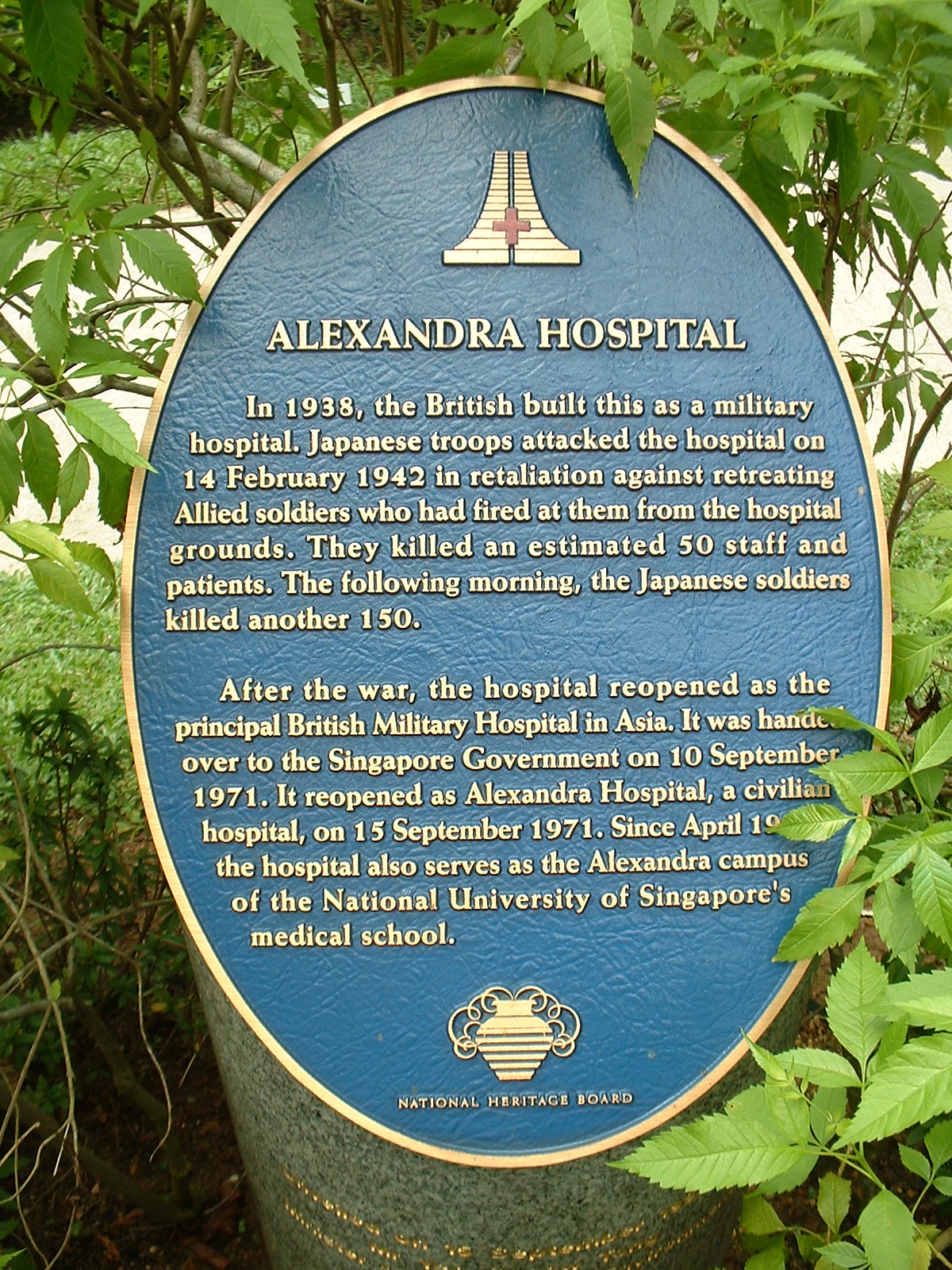
The BMH was quite an institution. It was a large red brick building built between the wars in 1938 and I suppose by modern standards very old fashioned. The wards were long and open containing twenty or more beds, It was not air-conditioned but its open nature with wide verandas and many large trees and grassed areas made it pleasantly cool and I suspect healthy, perhaps the reason for its low infection status. At the time of the Japanese occupation it incurred the most appalling incident which is described in the beautiful plaque shown here. It reads....In 1938 the British built this as a military hospital. Japanese troops attacked the hospital on the 14th of February 1942 in retaliation against retreating allied soldiers who had fired at them from the hospital grounds. They killed an estimated 50 staff and patients. The following morning the Japanese killed another 150. After the war the hospital re-opened as the principal British military hospital in Asia. In 1970 the walls of the wards remained scarred with bullet holes.
A Malay wedding
The Finnemores had a Malay house amah, (I will call her Bindi) a little unusual. Anne-Marie had developed a close friendship with her Bindi who was a very pleasant person although I sometimes heard Tom giving a bit of a grumble. I think they only had the one amah – the New Zealand army was a bit stingy in this regard. I suppose Anne-Marie's friendship with Bindi would have been much the same as Wendy's with An Chu. Wendy came to know Bindi quite well through Anne-Marie through her frequent visits and all this led to quite a unique occasion. Bindi’s sister was being married in her village – a very traditional Malay kampong, not notably hygienic by our standards – and Anne-Marie and Tom were asked to attend. Anne-Marie felt she needed the company of a friend and Bindi said that would be fine and hence Wendy and I were asked to attend.
The four of us made our way the village on a track winding through a number a rather murky looking drains and finally arrived. We were made quite a fuss of; the wedding feast was about to start and there were fifty or more Malay villagers as well as children sitting at a long table that ran parallel and close to one of the murky drains that we had been avoiding on our trip in. All were dressed in their best clothes, mostly western but some in traditional Malay dress and of course the bride and groom (by now husband and wife – the actual nuptials had occurred that morning) were seated at the head of the table on throne-like elevated chairs. The table was all but groaning under the weight of food upon it – platters of chicken that looked to me as though it could do with a little more cooking, piles of rice and hot curries (hot in taste that is, not in temperature) and all sorts of other dishes no doubt traditional Malay. We picked away at some of the food and it was all very hot and tasty (hot as I said before).
The married couple departed to their honeymoon suite, a village house of somewhat better construction than the others in the kampong; and not I presumed the home in which they would live. The object of their withdrawal we were given to understand was to consummate the marriage and I can only assume that happened although in the circumstances I think that would have been fairly difficult. They emerged later, sometime after we had all risen from the table and were standing around in the dusty village square. They were greeted with applause and they moved around looking I thought a little embarrassed. I think they were still in their traditional wedding dress, the wife was a very attractive Malay girl, probably only seventeen or eighteen years old, maybe younger, and the husband a very handsome slightly built Malay man. The afternoon was drawing to a close and we departed. I am not sure whether we met the couple personally. Wendy through Anne-Marie and Bindi had given the bride a gift of some value although I do not remember what it was,
Tac 3
In October I was scheduled to attend my Tactics 3 course at the Jungle Warfare Centre Canungra for four weeks. Tac 3 was a requirement for Staff College attendance. It was not a qualifying course; that is, it wasn’t a pass-fail course, just an attendance course – too easy! Nevertheless, I did a fair bit of swotting up on unit organisations – personnel, vehicles and weapons – down the sub-units. Tactics courses require that sort of information at your fingertips.
On the 14th October I departed Tengah airport by a Qantas 707 for Sydney (via Butterworth) where I cleared customs and then by train to Brisbane. With a few hours in Sydney to fill in before catching the overnight train to Brisbane I visited Victoria Barracks in Paddington – Ted Laker, now DAD Survey after the death of Bob Hammett, then out to Randwick, called on Jean Hammett and stayed for an hour and finally back to the city and a cab to Uncle Basil’s and Aunt Elsie’s home at Killarney Heights. Aunt Elsie was at daughter Brenda’s dress shop. Uncle Basil picked me up from there and after a light tea drove me into Central Station in comfortable time for my train to Brisbane.
I had three days to fill in in Brisbane before catching the Army bus to Canungra on the 19th. A Survey vehicle happened to be conveniently at South Brisbane interstate railway terminal and I had it take me out to the Northern Command Field Survey Unit at Gaythorne, calling on Major George Hann and a few others at the unit and then booked into the Personnel Depot for three nights accommodation. Over the next couple of days I had time to visit old friends, David and Shirley White at Taranga and my principal contact in the Lands Department Survey Office, Keith Waller. Also called on cousin Edna in her new attractive war service home at Indooroopilly for an evening with Sue and boyfriend Brian, Greg and his girlfriend and Warwick. Finally on the 19th with many others destined for Jungle Training Centre caught the Army bus, arriving mid afternoon. JTC was becoming something of an alma mater to me having had two previous memorable stints there.
At Canungra we were checked into the very comfortable Officer’s Mess, a new one since I was last there (the old one had burned down). I was allocated a room with Phil Skelton, a Signals Corps officer. Phill and I became quite good friends, a useful relationship that continued for some years. I well knew that the course would be a gentleman’s course, white linen on the tables and mess silver – even when we picnicked in the bush doing TEWTS, a time honoured method of teaching tactics. There was one other Survey Corps officer on the course who was also destined for Staff College, Frank Thorogood. By mutual agreement we gave each other a wide berth. Frank was senior to me by a few years – he was a substantive Major while I was but temporary with a year to go for substantive rank. Frank of course – being Frank – never let me forget it. Wendy has always maintained that Frank made application to attend to gazump me. Maybe – in any case we both went.
I don't recall a great deal about the course other than that it was very pleasant. On most days we went to a chosen location in the hills surrounding Canungra and fought our imaginary battles. Narratives setting the scene would be issued to students the evening before requiring an outline appreciation, possible courses of action and finally an outline plan. We worked in pairs - I can't remember who my partner was but I found I could contribute to the solution at least equal if not better than he. At about midday we would move to a nearby small park location (there are many of these in the vicinity) probably adjacent to a babbling brook where the mess staff would have set up trestle tables with mess linen and silver and a bain-marie nearby with hot food. I found all this hard to believe - a bit over the top I thought being used to survey camp fare, usually straight from the can.
At weekends we could do as we liked and I recall going to Brisbane on one occasion and visiting my cousin Edna. I recall also visiting Warwick and Joyce Paley at Macgregor where they were having a low key party to which I had been invited, possibly on the same weekend that I visited and stayed with Edna. I doubt that I would have made more than one trip to Brisbane.
It was finally time to return Singapore and I had arranged a stopover in Perth to visit my stepfather Tiger. I was a little surprised at how easily the army transport staff conformed to my need but then I found that the army contract fare to Singapore was the same whichever way one went and via Perth was quite acceptable.
Tiger had finally re-married and had sold the old home at 134 Great Eastern Highway, Belmont and moved into his new wife Beatrice’s home in one of Perth’s western suburbs. I met Tiger and as soon as I saw him I realised that he wasn’t good. He looked pasty and pale and somewhat wasted. He drove me to his home where I met Beatrice, a pleasant little woman and her sister with whom she lived whom I didn’t like at all. She was suspicious of me and not the least friendly. Tiger lived on the enclosed back veranda sleeping on a stretcher bed which for Tiger was okay – he was never one for creature comforts. He was very proud of his car, a fairly old MG Magnet; nice little fairly sporty sedan. Tiger drove instinctively. I do not recall him ever having an accident as long as I knew him. We went down to the local pub and had a couple of beers and then home again. Beatrice had cooked a simple meal and I left for my motel out near the airport soon after that with quite a few misgivings. I had noticed in their lounge room Mum’s old piano and even the oval occasional table I had made in my school woodwork class. Tiger drove me to my motel near the Perth airport and the following morning I taxied to the international terminal at Guildford for my flight to Singapore which to my surprise was Air India. Why that I had no idea but perhaps it was the only flight via Singapore on that day, in any case it was very comfortable in first class if a little shabby and all sorts of exotic Indian food was served in flight. The flight back gave me ample time to think about Tiger and his circumstance with his third wife Beatrice. She seemed very warm to him, affectionate even but my misgivings centred on her sister who was cold and brittle, very unwelcoming. Tiger was clearly far from well and I wondered how long that arrangement was going to last. In the event it was not going to be for long but that I must let unfold.
Wendy's trip to Ceylon (Sri Lanka)
Now what had Wendy been up to during my sojourn at Canungra; certainly not letting the grass grow under her feet. At quite short notice she had been able to arrange an indulgence flight to Colombo, Ceylon (Wendy believes that I did this before leaving for Tac3 but I do not recall that) this time on a C130 Hercules on what was commonly known as the milk run to the British military base at Gan in the Maldive Islands in the middle of the Indian Ocean. Wendy's original intention was to travel with Marion and Alan Bachelor but Alan who had been on a seconded position with the British Headquarters had been posted back to Aust Arm and immediately became ineligible for indulgence flights with the RAF5. The Hercules stopped at Colombo to refuel both going and returning and as always the RAF was more than willing to take indulgence passengers. Wendy travelled with a pair of whingeing Poms (WPs) who apparently complained incessantly about every aspect of the trip no doubt expecting to get the same creature comforts on a C130 with its red netting seating down either side leaving space in the centre for cargo and baggage as one would expect on a VC10 or Andover. They were civilians I think, not British army people who might have been more tolerant of the discomforts of a C130.
Wendy (and perhaps the WPs) stayed at an old British Raj hotel on the water front called the Galle Face - why that she does not recall. Time in Ceylon before the return of the Hercules from Gan was three days. On day one Wendy spent her time looking around Colombo, partly on foot but also by taxi (the traditional South East Asian cabs - fairly old black and yellow Morris Oxfords). She and the two WPs booked a cab to take them to Kandy (the old capital of Ceylon) more or less central on the island. Ceylon is very mountainous and very verdant and beautiful with terraced paddy fields up the slopes of the hills Kandy has many old buildings and temples one of which is famous as the Temple of the Tooth Relic (said to be Buddha’s tooth and a very holy place). The WPs shared the taxi to Kandy meeting the fare fifty-fifty despite their being two of them and one of Wendy. Nevertheless Wendy controlled her annoyance and together they saw all the important things in Kandy. The return trip in the old Morris Oxford taxi was mostly in heavy rain down a fairly precarious road tending to flood in some low lying areas. On the way Wendy spotted a traditional field worker ploughing a paddock with an Ox pulling a single blade plough. She stopped the taxi and took a photo whereupon the plougher dropped the plough and ran across to the taxi with his hand out obviously looking for a payment. Wendy gave him five shillings in Ceylonese currency and he seemed well satisfied. The two WPs were less than happy at the stop but were reluctant to complain openly. Of course all were anxious to get back to Colombo and beat any further flooding - they had a Hercules to catch the next day. The third day was a day of relaxation, bit of shopping and getting ready for the return flight in the Hercules. The two WPs were both smokers and to do them a favour Wendy bought a carton of cigarettes for them (travellers only allowed one carton each) expecting them to pay her. They accepted it as a gift no doubt for services rendered.
The trip back wasn't uneventful. Apparently there was a problem with the cabin pressure system and the flight to Singapore was at about 2000 feet above the ocean with the loadmaster spending his time tapping valves and pipes (which abound in a Hercules all over the walls and bulk heads) in a most disconcerting manner. Also on the Hercules were the Lockies (also Aussie) who had been somewhere, perhaps Gan on an earlier milk run.
Hong Kong
Wendy, Sarah and I had a further and last indulgence trip, this time to Hong Kong in December, departing the 5th and returning the 10th courtesy the Royal Air Force. This time it was in a VC10, A very nice aircraft from British Aerospace used for VIP purposes and families but it wasn't a great commercial success, possibly the last of the British built airliners before the US giants took over. It had the three engine combination at the tail similar to the Boeing 727 and from a passenger point of view very quiet. As with all RAF passenger seating configurations, the seats all faced to the rear. We had booked into the YWCA accommodation in Kowloon facing the waterfront and only a short walk down to the well known Star Ferry terminal connecting Kowloon with Hong Kong Island.
We had with us quite a remarkable publication produced by the Presbyterian Church for British service personnel wishing to visit Hong Kong or who might be stationed there. It gave details of all sorts of trips one could do through Hong Kong Island, Kowloon and the New Territories – all by public transport. It showed routes, bus numbers, stop numbers, which stops one should alight from to visit a certain market or location. It was of course quite a cheap way to see Hong Kong. It was a remarkable book and I wondered at the work it must have taken to compile. It was foolscap size with roneoed pages, nothing flash. In our week in Hong Kong we travelled extensively visiting all the well known spots, Aberdeen, Repulse Bay, the border of the New Territories with Red China (very forbidding) and took the cable car to the top of Victoria Peak at night and were dazzled by the lights of the city below us; Wendy was keen to shop and I think we bought a few small things. I recall her attempting to bargain down a price for something and the proprietor getting quite cranky, bordering on abusive – we left with the impression that Hong Kong was not Singapore. Wendy was interested in buying a long pearl necklace. We had been advised that rather than go to one of the many dealers we should use the British commissariat where one would have more certainty in the quality of the purchase with supporting certificates. I think we had to have some sort of entree device which Wendy had arranged through a friend in Singapore. Anyhow, the purchase was successfully made.
We booked in to dinner on one of the floating restaurants, quite large and this one quite famous being the setting of a well known Hollywood movie – Love is a Many Splendid Thing. The special claim was that one could choose a live lobster from lobsters in glass tanks and that lobster would be specially cooked just for you. What nonsense; we were served with some sort of Chinese lobster concoction that came from a big cooking pot. Well, it was all part of the Hong Kong experience.
The booking arrangements for our indulgence trip back to Singapore became confused and I was advised that we could be loaded onto a C130 Hercules a day or two after our planned departure date. I never knew what the problem was, however, I wasn’t too disconcerted. In any case the original schedule and aircraft was reconfirmed.
Our trip back to Singapore was on the VC10. Looking out of the window at one point I realised we were flying over the southern end of Vietnam. There it was down below us – Phuoc Tuy, The Vung Tau peninsula the Saigon River. I pointed it out to Wendy. There were puffs of white smoke rising from the jungle. It looked like a B52 air strike under way. All very sobering – the war was still continuing while we were experiencing the pleasures of Hong Kong. We finally landed at Changi and returned to our routine whatever that was the next day.
The end of our time in Singapore and the demise of 84 Survey Squadron RE
In Singapore it was back to normal routine. We had only a few days before our return to Australia and Christmas in between. My diary simply records ‘filling in time’. Wendy who had been away for only four days had a great welcome from Sarah who had been staying with Rosemary and Les Francis, an Australian couple at Aust Arm with a similar aged daughter and with whom we had developed a close friendship over the preceding months. Wendy having chosen to spend a day or two with Sarah and An Chu was soon back into her activities, secretary of the A & NZ Association and the Tampines home, her golf and maybe tennis although I think the Finnimores may have returned to New Zealand while I was at Tac 3.
I returned to my work (if you could call it that) as Deputy Assistant Director of Survey, HQ FARELF - brilliant title - at that stage with the British run down a job with little enough to do. Major Mike Richards had moved into Survey Office as Assistant Director of Survey with promotion to Lieutenant Colonel replacing Tommy Tomlinson who had returned to UK. I had previously found Mike Richards in 84 Squadron fairly uncommunicative although I think he was probably a better OC than his predecessor Tom Farmer. In the Survey Office I was much closer to him; effectively his 2IC and we often had long talks about all sorts of general, mostly military matters. Mike made a couple of trips to Hong Kong – the small survey element there was to continue providing direct support to the remaining British Forces in Hong Kong. During those times I was nominally in charge of the small remaining staff, a couple of NCOs and two of three civilians.
A significant event occurred on the 2nd December; that was the official handover of 84 Survey Squadron and the Dover Road Barracks to the Singapore Defence Force complete with equipment less the two worn out Countess printing presses that had been dismantled and returned to UK. The unit as handed over was to be retained as a mapping survey unit for the Singapore Defence Force and guess who the OC was to be - none other than National Service Lieutenant Yuen See Wah who was looking ill at ease. The ceremony took place over the old slotted template table in Tech Control at the Squadron. There were at least ten officials from the Singapore Government including Rameswarren the Chief Surveyor of Singapore whom I had met early in my time. The Brits were represented by the senior property manager from FARELF and a Brigadier from somewhere and of course Mike Richards. I was there as an observer, not much more although I think Yuen See Wah was pleased enough to see me and I lingered on afterwards talking to him and Rameswarren. The handover was formalised by the passing of a single Singapore dollar across the table from the Singaporean delegation to the British property man and the signing of a couple of pre-prepared papers. I guess the Singapore dollar was better than the traditional peppercorn.
Thereafter it was a case of filling in time till Christmas. Of course there were a few pre-Christmas events – I recall a fairly grandiose party at the Australian High Commission put on by the A&NZ Association that looked like lingering on for a while. The New Zealanders were for some reason staying on and had taken over Tyersall Park and I am not sure about when the Aussies were leaving Nee Soon. The RAAF base remained at Butterworth with their Mirage jet fighters with a company of infantry for airfield protection - for how long I am not sure. The Malaysians seemed happy enough with that arrangement.
Wendy and I were intent on planning our trip back to Australia. We were to return via Perth where we planned to spend some time with Tiger and also pick up our Mercedes Benz which we had shipped there as indulgence freight on a British RN fleet oiler vessel. Why it should be making the trip to Fremantle I have no idea, however my application for indulgence freight was accepted and for twelve pounds Sterling I avoided paying the commercial freight charge of several hundred Australian dollars. Thinking back on all of our indulgences courtesy the RAF, the RN and not to mention having all our furniture returned on the HMAS Jeparit (albeit, via Vietnam) we did remarkably well.
Looking back through an old file I can see that our departure from Singapore was far from easy. There are numerous letters involving the transfer of bank accounts, readjustment of bank accounts, drawing money forward from Australia (Bank of NSW) to pay off our loan for the car from the Bank of Hong Kong and Shanghai (which for some reason was delayed to my embarrassment), rearranging insurance and then organising a place to live at Queenscliff. Finally it was all resolved – loan paid off and we were free to depart Singapore.
There were many farewells from Singapore. Most of our British friends had long since departed. I think the Thomas’s were still there but there weren't many others. Our parting with An Chu was sad with a few tears. Wendy had given An Chu a lot of help in overcoming her health problems – if indeed they could ever be entirely overcome but at least she had the direction to take in the future. Health services in Singapore for nationals were free of charge. We kept in touch with An Chu for a number of years and we would get the occasional card back. Her family of five grew into fine and successful young men so I believe.
Puss had become very morose at our impending departure and finally developed some sort of cat disease and had to be put down. Perhaps that was the best outcome because with us leaving he would have probably returned to the street or the kampong at the end of University Road from whence he came. There was no way we could have given him away – everyone was leaving and Chinese people have little regard for cats.
Staff College was due to commence in the 25th January 1970 and overseas officers were advised to be in Melbourne between the 11th and 15th January. My return to Australia well fitted that timing – we were scheduled to depart Singapore on the 5th January arriving in Perth the following morning
A flight home
Our departure from Singapore was delayed two Looking back through an old file I can see that our departure from Singapore was far from easy. There are numerous letters involving the transfer of bank accounts, readjustment of bank accounts, drawing money forward from Australia (Bank of NSW) to pay off our loan for the car from the Bank of Hong Kong and Shanghai (which for some reason was delayed to my embarrassment), rearranging insurance and then organising a place to live at Queenscliff. Finally it was all resolved – loan paid off and we were free to depart Singapore.
days caused by a snow storm that closed London’s Heathrow airport. We had checked out of 94 University Road on the 4th January 1970 going through the usual check out procedures, a handover stock take down to the very last teaspoon (I don’t think we had lost any) and countless other small items. My ‘Marching Out Inspection Report’ seems to list numerous items that were inspected but any wear or damage was written off as ‘fair wear and tear’ and we were not charged for anything. We were put up for the gap period in the Equatorial Hotel in Bukit Timah Road; a newish middle sized hotel that certainly was no Goodwood. Unfortunately, perhaps due to the air conditioning that I always found in the tropics to make a fairly dank atmosphere, Wendy developed a chest infection that was trending towards bronchial pneumonia and that had the potential to jeopardise our departure.
Having reached this point in our delayed departure from Singapore we were anxious to board our flight and be off. Were we flying Qantas? – I am not sure but the flight to Perth was via Jakarta. The Army Movements Warrant Officer was very helpful with our dozen or more pieces of baggage (that was not too abnormal for families returning home after two years). All were checked in and Wendy and I were sitting and waiting in the departures section of the airport with half an hour to fill in. I idly perused the handful of baggage reclaim chits and wondered vaguely why they were all marked ‘Jakarta’ and reasoned that was probably because our flight was via Jakarta. Wendy being a little sharper was less than convinced so I went back to the check-in clerk and questioned the fact that Jakarta was shown on all of our baggage reclaim chits. He was nonplussed but in typical oriental fashion didn’t want to admit anything. So I asked to see the airport manager or similar. An airport official finally arrived and confirmed that our baggage would be off-loaded at Jakarta. I showed him our tickets that clearly gave our destination as Perth. He said he would see what he could do (not admitting fault of course). Our time was rapidly running out. Wendy (still not at all well) was about to throw herself in front of the aircraft to stop it from taking off. I think her evident concern injected some sense of urgency into the airport official. He finally gave me an authority – a piece of paper with an official stamp upon it that I was to show to the Qantas cabin staff that would allow me to leave the plane at Jakarta and identify each of our baggage pieces as they were unloaded and then re-labelled and re-loaded. I was not to leave the tarmac. We finally boarded the Qantas 707 for an uneasy flight to Jakarta although soon after take-off the head cabin steward spoke to me and confirmed the arrangement. To disembark at Jakarta and remain on the tarmac was very irregular. It was quite dark when we touched down at Jakarta – very few lights on either at the airport or as far as I could see in the city. A lot of baggage was taken off and I was appalled at the way it was handled – literally being thrown from the hold of the 707. Somehow I identified each of our pieces; they were re-labelled and returned to the aircraft hold. I re-boarded and we continued to Perth arriving in the early morning.
Sad days in Perth
Our arrival was without incident – we had had enough ‘incidents’ in our departure from Singapore. We booked into a fairly nice motel on Great Eastern Highway somewhere around Belmont. There were many memories there for me. The old Sandringham pub was still there but rebuilt in modern style – pity, it had lost its charm! Wendy still had her heavy chest and was not at all well. Sarah had slept on the flight from Jakarta and was well rested.
I was due at Staff College Queenscliff on the 25th January 1971 leaving time in Perth to catch up with Tiger and collect our car, have it registered in Western Australia and take out RAC membership. There were other formalities concerning the importation of a car but these were fairly quickly resolved. From Singapore I had appointed the RAC WA to be my importing agent and they were very helpful and I remember them commenting that they had never seen a car landed on the wharf at Fremantle with such care. We noted that it had the odd splash of battle ship grey on the side of the car. I guessed that the ship had been having the deck repainted on the five day voyage to Fremantle.
The first thing I wanted to do was to phone Tiger and arrange a visit and or meeting elsewhere if that was more appropriate. I tried a couple of calls during the morning to Beatrice’s home but the phone wasn’t answering. Wendy had opted to stay in our motel room. We may have called for a doctor – I have a vague memory that I did but I am not sure. I think Sarah probably stayed with me as I went about processing the release of the car. It didn’t take too long. The RAC WA provided provisional number plates that were good for a few days until I arranged full registration. The situation that generally applied in Australia at the time was that once you were resident in another State you were bound to re-register in the new State. While the police were not unduly concerned about that the insurance companies were and failure to do so could lead to a problem in the event of an accident. All of this ate up the morning until mid afternoon and by then we had our car and it was all plain sailing.
I suppose with Tiger I had sort of assumed he was out somewhere but I didn’t think too much about it. I was intent on getting our wheels so that we could have the flexibility of visiting and perhaps showing Wendy some of the sights of Perth and the Swan River. Nevertheless, I felt a degree of unease, but then our departure had been delayed some days so there may have been confusion on our final arrival.
Mid afternoon I finally got through to Beatrice’s home. I think it was her sister who answered. Tiger, or Cyril as they preferred to call him, had died a few days earlier. It was during the time we were at the Equatorial Hotel and they had apparently tried to contact me by telegram at our University Road address (so they said). Tiger’s funeral had been that morning at Karrakatta. There had been no wake. I was floored absolutely. The conversation with Beatrice’s sister was short and to the point. Maybe I said we would visit the next day but if I did it produced no welcoming response. We spent the rest of the afternoon at the motel – may have taken Wendy and Sarah for a drive around the area. My old home at 134 great Eastern Highway was only a short distance away.
I am not sure what the sequence of events was that followed. Wendy had a wedding present in our baggage – a Willow pattern table cloth with napkins embroidered in traditional blue and I think it may have been mid afternoon when we finally drove to Beatrice’s address. Our arrival was regarded with suspicion. Beatrice sat in the background and whatever discussion took place was conducted by the sister. We didn’t stay long and returned to our motel.
The next morning I called on my old home at 134 Great Eastern Highway introducing myself to the new owners. Although our home looked pretty good from the front is had became quite shabby internally. The new owners were nice people and had great plans for it. They told me that there was a tea chest of stuff in the back shed; the one Tiger had built out of material flogged from the railways in 1955. Sure enough it was and it was full of old memorabilia, photos of my father’s family and lots of other things. I had the box taken around to my old mate Jim McLaughlin’s home in a nearby suburb, High Wycombe – Jim and Beruta were expecting me – and carefully unloaded it sorting out what I wanted to keep with all the rubbish, old newspapers and similar into the incinerator. Of course we talked of old times and Beruta prepared a nice lunch I met Jim’s three children, Robert, an interesting and highly intelligent young fellow and the two girls Catherine and Susan. Jim took Wendy and me to his mother’s home in a retirement village at Victoria Park – Swan Cottages. Mrs Mac was just the same, a wonderful Scottish lady but at that stage deaf as a post. We had dinner with Jim and Beruta that evening.
It was getting close to our departure day for Victoria and Staff College across the Eyre Highway but I needed to visit my Aunty Thora and Uncle Don Coverley. They had not long before bought a property in the Upper Swan valley on which they agisted a few horses but more than that they agisted their very successful race horse ‘Sweet Mystery’. Aunty Thora was certainly my favourite aunt and Uncle Don the strong silent type, some twenty years older than Thora had been remarkably successful both as a business man and in the racing industry. Wendy, Sarah and I arrived at their home mid morning and we had a very pleasant few hours with them. They knew of Tiger’s death but had no idea of where I was at the time. They also knew of Tiger’s re-marriage to Beatrice but had not seen him for many years, probably not since the death of my mother in 1955. Wendy and Thora got on famously as did Sarah with both. Uncle Don had always had a rapport with small children and of course with his own daughter Robin who was two years younger than I.
Aunty Thora was aware of the sale of our home at 134 Great Eastern Highway and believed that should have been a part beneficiary from the proceeds of the sale and I should look into the matter. Tiger had been married to Beatrice for less than a year, although they had probably been together for somewhat longer, and Thora knew that at the time of its building in the early 1950s Mum had put her little nest egg into its construction, probably about eight hundred pounds. To my mind all that was past history and well left alone but with Wendy’s encouragement and the thought of Beatrice’s unpleasant sister I visited the bank manager (Commonwealth) in Victoria Park that afternoon. I recalled also many years back, at the time of my mother’s death Tiger telling me that should 134 ever be sold I would benefit from it. The bank manager was quite a pleasant fellow and treated me kindly enough. He was well aware of the sale of 134 and Tiger’s death – had already been contacted by Beatrice (or more probably her sister). 134 had sold for $18,000, its value being mostly due to its riverside location and Tiger had died intestate, without a will. It was automatic that the money from the sale would go to his wife and there was no way that that could be contested, certainly by a stepson who had already succeeded in his own life. I left feeling a little like an interloper. We were to leave the next morning on our long car trip across the Eyre Highway, estimating that it would take two overnights and three days of driving.
Tiger’s ashes had been simply scattered in one of the gardens in the very beautiful and extensive Karrakatta cemetery. There was no memorial or anything to indicate that he once strode this land – that he called Australia home. It was to be many years, thirty two in fact, before I corrected this deficiency.
Across the Eyre Highway
We set out the next day about 9.00am with the intent of reaching Kalgoorlie by nightfall; also with the intention of having a look around the gold city of Australia either that same day or the following morning. The Great Eastern Highway to Kalgoorlie, some 600 kilometres had been upgraded considerably since my previous trip in 1958, still two lanes but these were wide and comfortable. Wendy was still far from well but certainly improved since Singapore. It was very hot in mid-summer and my first Benz was not air-conditioned. We drove through Coolgardie and onto Kalgoorlie arriving late afternoon, booked into a central motel and then Sarah and I took a leg stretching walk past the statue of Paddy Hannan who first discovered gold to uncover the richest gold reef in the world – the Golden Mile. We set out the following morning, first taking a drive around the city, found Kalgoorlie’s famous bordellos then south to Kambalda past the massive open cut mines and their mountains of spoil, the get- rich-quick Poseidon nickel mines and onto Norseman where I observed the Australia flag over the post office flying up-side-down. I called in and advised them of that mishap to receive a blank look although stopping to take a little refreshment in a nearby park I noticed a young fellow emerge, take a look, scratch his head then lowered the flag and put it up again, this time right way up.
At Norseman we set out east on the Eyre Highway intending to reach Cockelbiddy and the motel there by nightfall. The Highway had been sealed and surfaced into a broad two lane high speed road as far as the South Australian border. I boasted the longest straight stretch of road in Australia, 146 kilometres, somewhat less than the longest straight stretch of rail track on the Trans-Continental Railway across the Nullarbor to the north – 478 kilometres. Cockelbidddy was the only motel stop on the Eyre Highway short of Ceduna although there may be others these days. We had refuelled at Norseman hoping to avoid refuelling at one of the drum points along the way and managed to make the distance with little left in the tank.
We reached Cockelbiddie in the late afternoon and checked in to the recently built motel and enjoyed its hot salt water showers and very brackish water from its artesian bore, had a very adequate meal and collapsed onto our beds soon after. Wendy was feeling much better – it seemed as though driving into the hot sun had helped her chest infection. Sarah had taken to the long days of driving remarkably well. Our target the next day was to be Port Augusta, a distance of 1217 kilometres, by far the longest stretch of our journey so far in a day and especially trying since in crossing the South Australian border we were onto an unsealed dusty, stony road until we reached Ceduna. I can’t be sure that we reached Port Augusta and may have overnighted in a motel short of there but there were not many to be found other than at Ceduna so I assume we arrived fairly late at the Port.
Intending to avoid Adelaide our objective was to reach Melbourne by the shortest possible route where we were to spend a day with old close friends Myrie and Kevin Moody. From memory and map perusal I believe we travelled from Port Augusta to Narracoote then Mount Gambier, Hamilton Geelong to Melbourne and the western suburb of East Keilor where Myrie and Kevin lived, a distance of 1240 kms. In all the distance we travelled over those four days with three overnights from Perth to Melbourne was 3400 kilometres, quite a distance for our little girl Sarah. I remember she amused herself at that time ‘doing her very tolerant Mum’s hair.
I refuse to say that we drove across the Nullarbor as so many motorists claim. The Eyre Highway traverses south of the Nullarbor on the coastal plain which is certainly flat but does have almost imperceptible undulations. The Nullarbor Plain is centimetre flat and so very red.
No doubt we had a pleasant night with Kevin and Myrie and I certainly know that Sarah and Peter Moody forged a friendship that lasted the years, invariably getting up to all sorts of mischief whenever they were together. I was due at Staff College on the 25th January 1971. We may have had an extra day in Melbourne – I had uniforms to get out of mothballs and freshen up. Thankfully it was summer time and I think I had sufficient summer polyester trousers and shirts etcetera that I had with me in Singapore to be sufficiently well uniformed to front up.
PHOTO GALLERY
Out and About in Singapore in 1969/70
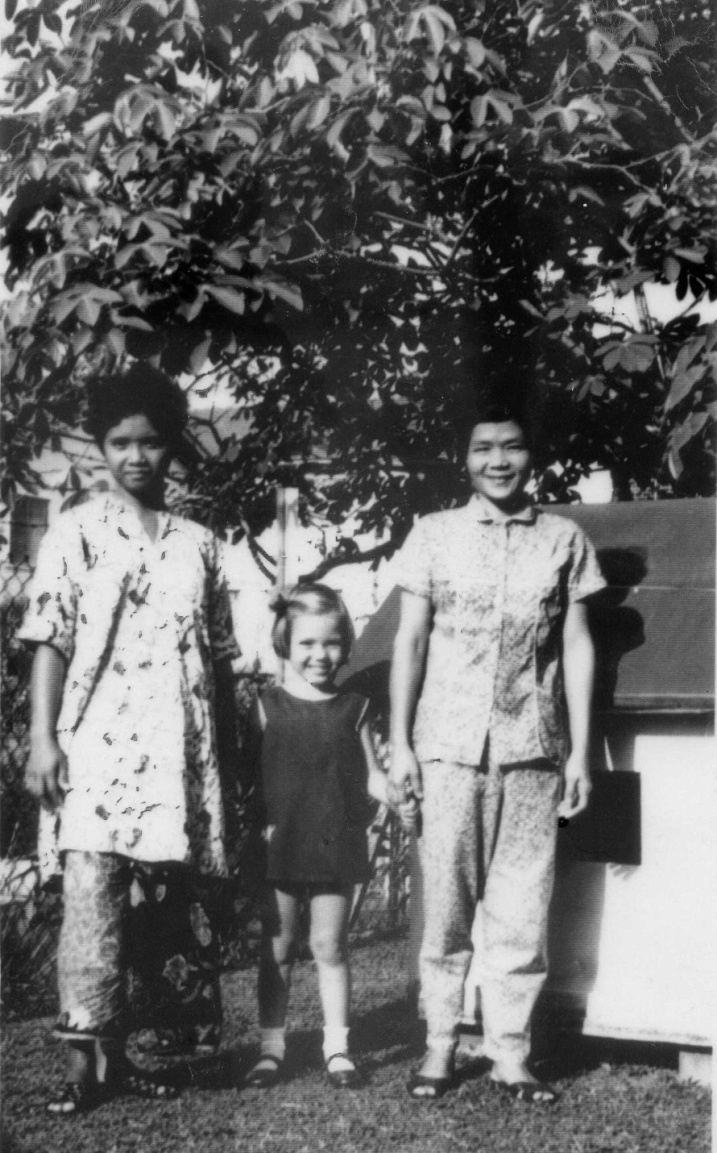
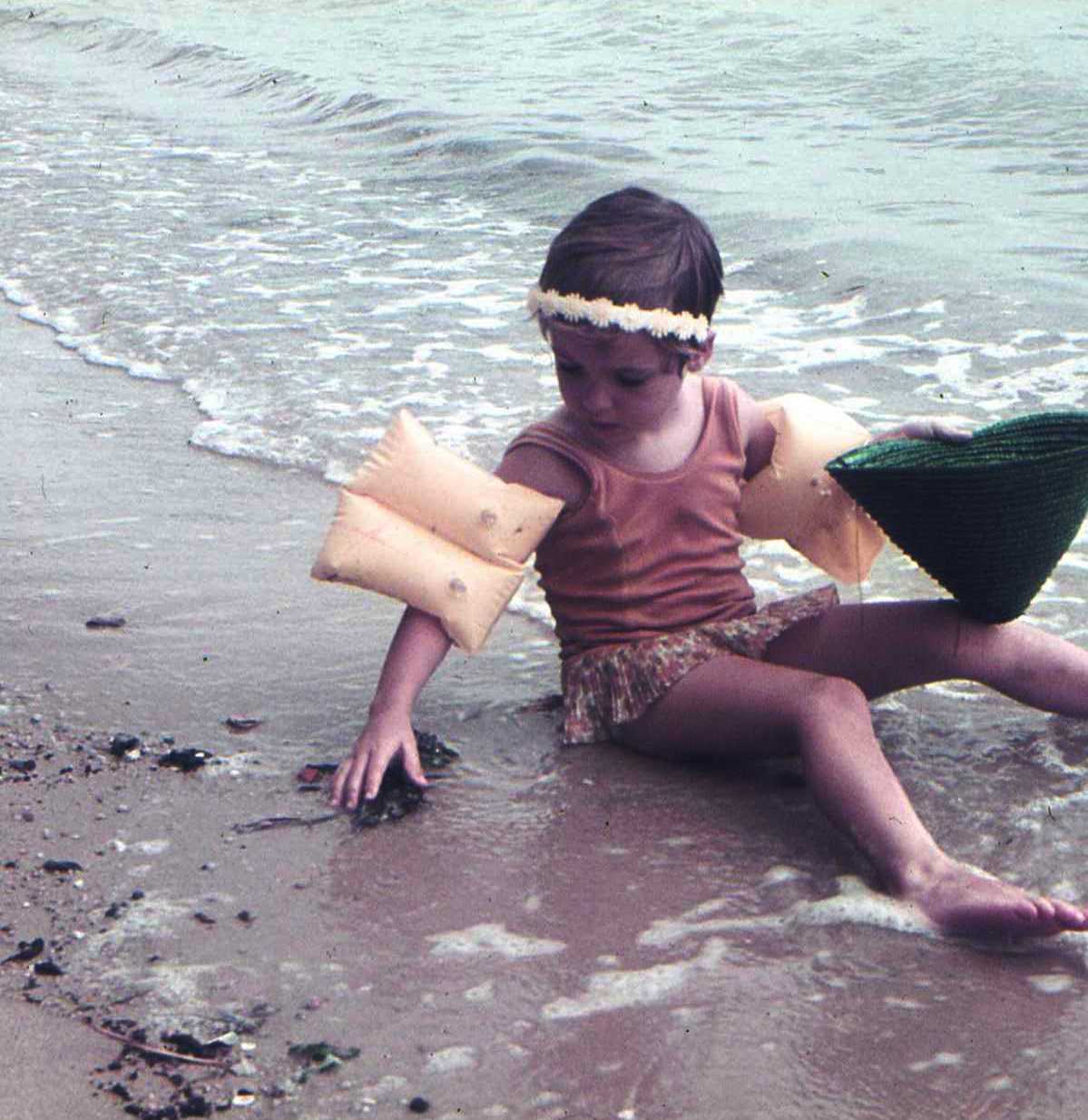
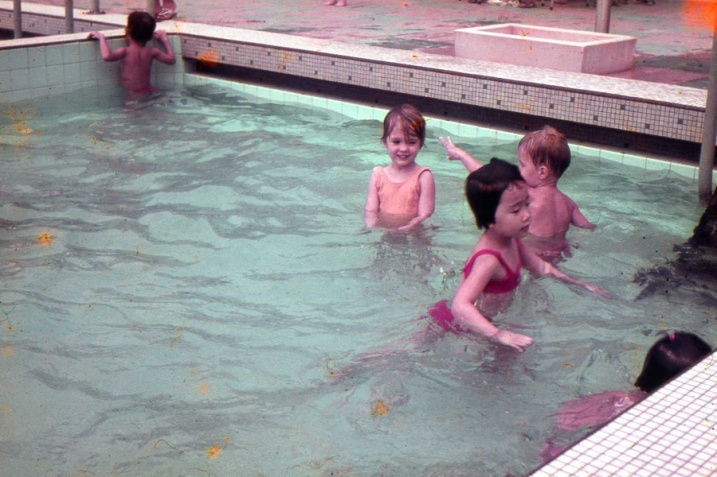
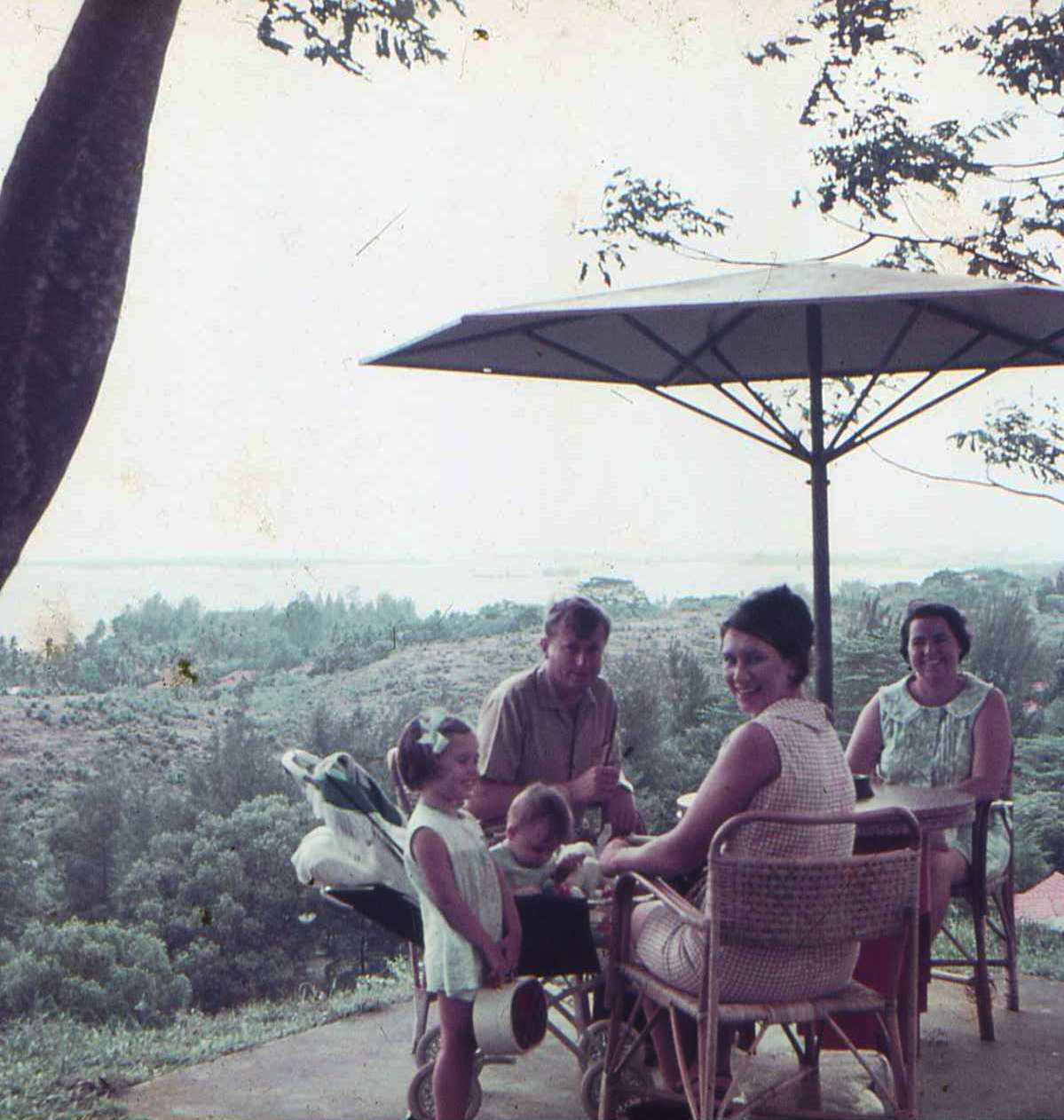
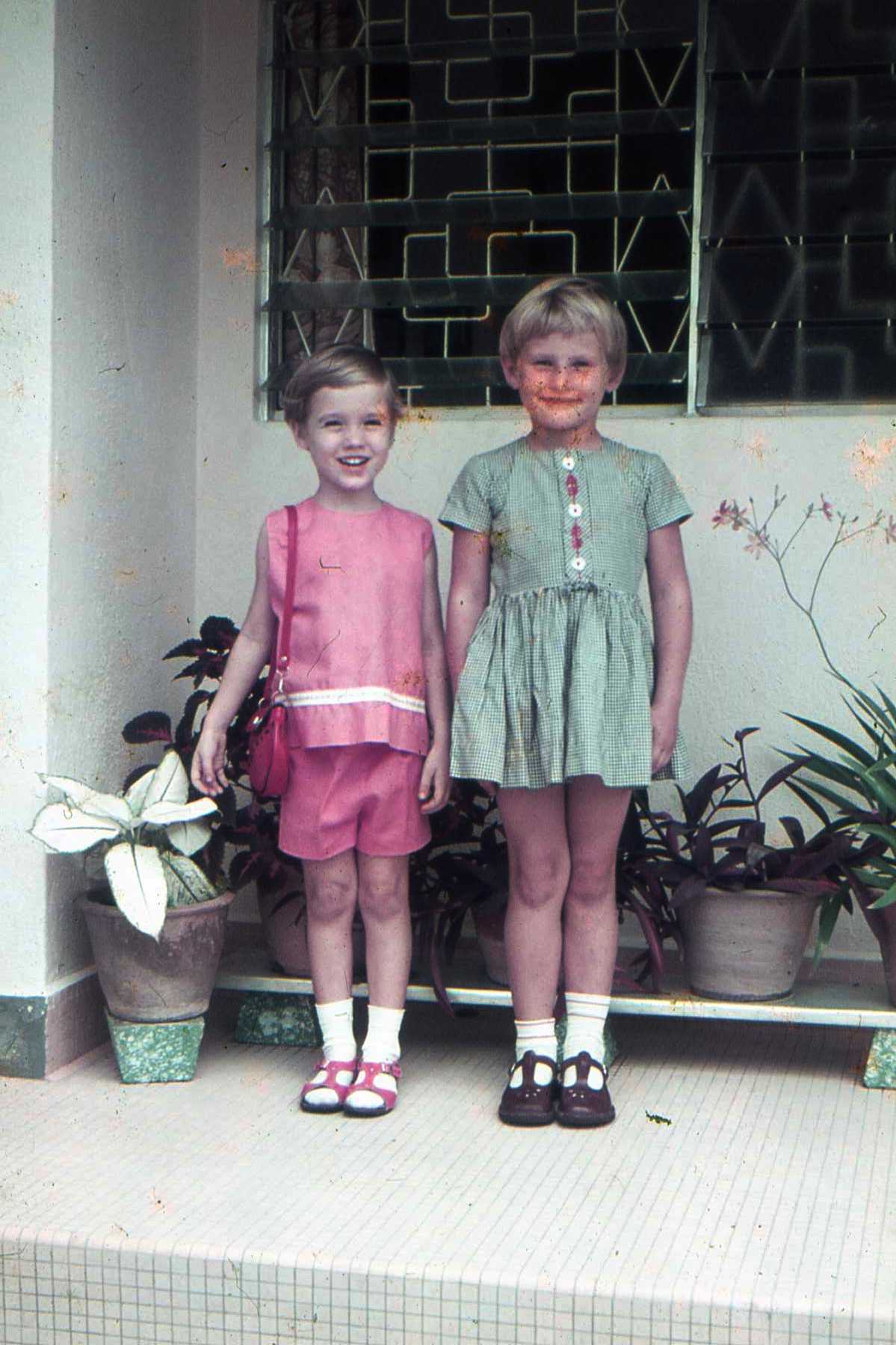
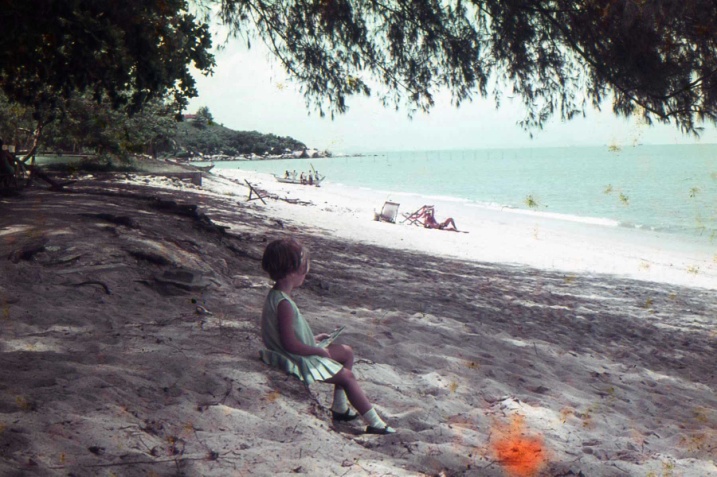
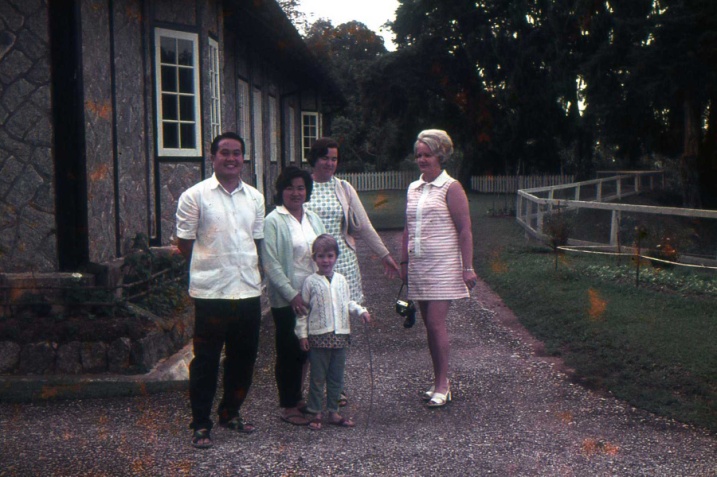
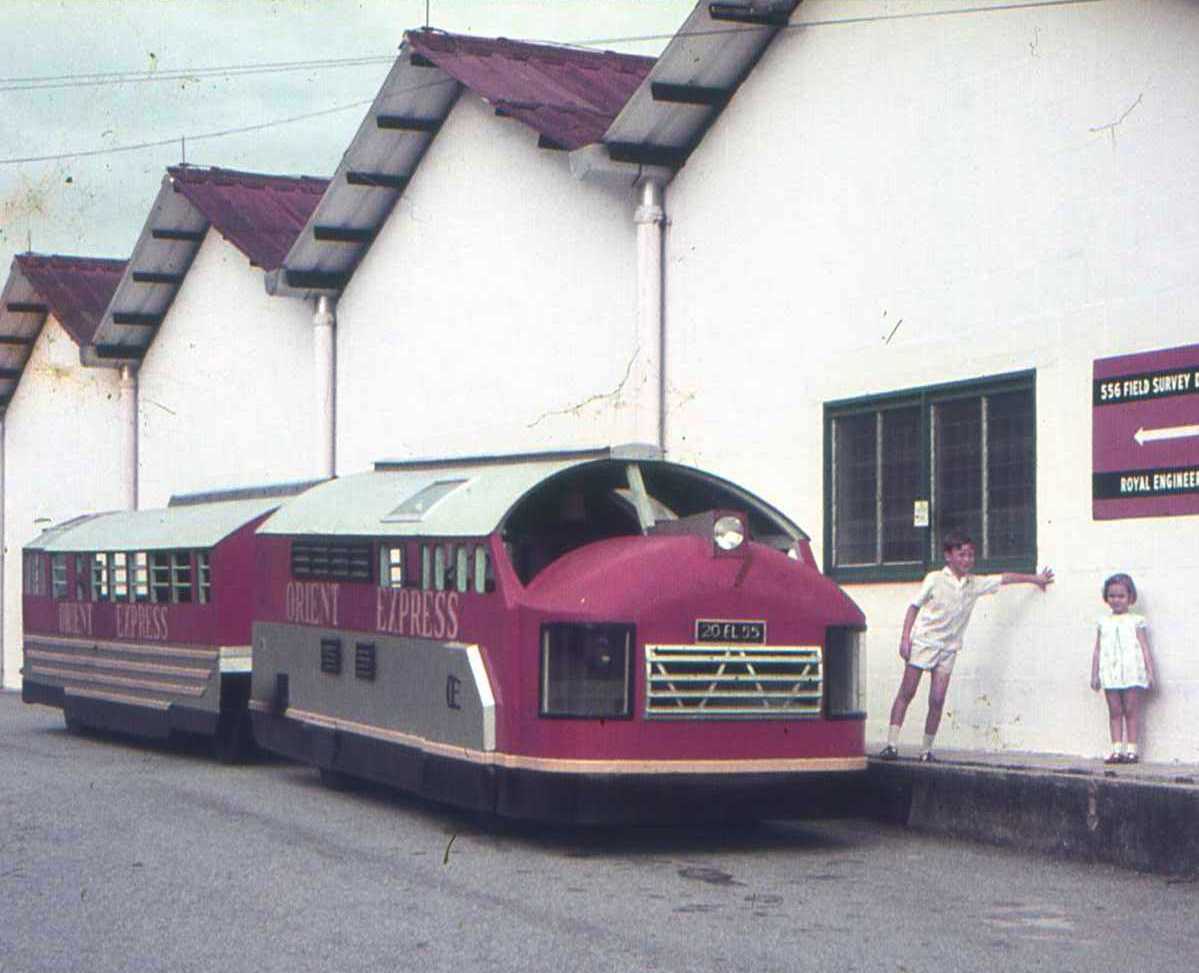
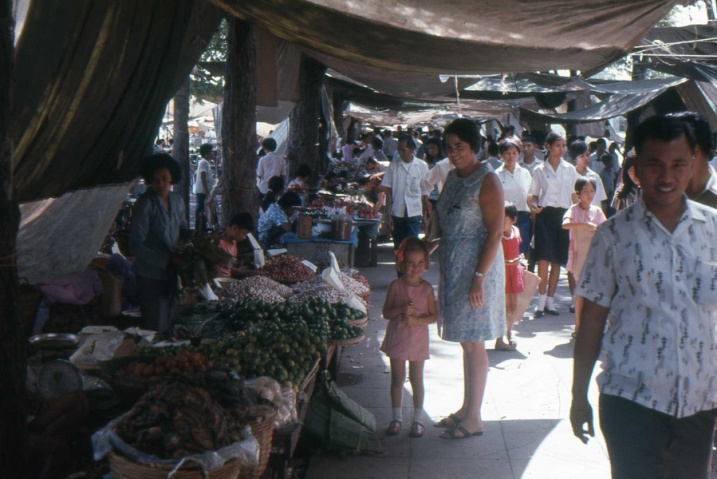
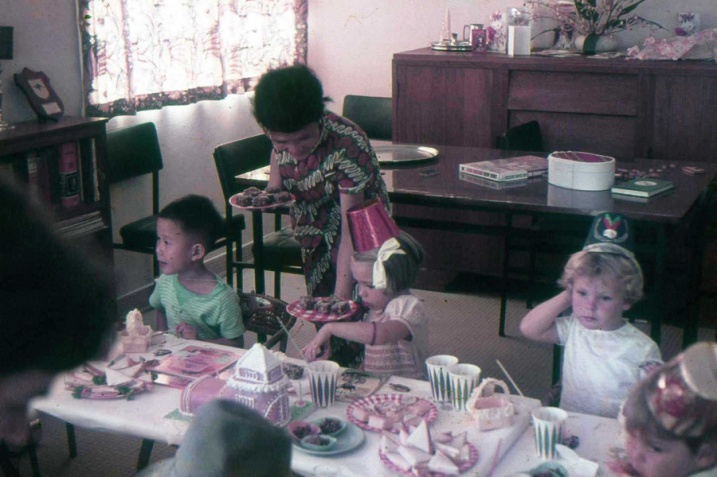
Old China Town (Mr Lim’s Walking Tour)
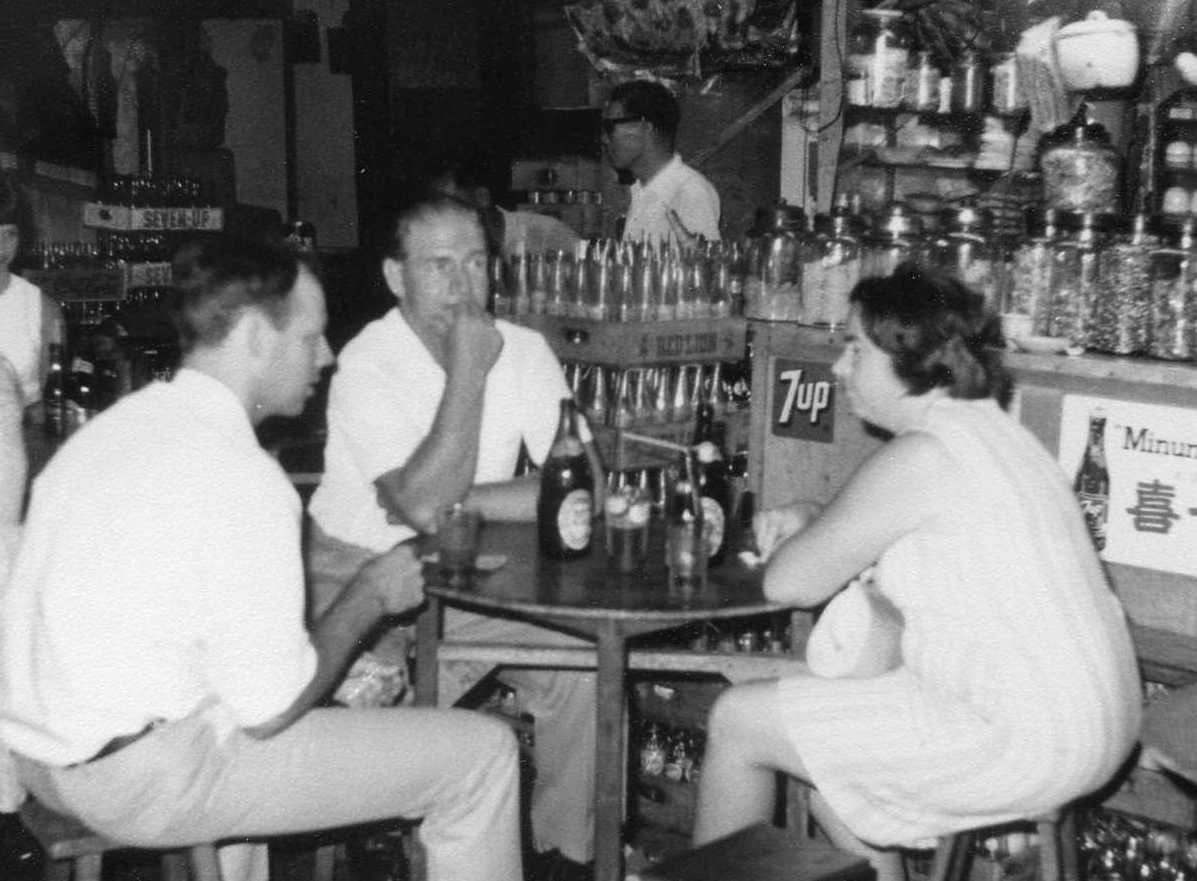
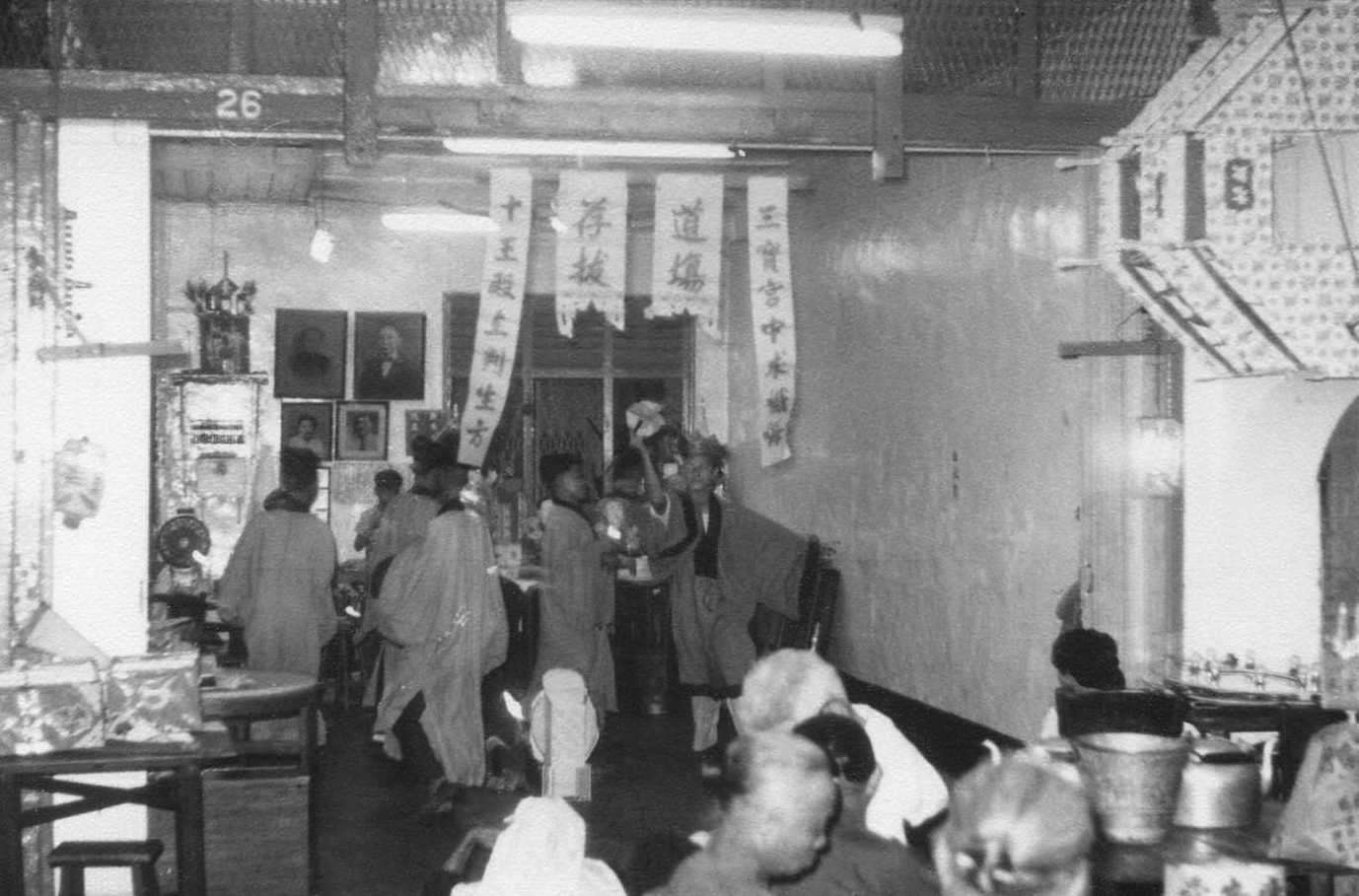
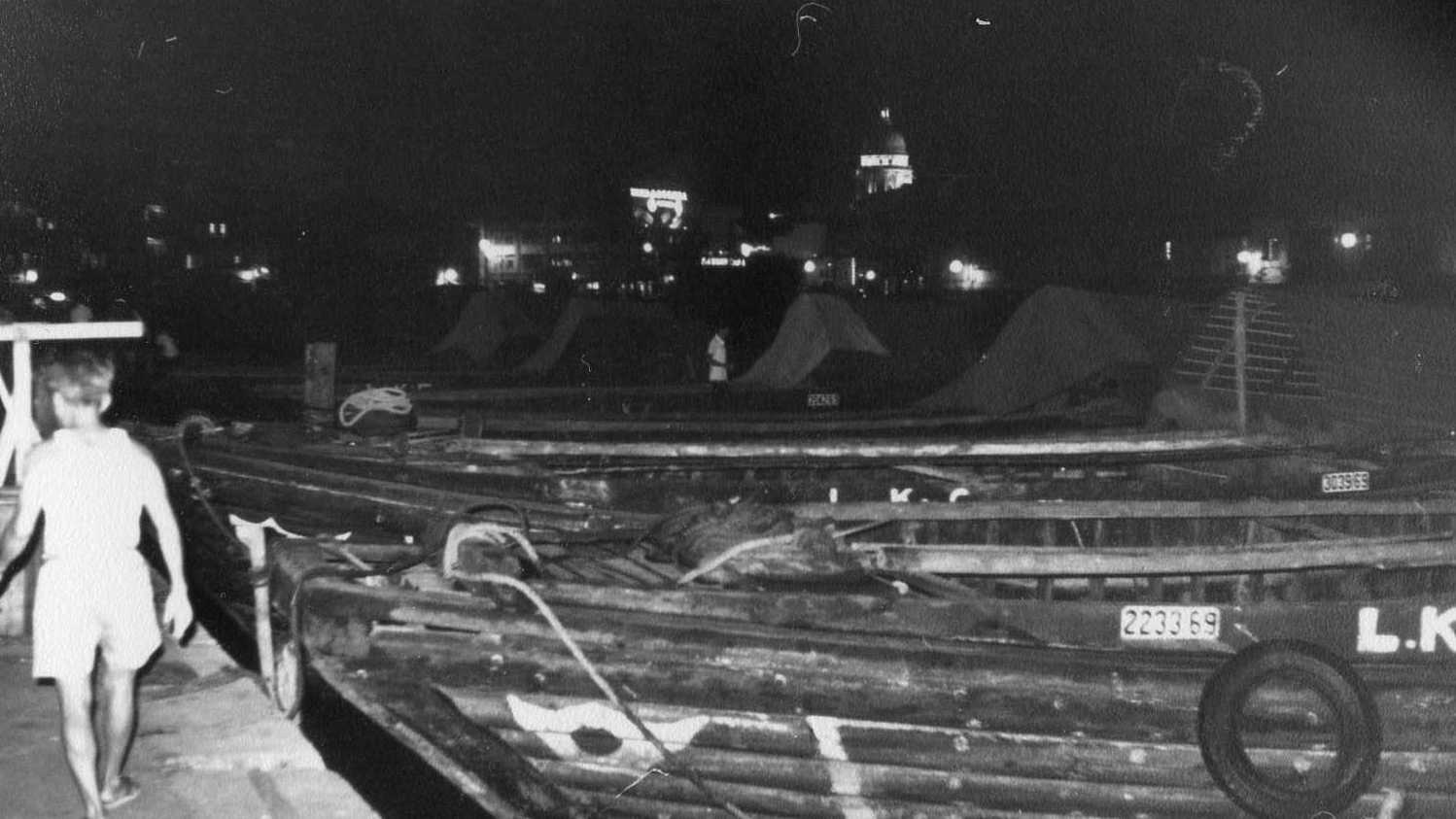
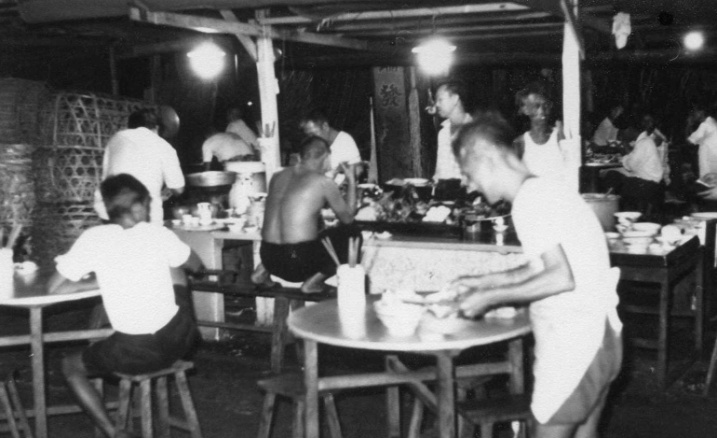
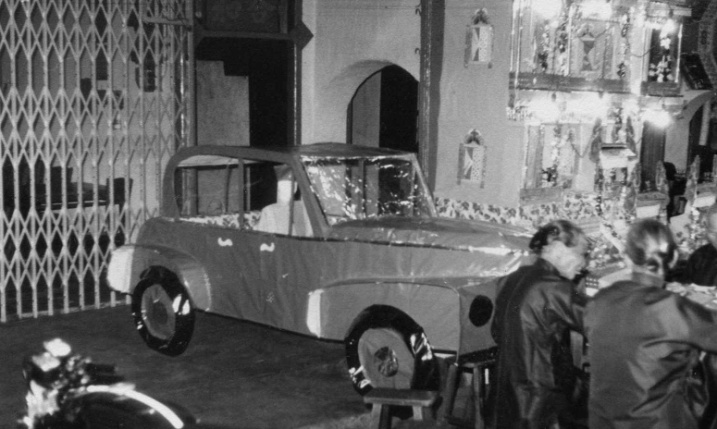
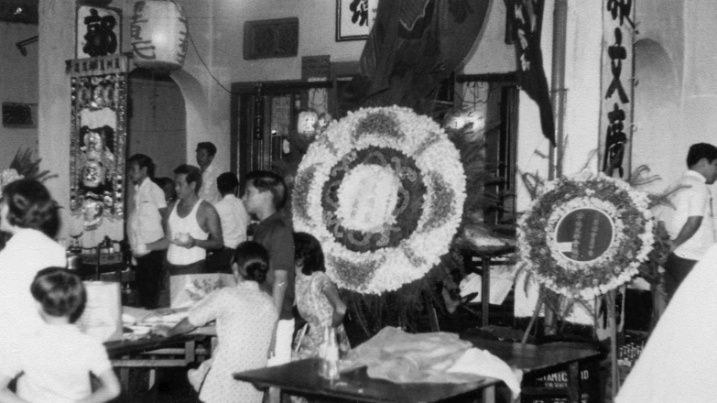
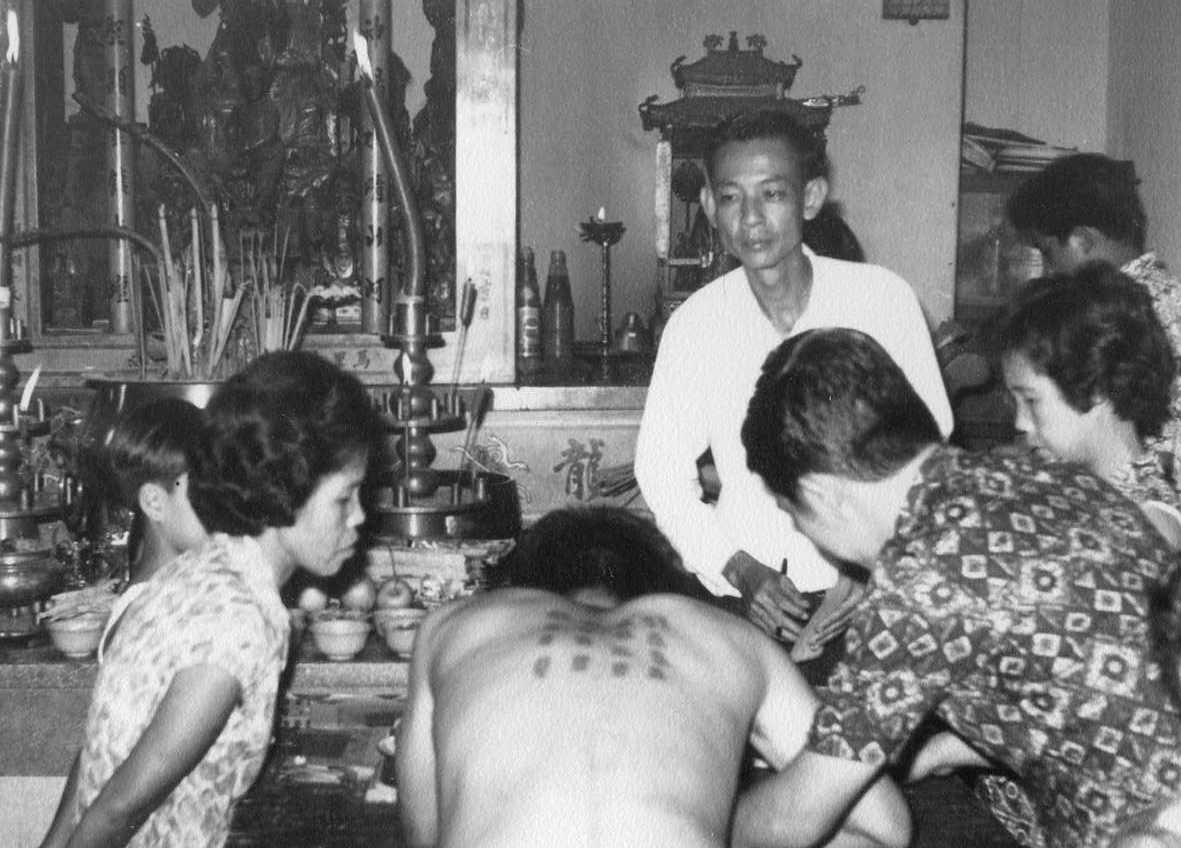
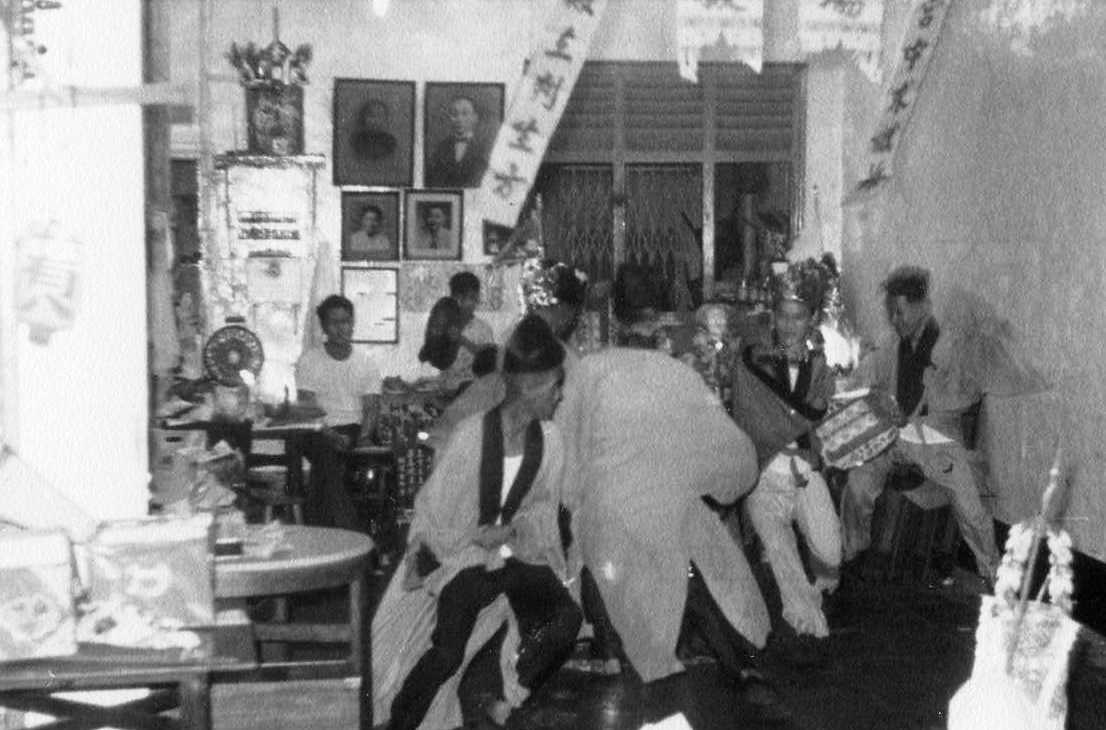
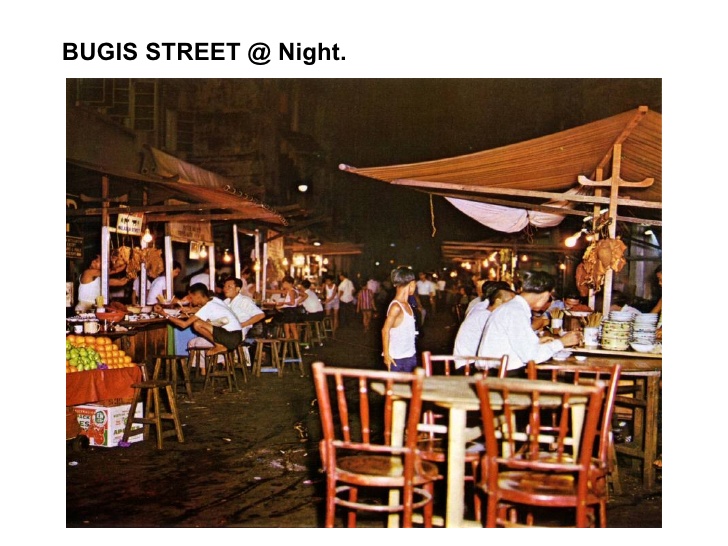
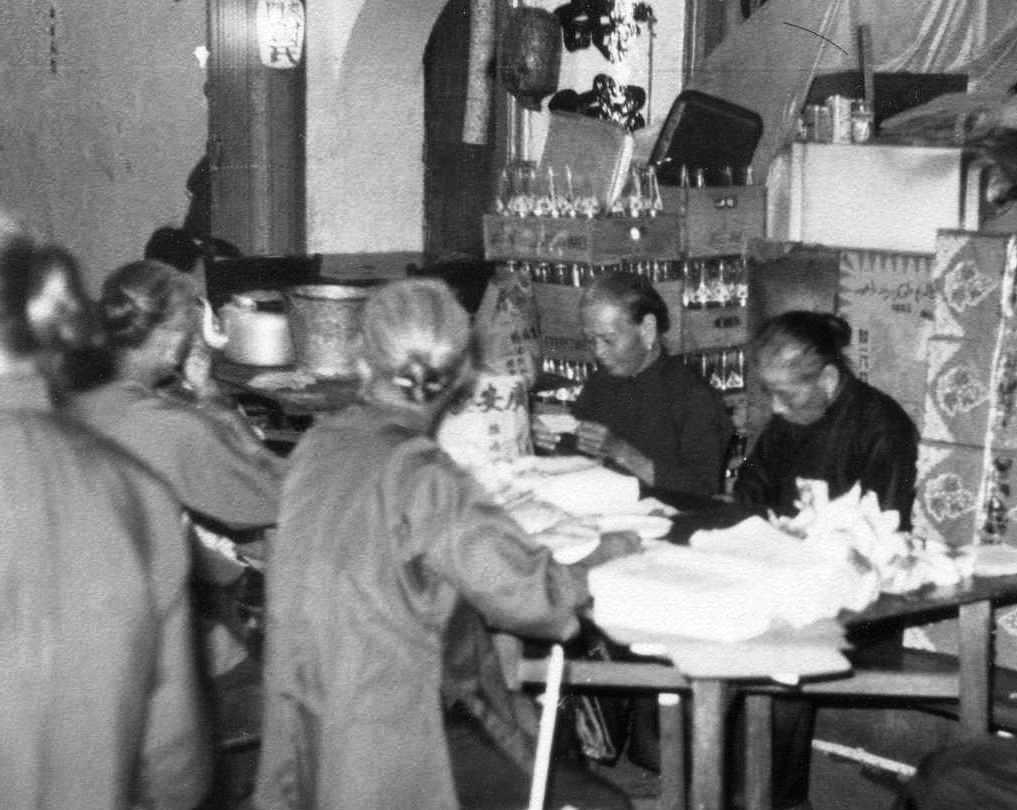
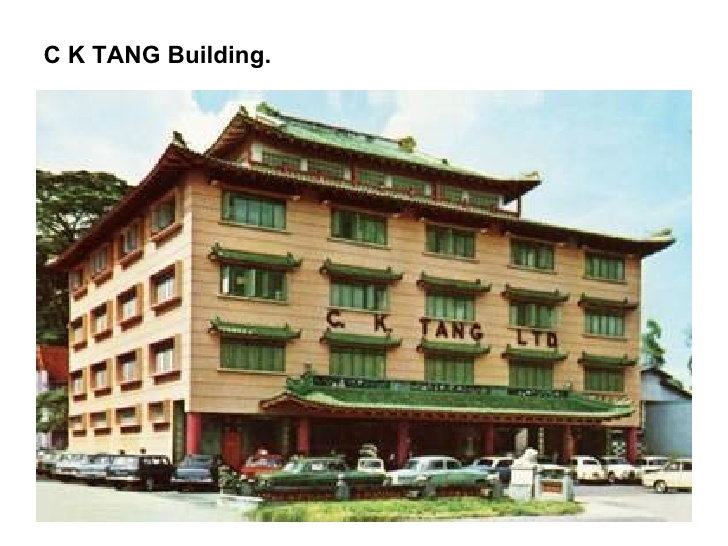
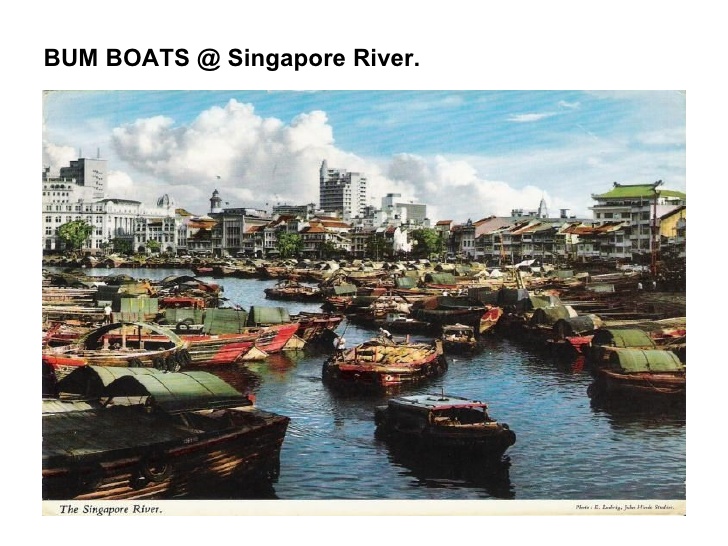
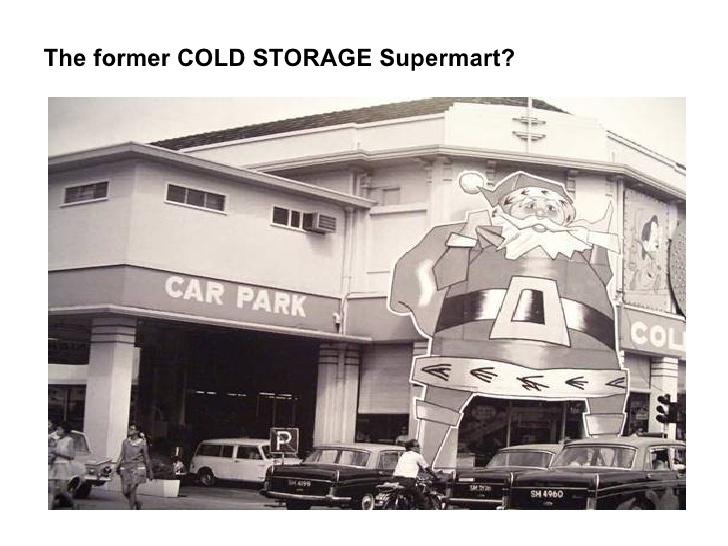
Sarah Jane in Singapore
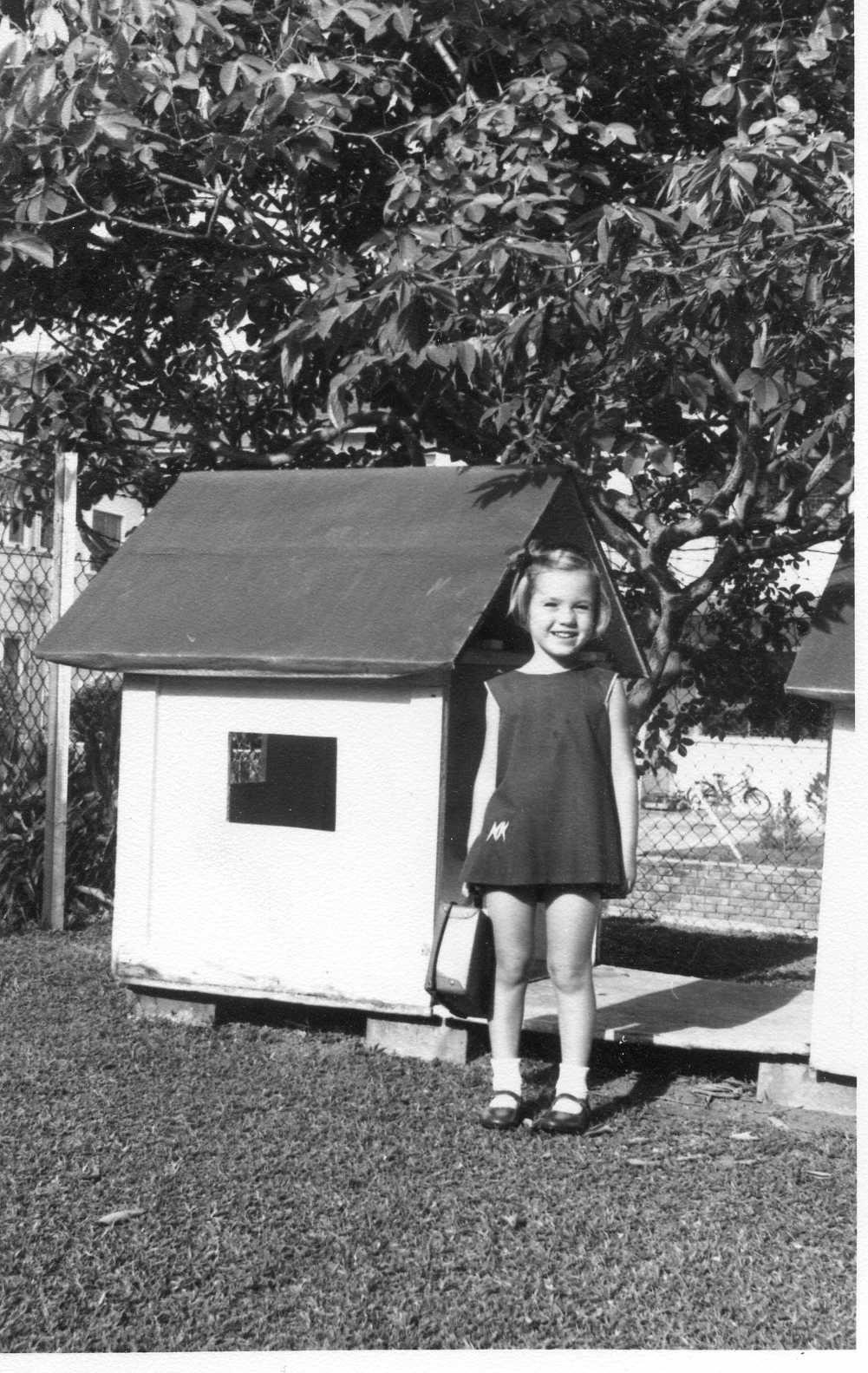
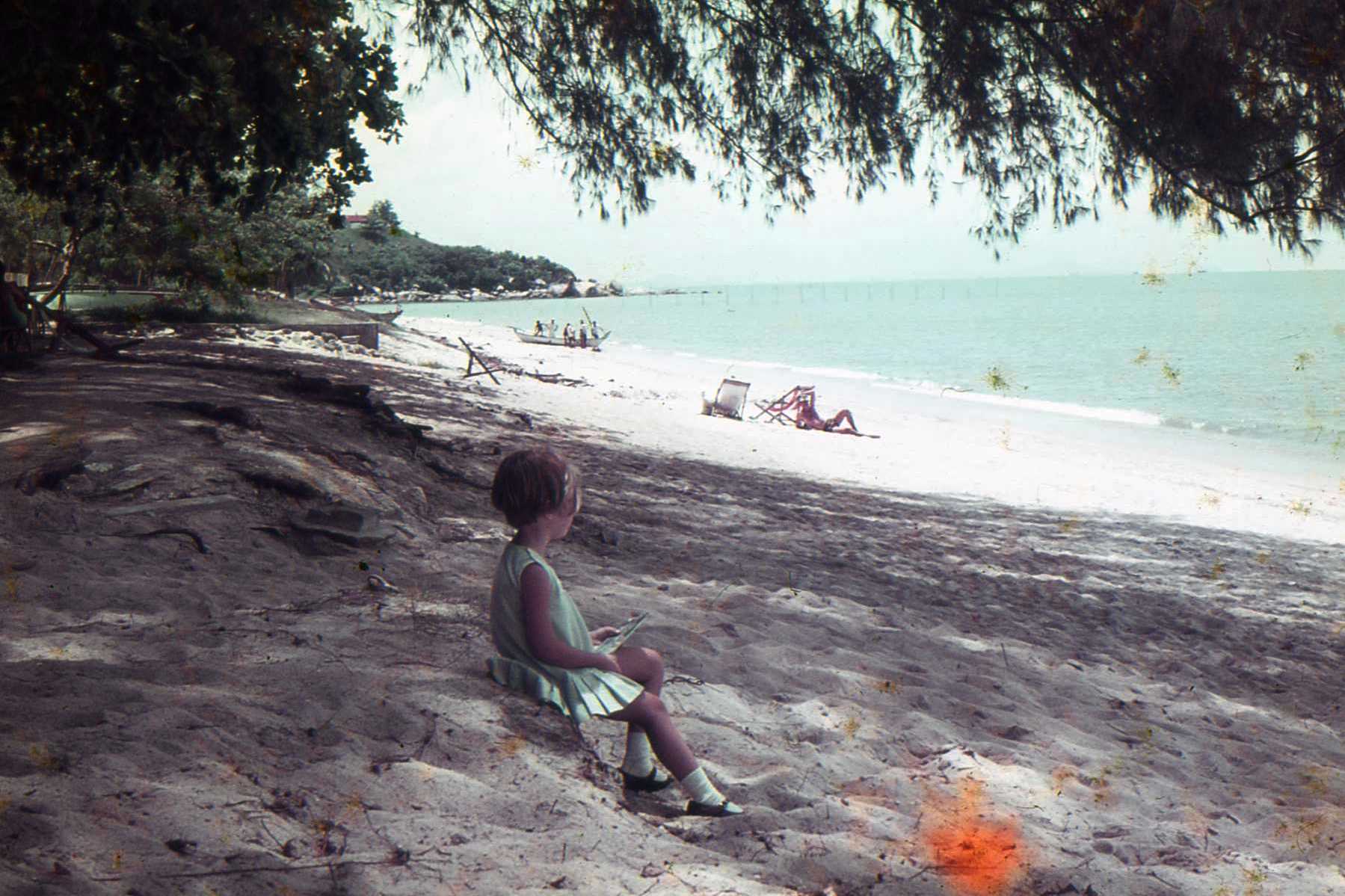
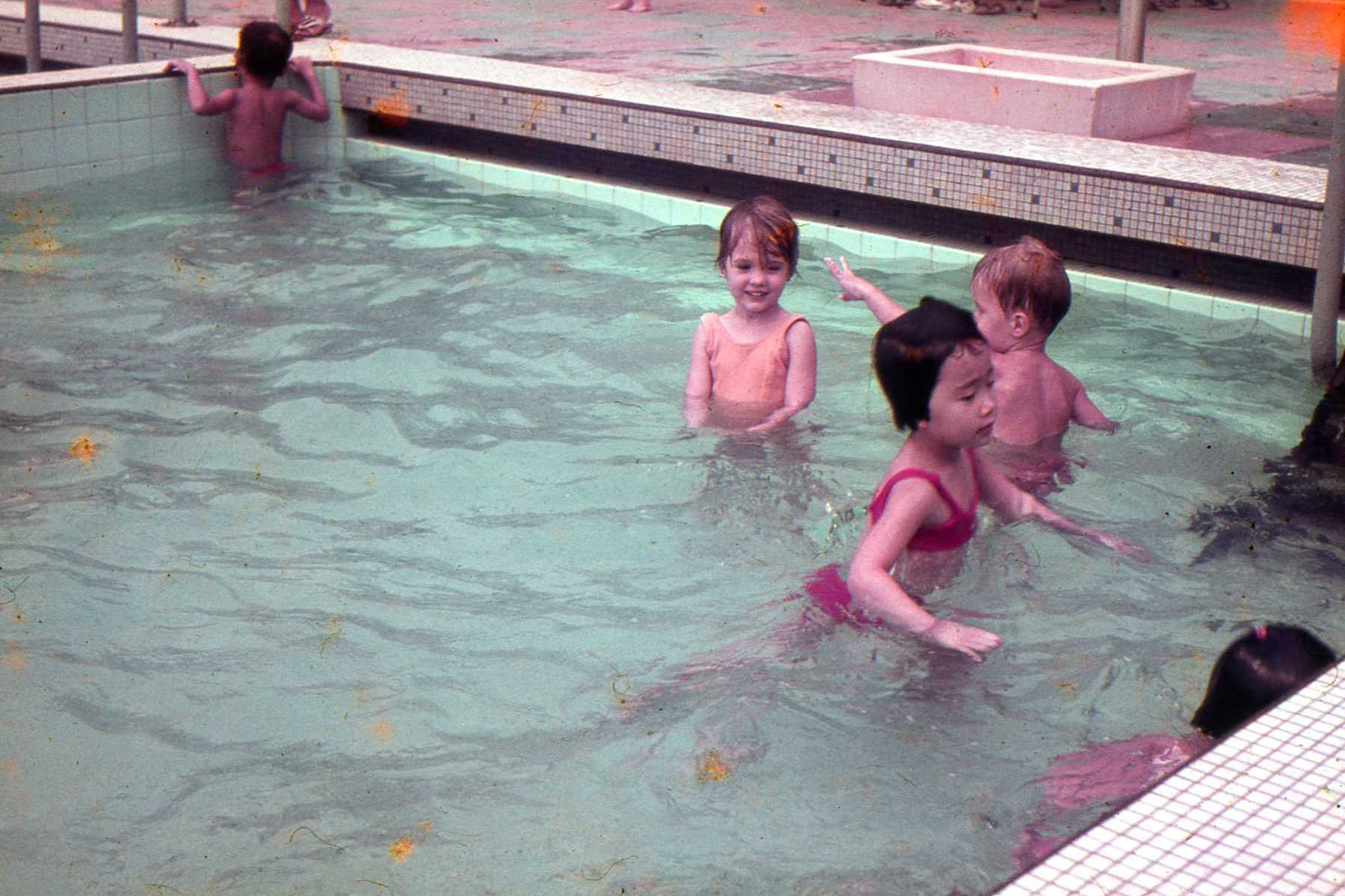
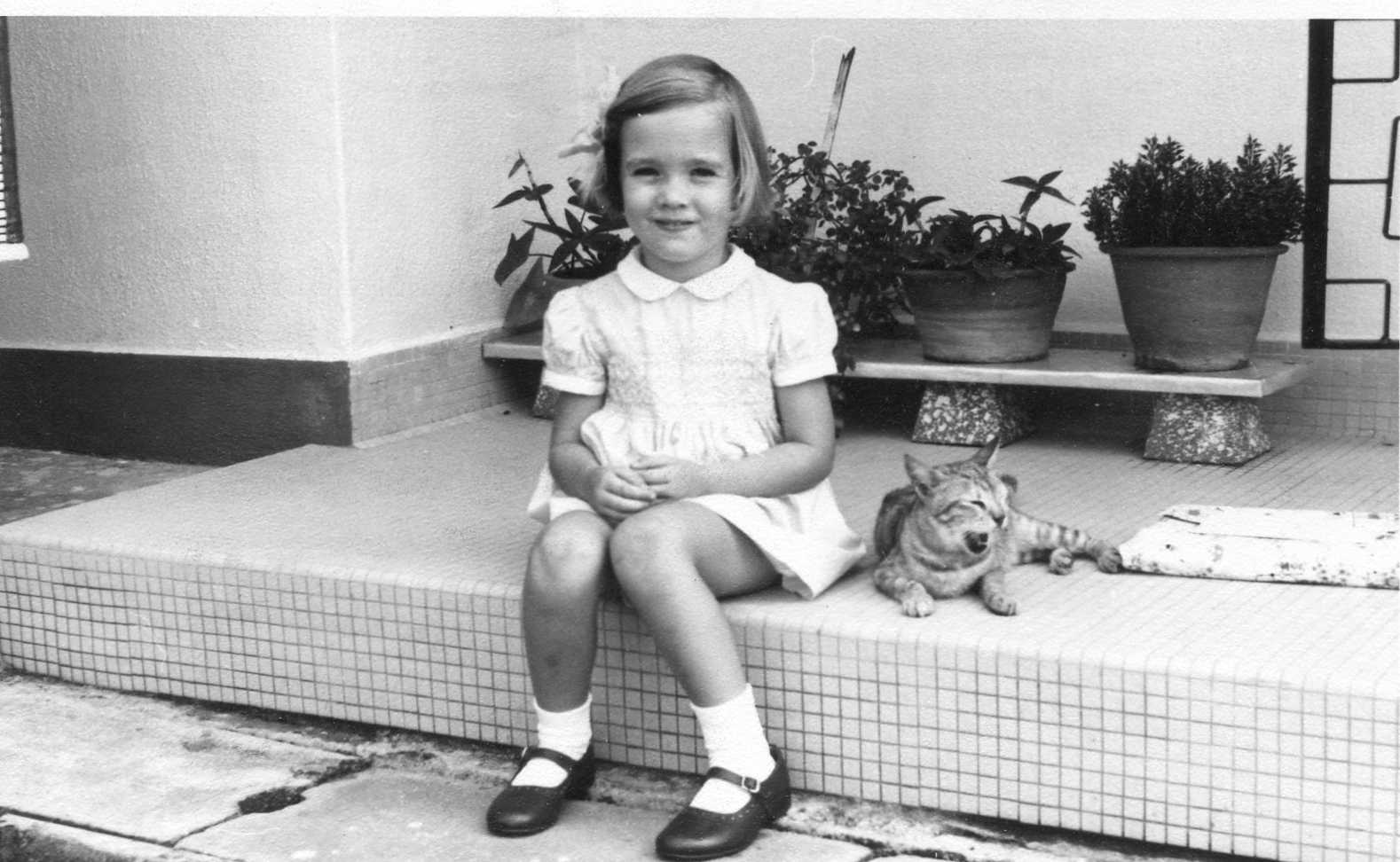
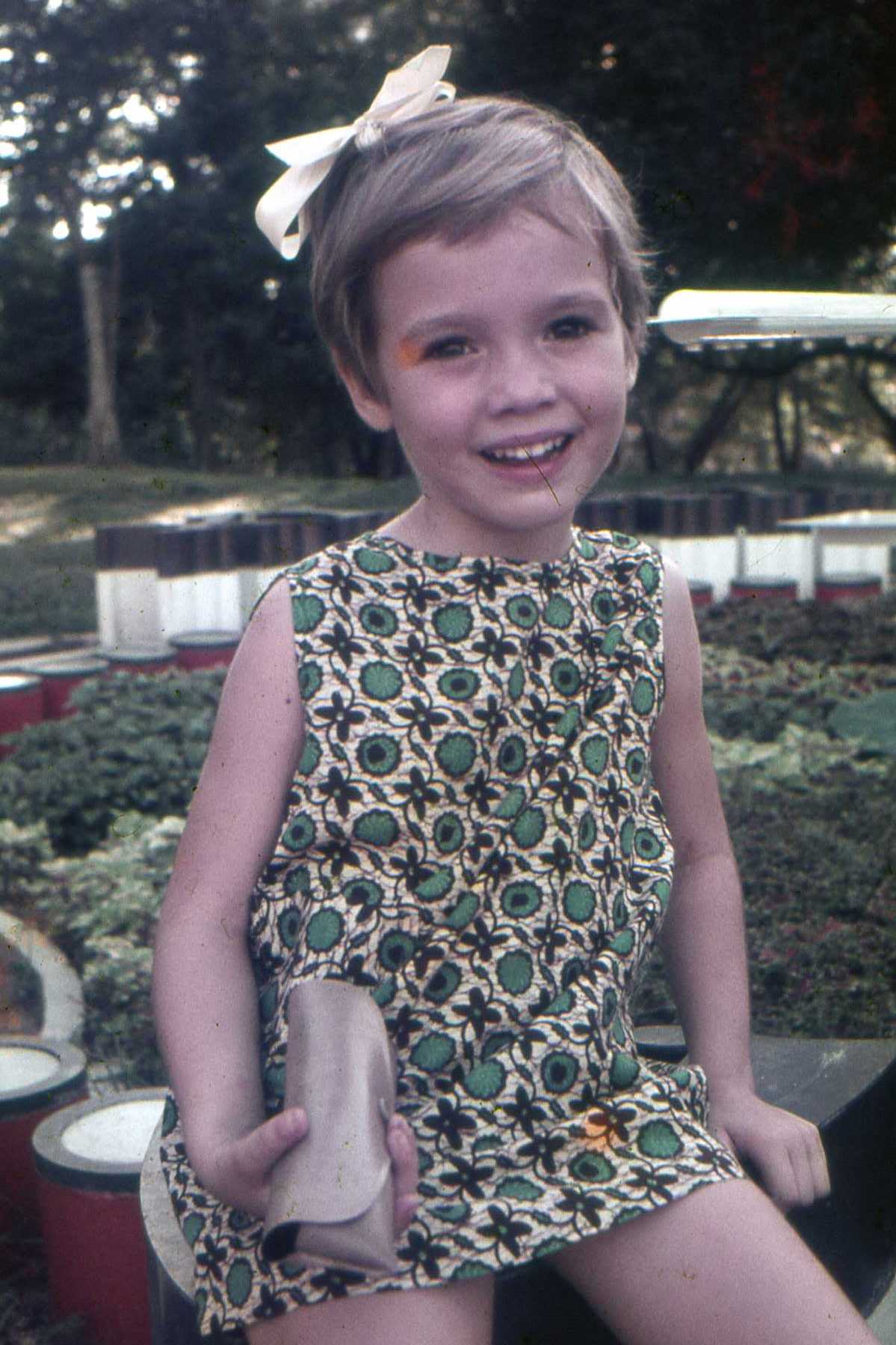
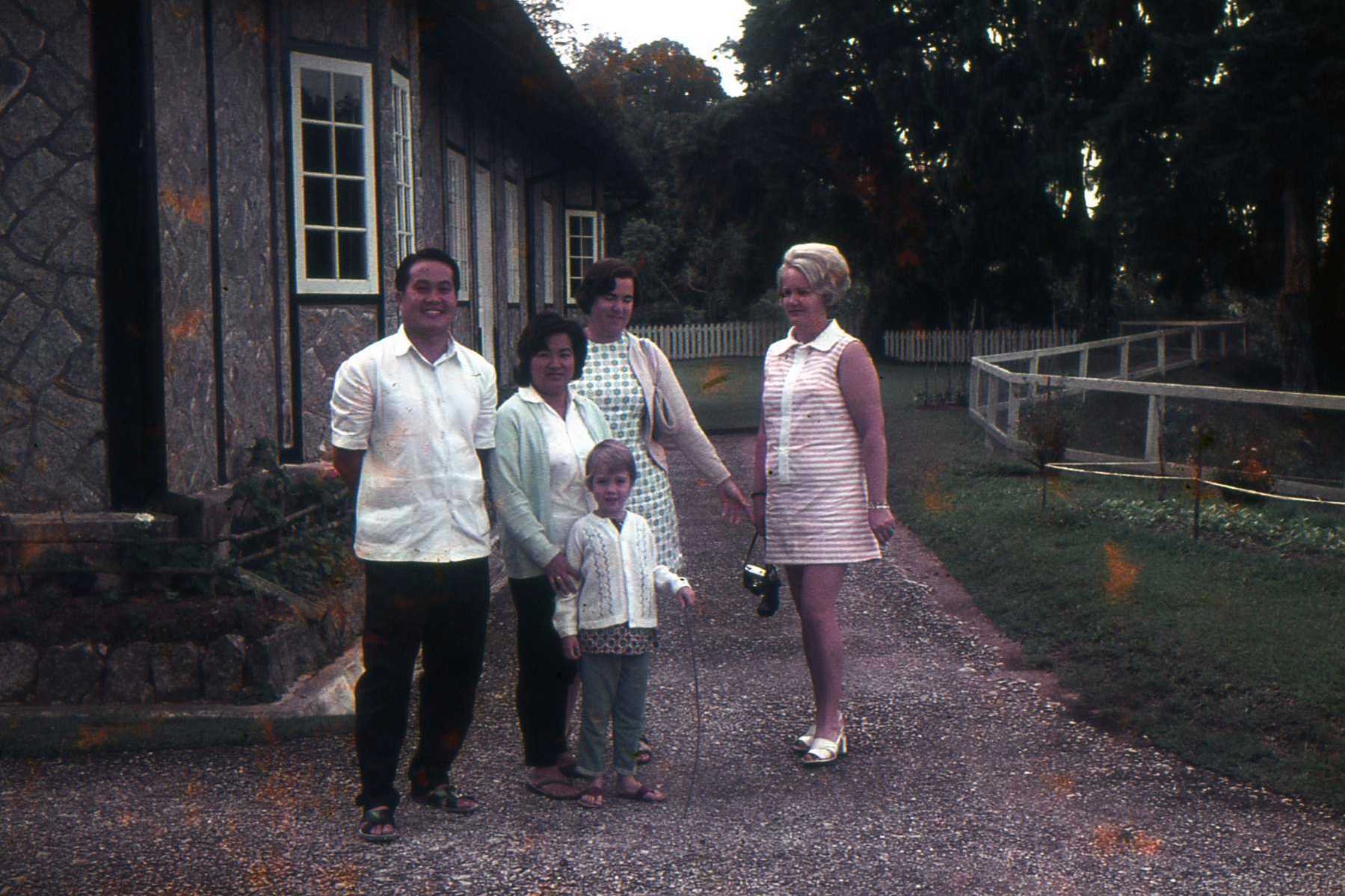
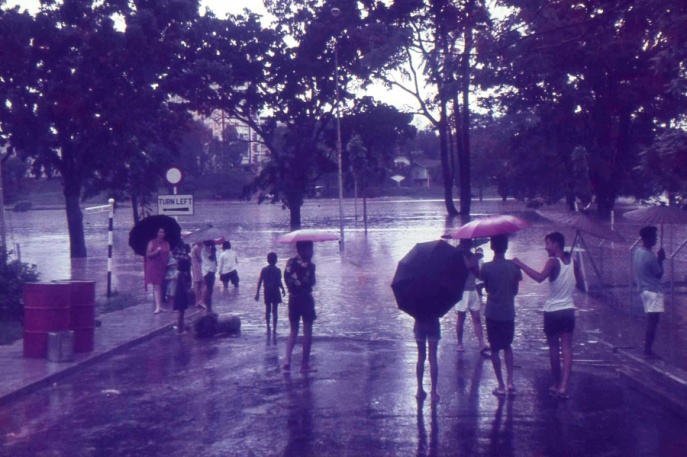
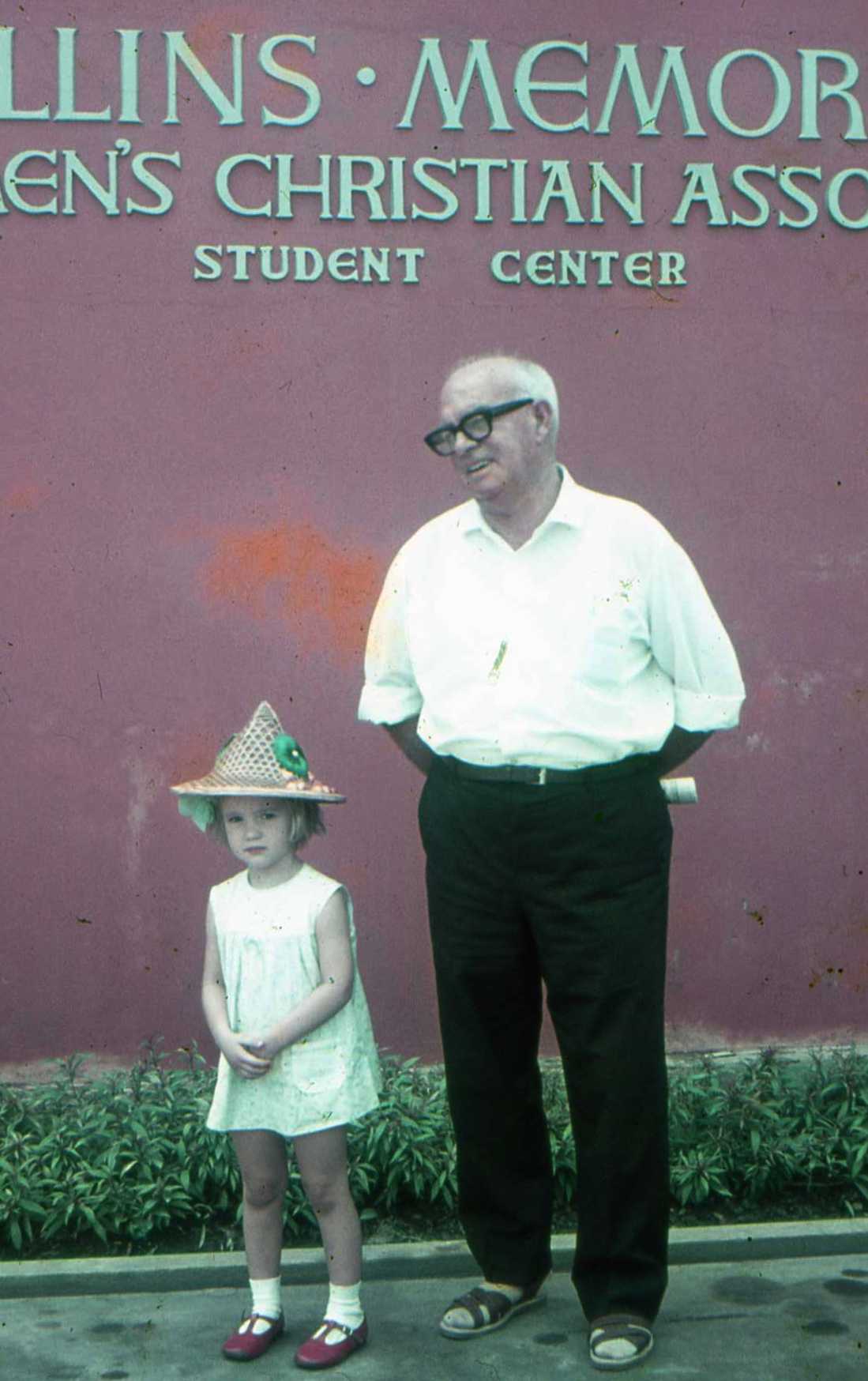
Singapore In Recent Times